Home | Who we are | Global Core Team
Global Core Team
| EVELIN G. LINDNER Evelin Gerda Lindner is the Founding President of the Human Dignity and Humiliation Studies (HumanDHS) network and initiator of the World Dignity University initiative. She is a transdisciplinary social scientist and humanist and holds two Ph.D.s, one in medicine and one in psychology. In 1996, she designed a research project on the concept of humiliation and its role in genocide and war. European history served as starting point. It is often assumed that the humiliation of Germany through the Versailles Treaties after World War I was partly responsible for the Holocaust and the Second World War. It seems therefore important to understand the nature of humiliation and how it is related to the occurrence of genocide and mass violence. From 1997-2001, Lindner began carrying out such research, interviewing over 200 people who were either implicated in or knowledgeable about the wars and genocides in Rwanda, Somalia, and Nazi Germany. Her research indicates, that, indeed, the dynamics of humiliation may be at the core not only of war and genocide, but also of current events such as the "war on terror," American questions such as to "why do they hate us," or whether combating poverty would reduce terror or not. Lindner is currently primarily concentrating on writing planned books and articles on humiliation, as well as establishing the Human Dignity and Humiliation Studies as an international platform for further work on humiliation, with the particular aim of linking research and practice. |
|
| DONALD C. KLEIN † June 8, 2007, yet always with us in spirit! Our beloved Don Klein has passed away. Please see here our condolences, or, more precisely, our love letters to Don. We are shattered and, for the moment, speechless. Dear Becca and Alan! We are holding your hands in this difficult moment of losing your father and grandfather. Don was and will always be, one of the central pillars of our work and our group. He is on the Board of our Directors and will always be there. He spoke to us about Awe and Wonderment. About our human ability to live in awe and wonderment, not just when we see a beautiful sun set or the majesty of the ocean, but always. That we can live in a state of awe and wonderment. And we do that, says Don, by leaving behind the psychology of projection. The psychology of projection is like a scrim, a transparent stage curtain, where you believe that what you see is reality only as long as the light shines on it in a certain way. However, it is not reality. It is a projection. And in order to live in awe and wonderment, we have to look through this scrim and let go of all the details that appear on it, in which we are so caught up in. When we do that, we can see the beautiful sun set, the majestic ocean, always, in everything. We are all inconsolable! We are with you, dear Don, wherever you may be now! And we promise to always remember that we can live in Awe and Wonderment, always! Evelin, on behalf on our entire HumanDHS network! Sunday, June 10, 2007 Donald C. Klein, Ph.D., was also a Member of the HumanDHS Board of Directors, the HumanDHS Global Advisory Board, the HumanDHS Global Coordinating Team, and the HumanDHS Research Team. After earning a Clinical Psychology Ph.D. in 1952 at the University of California, Berkeley, he was CEO of an experimental community mental health center, directed a multi-disciplinary graduate center at Boston University, served as NTL Program Director for Community Affairs, and helped to develop and became coordinator of the Applied Behavioral Science graduate program at The Johns Hopkins University. Subsequently, he was Professor Emeritus of the Graduate College of The Union Institute & University, which offers an innovative non-residential doctoral program for working adults. Don Klein has been one of the first to explicitly examine and write on the humiliation phenomena. His first publication on humiliation goes back to 1991 (Journal of Primary Prevention on the Humiliation Dynamic, Vol 12, no. 2, Winter, 1991; Vol 12, No. 3, Spring 1992). He has written numerous books and has conducted extensive research on how families and organzations use humiliation as a tool of control and socialization. In addition to the Humiliation Dynamic, as an Applied Behavioral Scientist, he has studied and written about community change dynamics, differences and diversity, power, and large group methods for change in organizations and communities. In his training and consulting work he has used sociodrama and other performatory approaches. He is especially interested in methods that can be used to create meaningful, integrative non-humiliating connections (i.e., "social glue") between diverse groups in community settings. In recent years Don Klein has become deeply engaged with what he calls Appreciative Psychology, which has to do with the inherent level of appreciative being that connects each one of us with universal life energy. Please find here: • The humiliation dynamic: An overview by Donald C. Klein, in Klein, Donald C. (Ed.), The Humiliation Dynamic: Viewing the Task of Prevention From a New Perspective, Special Issue, Journal of Primary Prevention, Part I, 12, No. 2, 1991. New York, NY: Kluwer Academic/ Plenum Publishers. • Creating Social Glue in the Community: A Psychologist's View by Donald C. Klein, a revised version of paper presented at 'Rising Tide: Community Development for a Changing World', 32 nd annual conference of the Community Development Society, Saint John, New Brunswick, Canada, July 26, 2000. • Community MetaFunctions and the Humiliation Dynamic, paper presented at the 2nd Annual Meeting on Human Dignity and Humiliation Studies, Paris, France, September 16-18, 2004 (not to be cited without author's authorization). • The Humiliation Dynamic: Looking to the Past and Future, paper presented at the 2005 Workshop on Humiliation and Violent Conflict, Columbia University, New York City, December 15-16, 2005. • Looking to the Past, Looking to the Future, New Years Greetings: 2006! • written by Alan Klein, Don's son, Past Master: Don Klein, first published in Practising Social Change, Issue 05, May 2012, pp. 48-49. |
|
| LINDA M. HARTLING Linda M. Hartling, Ph.D., is the HumanDHS Director, the HumanDHS Global Advisory Board, Global Coordinating Team, HumanDHS's Research Team, and HumanDHS's Education Team. She is also a Member of the Editorial Board of the Journal of Human Dignity and Humiliation Studies (JHDHS). Linda M. Hartling is the recipient of the Association for Creativity in Counseling Research Award (see the slides of her acceptance talk). Linda is affiliated with the Jean Baker Miller Training Institute (JBMTI) at the Stone Center, which is part of the Wellesley Centers for Women at Wellesley College in Massachusetts. Until 2008, she was its the Associate Director. Dr. Hartling is a member of the JBMTI theory-building group advancing the practice of the Relational-Cultural Theory, a model of psychological growth and development. She coordinates and contributes to training programs, publications, and special projects for the JBMTI. She holds a doctoral degree in clinical/community psychology and has published papers on resilience, substance abuse prevention, shame and humiliation, relational practice in the workplace, and Relational-Cultural Theory. Dr. Hartling was co-editor of The Complexity of Connection: Writings from the Jean Baker Miller Training Institute at the Stone Center (2004) and author of the Humiliation Inventory, a scale to assess the internal experience of derision and degradation. She is currently a member of an international team establishing the first Center for Human Dignity and Humiliation Studies. [read more] |
|
| MICHAEL F. BRITTON Michael Francis Britton is a Member of the the HumanDHS Board of Directors, the HumanDHS Global Advisory Board, the HumanDHS Global Core Team, and a Member of the HumanDHS Global Coordinating Team, as well as Co-Director and Co-Coordinator of the HumanDHS Stop Hazing and Bullying Project. He is the HumanDHS Director of "Global Appreciative Culturing." Concerned with integrative thinking across neuroscience, in-depth psychotherapies and historical/cultural living, Michael Britton's work looks at how participation in the historical life of our times and interior life are deeply intertwined. His earlier research looked into experience by US military in planning and commanding nuclear weapons in the Cold War; kinds of parenting that help children grow to do well in love as adults; kinds of parenting that make it harder for battered women to take action on their own behalf; and psychological attitudes towards existing and hoped for worlds reflected in traditional, modern and postmodern architecture. Michael provides workshops for therapists to think about mature love and how patients are helped to get there within themselves, within relationships, and in their co-responsibility for sustaining love in the larger world. He is very concerned with supporting a culture of appreciation for what we can learn from each other, i.e. open societies rather than totalitarian, as the basis for global life. He is currently focused on the demands for psychological adaptation posed by global life and is working on two writing projects that invite taking up those challenges. The first is on weapons of mass destruction and the psychological challenges involved in creating global safety. The second is on understanding what global life requires of us as illuminated by understanding the human brain's place in evolution, its multi-layered inclinations for rendering history in the present, and the choices among those inclinations that we face as we go about the business of everyday work as adults in the institutions of our societies. Please see here: • Transforming Myths of War to Create a Legacy of Peace, in V. K. Kool (Ed.) Non-Violence: Social and Psychological Issues. Lanham, MD: University of Press of America. • Adults' Perceptions of Childhood Experiences of Parental Love As Predictive of Stability and Levels of Enjoyment in Adult Relationships. Doctoral Dissertation. Ann Arbor, MI: University Microfilms International (Order Number 9004433), 1989. • Weapons of Mass Destruction, in Christie, Winter, Wagner (Ed.) Peace Conflict and Violence: Peace Psychology for the 21st Century. Englewood Cliffs, NJ: Prentice Hall, 2001. • Conversation Between Harsh Agarwal and Michael Britton on Ragging, New Delhi, India: Coalition to Uproot Ragging from Education (CURE), 2007. • Finding the ‘Right’ Moral Tone Regarding Climate Change And Travel, New Delhi, India: Coalition to Uproot Ragging from Education (CURE), 2007. • A four and a half minute song with video on ragging produced by CURE on YouTube, and downloadable as high resolution version of this song and video, New Delhi, India: Coalition to Uproot Ragging from Education (CURE), 2008. • Ragging: Can we ever solve this problem?, New Delhi, India: Coalition to Uproot Ragging from Education (CURE), 2008. • Is it Ragging or Stockholm Syndrome in our Campuses?, New Delhi, India: Coalition to Uproot Ragging from Education (CURE), 2009. |
|
| VICTORIA C. FONTAN Victoria Christine Fontan is a Member of the HumanDHS Board of Directors, the HumanDHS Global Advisory Board, the HumanDHS Global Core Team, the HumanDHS Research Team, and the HumanDHS Research Team. She is furthermore the former Co-Editor of the Journal of Human Dignity and Humiliation Studies (JHDHS). Victoria is the Director of Academic Development, and Professor of Peace and Conflict Studies at the United Nations-mandated University for Peace in San José, Costa Rica. As a Fellow to the Iraq Project at the CICR in Columbia University, Victoria is in charge of developing a permanent Conflict Resolution curriculum in northern Iraqi universities. Prior to 2005, Victoria was Assistant Professor of Conflict Resolution at Salahaddin University, Erbil, Iraq. Previously, she was a Visiting Assistant Professor of Peace Studies at Colgate University, NY, where she lectured in conflict resolution and peace studies. Earlier, Victoria was a Post-Doctoral Research Fellow at Sabanci University, in Turkey. She lectured in the MA Program in Conflict Resolution and Analysis and also conducts research on conflict resolution processes and the politics of communication. Victoria holds a Ph.D. in Peace and Development Studies. She published various papers on multi-track diplomacy, human trafficking, the public diplomacy of armed groups and the formation of political violence in post-conflict societies. Central to her work has been a conceptualisation of post-conflict processes through the study of social, gendered, cultural, economic and political humiliation. She conducted field research in Lebanon with the Hezbollah, in Bosnia-Herzegovina on human trafficking and organised crime, and in Fallujah (post-Saddam Iraq) with emerging armed groups. She is also involved in gender training for peacekeeping operations, and has lectured to various armed forces on the subject. Please see: • The Dialectics of Humiliation: Polarization between Occupier and Occupied in Post-Saddam Iraq (2003, unpublished Draft (Not to be cited without Author's authorization). • co-authored with Bertram Wyatt-Brown (2005), "The Honor Factor", Op Ed in The Baltimore Sun, January 23, 2005, p. 5F. Please see here the oringal long version. • "Hubris, History, and Humiliation: Quest for Utopia in Post-Saddam Iraq," in Social Alternatives (Special Issue "Humiliation and History in Global Perspectives"), Vol. 25, No. 1, First Quarter, pp. 56-61, 2006. • Voices from Post-Saddam Iraq: Living with Terrorism, Insurgency, and New Forms of Tyranny Westport, CT: Greenwood/Praeger Security International. |
|
JUDIT RÉVÉSZ |
|
BHANTE CHIPAMONG CHOWDHURY |
|
| AMY C. HUDNALL Amy C. Hudnall is a Member of HumanDHS's Education Team, and Co-Editor of the Journal of Human Dignity and Humiliation Studies (JHDHS). She is also HumanDHS's representative to the International Association of Genocide Scholars (IAGS). Amy is a Lecturer in the History and Women's Studies Departments at Appalachian State University and a Research Assistant Professor at the Institute of Rural Health, Idaho State University. Her work focuses on cross-cultural trauma and genocide from an historical perspective, and she teaches courses on peace and conflict. She has presented and published on captivity trauma, human rights, secondary trauma, cultural relativism, and cross-cultural conflict. She received her M.A. in history at Appalachian State University and also studied at the Bayerische Julius-Maximilian-Universität in Germany. Amy Hudnall is teaching an interdisciplinary course on the development of warfare and peacemaking and preparing an interdisciplinary course on genocide that will have a heavy focus on psychology. Please see "Humiliation and Domination under American Eyes: German POWs in the continental United States, 1942-1945," in Social Alternatives (Special Issue "Humiliation and History in Global Perspectives"), Vol. 25, No. 1, First Quarter, pp. 33-39, 2006. |
|
| CHRISTOPHER SANTEE Christopher Santee is also a Member in our HumanDHS Research Team, and Project Associate of the Journal of Human Dignity and Humiliation Studies (JHDHS). He is currently studying and residing in San José, Costa Rica. He obtained a Bachelor's degree in Interdisciplinary Studies with a focus on Peace Studies from Naropa University in Boulder, Colorado, USA in 2005. Christopher has been working and interning at the United Nations-mandated University for Peace in Costa Rica since February, 2005. He hopes to enroll in a masters degree program in a yet-to-be determined institution for Sustainable Development, Peace Studies or International Relations with a focus on Latin America. Recently named Project Associate for the Human Dignity and Humiliation Studies network, Christopher will be working to aid the creation of a peer reviewed e-journal as well as a composited book on the study of humiliation. Prior to 2006 Christopher was a member of the Rocky Mountain Peace and Justice Center in Boulder, Colorado, organizing rallies and informational gatherings on the occupation of Iraq by the US as well as anti-racial profiling campaigns for US immigrant groups in the Colorado area through the Safety Net. Some of his work there included organizing a benefit concert for freetheslaves.net, featuring internationally renowned poet and activist Saul Williams in April, 2005. Through the service learning program at Naropa University, Christopher also coached high school students in community organizing and political activism on issues of civil rights and awareness utilizing the model of Public Achievement from the Center for Democracy and Citizenship at the University of Minnesota. Please see American Diversity and the Role of Humiliation, note presented at the 2006 Workshop on Humiliation and Violent Conflict, Columbia University, New York City, December 14-15, 2006. |
|
| BERTRAM WYATT-BROWN (March 19, 1932 - November 5, 2012, but always with us in our hearts!) Bertram Wyatt-Brown is a Member of the HumanDHS Board of Directors and was the Guest Editor of "Humiliation and History in Global Perspectives," a Special Issue of Social Alternatives (Vol. 25, No. 1, First Quarter, 2006), edited by Ralph Summy. Richard J. Milbauer Emeritus Professor of History, University of Florida, and Visiting Scholar, Johns Hopkins University, he has published the following works in history: Lewis Tappan and the War against Slavery (1969, 1996); Southern Honor: Ethics and Behavior in the Old South (1982); The House of Percy: Honor, Melancholy, and Imagination in a Southern Family (1994); The Literary Percys (1994); The Shaping of Southern Culture: Honor, Grace, and War (2001); Hearts of Darkness: Wellsprings of a Southern Literary Tradition (2003); and (co-editor), Virginia's Civil War (2004). Bertram Wyatt-Brown earned the B.A. degree at the University of the South (1953), a B.A. (Honours) and M.A. at King's College, Cambridge University (1957, 1961), and his doctoral degree at the Johns Hopkins University (1963) under the late C. Vann Woodward. Professor Wyatt-Brown has taught at Colorado State University, the University of Colorado, University of Wisconsin, Case Western Reserve University, University of Florida, and the University of Richmond (the Douglas Southall Freeman chair, 2002-03). He served as President of the St. George Tucker Society, the Society for Historians of the Early Republic, and the Southern Historical Association. His awards include: Finalist, Pulitzer Prize and American Book Award (1983); the ABC/Clio Historical Essay Prize (1990); the Henry Luce Foundation Fellowship and NEH Fellowship at the National Humanities Center (1989-90 and 1998-99), the Guggenheim Fellowship (1974-75), and several teaching and graduate student mentoring awards. Wyatt-Brown is currently preparing books entitled Who Owns the Dead? The Perils of Literary Biography and Honor and America's War, from the Revolution to Iraq. Please see also Professor Wyatt-Brown as "History Doyen" at the History News Network of George Mason University. Please see the Announcement of the 2004 James Pinckney Harrison Lectures in History by Wyatt-Brown and here the three lectures: • Honor and America’s Wars: From Spain to Iraq; • Honor, Secession, and Civil War; and • Honor and America’s Wars: From the Revolution to Mexican Conquest. Please see also • Honor, Shame, and Iraq in American Foreign Policy, note presented at the 2004 Workshop on Humiliation and Violent Conflict, Columbia University, New York City, November 18-19, 2004. • The Changing Faces of Honor in National Crises: Civil War, Vietnam, Iraq, and the Southern Factor, lecture for the Johns Hopkins History Seminar, Fall 2005. Bert has kindly accepted the task of being a guest editor of "Humiliation and History in Global Perspectives," a Special Issue of Social Alternatives (Vol. 25, No. 1, First Quarter, 2006), edited by Ralph Summy. Please see the Guest Editor's Introduction to the Special Issue, written by Bertram Wyatt-Brown, and Honor, Irony, and Humiliation in the Era of American Civil War. See furthermore: • The Psychology of Humiliation: Mann’s “Mario and the Magician” and Hawthorne’s “Major Molineux, My Kinsman” (2006), abstract presented at the 23rd International Literature and Psychology Conference 2006, by the Institute for Psychological Study of the Arts (IPSA), University of Florida and the Department of Education, University of Helsinki, and the 2006 Workshop on Humiliation and Violent Conflict, Columbia University, New York City, December 14-15, 2006. |
|
| MOHAMMED BAYEZID DAWLA Bayezid Dawla is a dignity activist. Born and based in Bangladesh, Bayezid studied in the Department of Economics and International Development at the University of Bath, UK and obtained the degree of Master of Research (MRes) in International Development. He also studied English language and literature in the Department of English at the University of Rajshahi and was awarded the MA and BA (Honours) degrees from that university. He worked with The Daily Star (published in Dhaka), ActionAid Bangladesh, and the Institute for Development Policy Analysis and Advocacy (IDPAA), Proshika (a human development organization). Bayezid Dawla is currently the (honorary) Executive Director of Civic Bangladesh, a civil society organization (CSO) registered as a Trust working to advance democracy and democratic governance through civic education and engagement. He is also General Secretary of Bangladesh Dignity Forum, which is leading an Equal Dignity Campaign launched in 2006 by Civic Bangladesh. See Pamela Gerloff covering Bayezid's work in Bangladesh in The Huffington Post. |
|
| MOHAMMAD ABUL KALAM AZAD Mohammad Abul Kalam Azad is Assistant Professor and Coordinator of the Center of General Education (GED), as well as Assistant Adviser for Student's Welfare at Manrat International University in Dhaka, Bangladesh. He has completed his M.A. degree in Peace Education at the United Nations mandated University for Peace in Costa Rica. Md. Azad has a bachelor’s degree and another Master’s degree in Islamic Studies from the University of Dhaka, Bangladesh. He has worked as a Research Assistant for USAID, where his research topic was “Pre-primary and Primary Madrasah Education in Bangladesh”. He has joined in the "Generations For Peace, Amman, Jordan, Training Camp-2009" in 2009, the “Curriculum Development Workshop on Peace Education in Islamic Context” in Toronto, Canada, in 2006, and in Yogyakarta in Indonesia in 2007. He did voluntary work for a variety of organizations that dealt with natural disasters in Bangladesh ranging from Rotary Club to Bangladesh National Cadet Corps, to Bangladesh Tourist Society. He was also president of several organizations, such as the Student Welfare Association in Mothbaria, Islamic Studies Cultural Forum, and Bangladesh Islamic Studies Forum. Please see: • Peace and Stability in Bangladesh through Charity, Sustainable Development and Peace Education in Bangladesh, San Jose, Costa Rica: United Nations-mandated University for Peace, Project Development Report, 2006. • Sustainable Development in Bangladesh: Problem and Prospects, paper presented at the 23rd Annual Conference of Human Dignity and Humiliation Studies 'Returning Dignity', in Chiang Mai, Northern Thailand, 8th - 12th March 2014. |
|
| NICHOLAS CARL MARTIN Nick is a also a Member of the HumanDHS Research Team. Nick is currently a visiting fellow at the United Nations University for Peace (UPEACE) campus in Costa Rica. He also serves as Deputy Director of UPEACE/US, a foundation created in the U.S. for charitable purposes and dedicated exclusively to the advancement of educational peace initiatives and programs established by the United Nations University for Peace. Nick received his B.A. from Swarthmore College where he graduated with honors degrees in both English Literature and Education and his M.A. in Education for Peace from the United Nations University for Peace. After Swarthmore, Nick earned his secondary teaching certification and taught literature to high school students in inner city Philadelphia. He then worked at Xi'an Teachers College in China as an American classroom pedagogy professor. In 2004, Nick helped to start what has become a very successful NGO called the Genocide Intervention Network (GI-NET) to raise awareness and money for the African Union mission in Darfur. He and his family have also started a policy think tank in the Czech Republic called Prague Security Studies Institute (PSSI) for Czech university students. Please see Exploring Possibilities for UPEACE in China: Peace Education, Project Development Report, thesis submitted in partial fulfillment of the requirements for the degree of Master of Arts, Peace Education, 2006. |
|
| ERIC VAN GRASDORFF Eric Van Grasdorff is also a Member of the HumanDHS Board of Directors, and the HumanDHS Global Core Coordinating Team. He is a Political Scientist and has graduated from the Free University of Berlin, German, on the topic African Renaissance and Discourse Ownership in the Information Age (2003). Born and grown up in Dakar, Senegal and later in Germany, he has very early in his life developed an intercultural identity. Eric Van Grasdorff is a Core Team Member of the Cameroonian NGO AfricAvenir and currently the Chairperson of its German section in Berlin. Additionally to being the Content Manager of both the HumanDHS and the AfricAvenir websites, he is currently building the Internet platform on Diversity Management for the German Heinrich Böll Foundation. Eric organised the 5th Annual Meeting of Human Dignity and Humiliation Studies in Berlin in 2005. His research interest include ICTs and International Relations, the Development/Postdevelopment Debate, Africa, African Renaissance and International Relations and Globalization, Transnational Corporations and Social Responsability in Third World Countries. |
|
| FRANCISCO GOMES DE MATOS Professor Francisco Cardoso Gomes de Matos is Recipient of the 2023 HumanDHS Lifetime Commitment Award. He is a Founding Member of the World Dignity University initiative and also a Member of our HumanDHS Global Advisory Board. He kindly coordinates two of our projects: he is the Director and Coordinator of HumanDHS's World Language for Equal Dignity Project and of HumanDHS's Creativity Through Equal Dignity Project. Professor Francisco Gomes de Matos taught linguistics and languages at the Federal University of Pernambuco (UFPE) in Recife, northeastern Brazil till his retirement in 2003. He holds degrees in languages and law from UFPE and in linguistics from the University of Michigan and the Catholic University of São Paulo. [read more] |
|
| ROSITA ALBERT Rosita Albert is a Visiting Scholar in the Social Psychology area of the Psychology Department at Harvard, and her research focuses on Intercultural Relations and Intercultural Conflicts. She is also an Associate Professor in the pioneering program in Intercultural Communication at the Department of Communication Studies at the University of Minnesota. She is a Founding Fellow and a member of the Governing Board of the International Academy for Intercultural Research. She is originally from Brazil, and her mother and grandparents left Germany to escape from Hitler. It is because of this background that she works to create respectful relations among groups from different backgrounds. As to her educational background and her positions, Rosita Albert earned her Ph.D. in Social Psychology from the University of Michigan. She has taught in Psychology, Education and Communication at a number of Universities. Rosita Albert has conducted research in a variety of topics, including research on a) the development and evaluation of the Intercultural Sensitizer, an instrument designed to foster intercultural sensitization; b) interactions between Latin Americans/Latinos and North or Anglo-Americans; c) the experiences and difficulties of Asian employees in American companies; d) conflicts and mutual misperceptions between African-Americans and Koreans in the U.S.; e) cultural differences in perceptions of negotiation; f) the effect of intercultural courses on intercultural development; and f) the effect of online interactions on perceptions of the other. With respect to teaching, training and consulting, Rosita Albert has taught courses in social psychology, intercultural communication, negotiation, and diversity. These courses have included students from many fields, countries all over the world, and a very wide range of cultures. She has conducted intercultural and diversity training, given presentations, and consulted for a number of organizations, including the World Bank, the 3-M company, Booz Allen Hamilton, the National Association of Transplant Coordinators, the University of São Paulo, the University of Minnesota and a number of other institutions. As to languages and international/intercultural experience, Rosita Albert speaks Portuguese, French, Spanish and English, and has had extensive experience with cultures from many parts of the world. |
|
| PAMELA HILEY Pamela Hiley is the Director of the Norsk Taiji Senter (Norwegian Taiji Centre). Pamela is one of Europe’s most experienced Taijiquan and Qigong instructors and the first professional instructor in Norway. Originally from Wales, she founded the Norsk Taiji Senter in 1983 and has since then instructed in both the private and public sectors. Her clientele includes many Norwegian government offices, educational institutes and private companies. Pamela also holds a Bachelor’s degree in Human Movement Studies. As an extension of her work with taiji, Pamela initiated many groundbreaking projects in Norway: In 2001 she created the Peace Point Foundation and participated in The Global Peace Initiative of Women Religious and Spiritual Leaders conference at the UN in Geneva. In 2003, she initiated and established the ‘Building Trust Peace Conference for the Middle East’ at the Nobel Peace Institute in Oslo, Norway. In 2004, she founded the Business Council for Peace at the Nobel Peace Institute and in 2006 the Youth Council and in 2007, MAP (Martial Arts for Peace). Pamela Hiley has been given recognition for her international peace work and has been honored with the title, ‘Ambassador for Peace’ from the Universal Peace Federation and in 2006, the outstanding work in Norway was recognised when she was selected as one of the Top 10 International Men & Women in Norway. Please see her son Bjarte Simon Ling Yuan Hiley, who studied Taihequan and Kungfu at Wudangshan in China, as he appeared on the Norwegian breakfast-tv show "God Morgen Norge" (published on 20th February 2013) and demonstrated the Wudang form of Taihequan, and holds a small tea ceremony using Pu'er tea while speaking about his time in China. A 30 minute documentary about Bjarte Hiley entitled "The Wudang Foreign Disciple - Ling Yuan" is part of a series called "Foreigners in China" on the CCTV International Channel in China and was aired on Saturday 20th April. See also and announcement and a YouTube version. |
|
| MANI BRUCE MITCHELL Mani Bruce Mitchell is also Member of our Global Education Team. My name is Mani Bruce Mitchell, I am an Educator, a Counsellor, Mentor, Change Agent, Artist – film maker and an intersex person (a person born with atypical genitalia), an issue that has for the last 100 years been shrouded in great mystery, silence and shame. I am also a teacher, a dreamer and in my early 40's (I am now in my 60's) I 'found my voice', I found it with gentleness, the result of attending the residential workshops designed by gifted grief and loss psychiatrist Elisabeth Kübler-Ross. I made the decision to be out and visible as not only an intersex person, but also a person who does not see or experience the world as fully male or female but as a blended wonderful other. It used to be an un-languaged place, and now wonderfully all around the world intersex people are talking and giving rich texture to this complex and diverse reality. I have experienced firsthand, at a visceral level what trauma and humiliation does to our sense of self, our soul and heart. I have also been blessed to have experienced the reparative life changing healing that dignity, respect and loving can bring. My original training was as an educator. A career change shifted my focus to disaster preparedness where my area of specialty became critical incident stress management. For the last 20 years I have been a counsellor/therapist with my own private practice. In 1996 I set up what would become the intersex trust of Aotearoa New Zealand (ITANZ) I have lectured and worked on many stages around the world. |
|
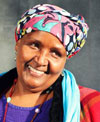 |
SAFIA YUSUF ABDI HAASE |
TONE B. BERGFLØDT |
|
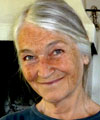 |
GERDELIN BODVIN Gerdelin is a social worker who specialised in group therapy. She was born in Bergen, Norway, and lives now on an island in the Oslofjord, called Tjøme, which is known for its beautiful landscape and cultural life. She has worked in many different contexts, among others, with designing and giving seminars and providing therapy to disabled patients and their families in various treatment institutions for disabled youths and adults. During the last fourteen years, she has worked in a hospital as a group therapist for psychiatric patients. She has also been part of the artists' community in Tjøme, among others, she led an art school for children for fourteen years, and was a co-founder and head of the art association in Tjøme for many years. |
| LISBETH VILKAN GLAD Lisbeth Vilkan Glad was born in Tønsberg, Norway, and lives on Nøtterøy in the Oslofjord. She has her own art gallery in Nøtterøy, Galleri Glad, where she works, arranges exhibitions, and offers painting courses. She has founded International Art for Understanding (IAU) to increase understanding and confidence between people of all races, based on her belief that this goal can be reached through the medium of art, by international paintings demonstrating how similar our basic needs are, such as for food and lodging, hope for liberty, and longing for peace. Already at the age of twelve, Lisbeth started her first official training to be a painter. Later, for a number of years, she worked in various drawing offices at the Kaldnes Shipbuilding Company in Tønsberg. For ten years, she had the pleasure of painting coulisses for the annual children's theatricals at The Tønsberg Theater. Then followed two years in Jamaica at the Edna Manley School of Art in Kingston, under the supervision of the renowned professor Robert Cookehorne. Part of the teaching took place outside in the fantastic nature and culture of Jamaica, and this inspired her love for the colors and the people of Jamaica. Back in Norway in 1988, she began working as a full time artist, and also continued her education. For example, she took courses in color energy under the instruction of Inger Ness and Tove Steinbo. She learned about the energy that can flow from colors, and how they may affect our lives, moods, and not least health itself. She spent much time on self-studies in color combinations and water color techniques. She was fortunate to participate in a course by the American artist Dave Daniels, on how to paint watercolor on canvas. She has also had the English water color painter John Lidzey as a teacher. It is important for her to create the magic of light and color without distractive elements. Lisbeth has studied, worked, and travelled to many countries: Jamaica, USA, Australia, Costa Rica, the Phillipenes, Malaysia, Bahamas, Thailand, Greece, Germany, France, Madeira, Kuwait, and Egypt. In the oasis of Siwa, deep in the Sahara desert, she has found her most special place, and here she spent part of the winter each year in her small studio, surrounded by organic farming, olive trees, dates, and clean water. She feels attracted to the beautiful formations of the desert with its light and shades. The library of Alexandria has published her book of 80 water colors with motifs from the Siwa oasis. See some of Lisbeth's art work here and read more about their home in Siwa here. |
|
 |
KIMBERLY ERIKSEN Kim Eriksen has a B.A. in the Humanities from the University of Pittsburgh. For her honorary achievement, she was recognized by the Golden Key International Honor Society. For nearly a decade, she held various corporate positions in the Oil and Gas Industry. However, her time spent over many years as an International Humanitarian Law (IHL) volunteer and leader at the Oslo Red Cross, Norway, prompted a shift in her awareness and consciousness that led to a life-long passion and academic pursuit to alleviate human suffering. In 2011, Eriksen pursued a “matter of heart” and was awarded her Master of Philosophy (M.Phil.) in Culture, Environment, and Sustainable Development from the University of Oslo, Centre for Development and the Environment. She studied her primary passion to protect the natural environment in the event of an armed conflict. A study of International Humanitarian Law (IHL) coupled with concerns for environmental protection to ultimately protect fundamental human dignity and rights, and also rights of nature, was a core focus. Her initial thesis led to further interests and concerns to advocate for Ecocide to promote and protect the natural environment as a fundamental human right. She earned her second Master degree from the Norwegian Centre for Human Rights (NCHR), International Human Rights Law program (LL.M) in 2014. In an endeavor to raise awareness and contribute toward advancing creative strategies and measures of protection for the natural world, in peace and war, she continues her independent research and activism in Oslo, Norway. |
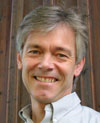 |
BJØRN Z. EKELUND |
| REGINA HANEL Regina Hanel is the Executive Secretary at the Heliopolis University for Sustainability in Cairo, Egypt. The 31st Dignity Conference took place at SEKEM ecovillage and Heliopolis University in September 2018. |
|
SAMEH SOBHY KHOUZAM |
|
• From Death Back to Life, Cairo, Egypt, on 15th September 2018
 Sameh Khouzam was so kind and created a drawing that makes visible Evelin Lindner's "journey from death back to life," a journey from seeing all the atrocities perpetrated on planet Earth by human beings toward each other, to being lifted out into a brighter universe. See a video explanation from 15th September 2018 and hear the soundtrack of the film 2001: A Space Odyssee, that accompanied Evelin's "Set years." Akhet is an Egyptian hieroglyph that represents the hills where the sun rises or sets. Nut is the goddess of the sky in the Ennead of ancient Egyptian religion. She was seen as a star-covered nude woman arching over the earth. Set is a god of the desert, storms, disorder, violence, and foreigners in ancient Egyptian religion. Sameh Khouzam was so kind and created a drawing that makes visible Evelin Lindner's "journey from death back to life," a journey from seeing all the atrocities perpetrated on planet Earth by human beings toward each other, to being lifted out into a brighter universe. See a video explanation from 15th September 2018 and hear the soundtrack of the film 2001: A Space Odyssee, that accompanied Evelin's "Set years." Akhet is an Egyptian hieroglyph that represents the hills where the sun rises or sets. Nut is the goddess of the sky in the Ennead of ancient Egyptian religion. She was seen as a star-covered nude woman arching over the earth. Set is a god of the desert, storms, disorder, violence, and foreigners in ancient Egyptian religion. |
|
| • Thank-You to Sekem and Healing Wedding Day. Mary Bakhoum, Sameh Khouzam, and Evelin Lindner express their deep admiration and gratitude to the Sekem Ecovillage in Egypt, or, as Sameh Khouzam formulated it, the Life Village of Sekem. 15th September 2018. | |
 |
NATHALIE HAAVIMB My name is Nathalie Haavimb and I am exploring the mystery of life and love. I graduated from the Norwegian University of Science and Technology (NTNU) in Trondheim, Norway, with a Masters degree in mechanical engineering and project management, and the master thesis “Execution Model for Rural Water Projects in Developing Nations,” where I also accompanied NORAD in an excursion to Tanzania to review former water projects. From 2009-2014 I lived in India, where I among other things studied Ayurveda, started a company with my partner called “Echo Earth Healing and Meditation Centre,” started a yoga and naturopathy centre called “Khaama Kethna”, and grew organic vegetable and lived very close to nature. I think peace comes if one first starts with making peace within oneself. I am endeavouring to be more true to my being and my quest at the moment is to find out more about my inner life and the female consciousness. |
| JOSHUA N. WEISS oshua N. Weiss is the Associate Director of the Global Negotiation Project at Harvard University. He received his Ph.D. from the Institute for Conflict Analysis and Resolution (ICAR) at George Mason University in 2002. Dr. Weiss has spoken and published on negotiation, mediation, and systemic approaches to dealing with conflict. In his current capacity he conducts research, consults with many different types of organizations, teaches courses on Negotiation, Mediation, and Conflict Management and Resolution, and practices the art and science of negotiation at the interstate, intrastate, and organizational levels. |
|
| KENNETH SUSLAK Dr. Kenneth Suslak is a Professor of Clinical Psychology and Interdisciplinary Studies at the Union Institute and University and a Clinical Psychologist for over 35 years with a specialization on the effects of war and oppression on children. He has provided consultation, treatment, and training services for professionals and indigenous workers in many countries, including Belarus, Latvia, Russia, Israel/Palestine, and the U.S. He has been involved with the Compassionate Listening Project in Israel and Palestine, a reconciliation program utilizing listening to all sides in intractable conflicts. He is currently studying the process of a number of reconciliation and peacemaking programs to determine whether there are consistent themes in "success". He has presented papers on his work at international conferences in Russia, Latvia, Canada, and the U.S. |
|
| HILDEGUNN NORDTUG Hildegunn Nordtug is also a member in our HumanDHS Global Coordinating Team. Hildegunn has just earned her Master's degree in Social and Community Psychology at the University of Trondheim. She wrote her thesis, Implicit Prejudice against Arab Immigrants. This thesis presents the duality of unconscious and conscious prejudice, and links it up to body language and unmonitored responses. She was also working as a research assistant for associate professor Ute Gabriel on an experiment about prejudice. Hildegunn has a wide interest in social and community psychology. Some of her interests are basic social psychology, community health, preventive work and violence. She is now working on a project called “Tolerence Nord-Trøndelag”, which has as a goal to reduce prejudice and enhance diversity in the region of Nord-Trøndelag in Norway. She happily accepts all ideas and suggestions on how to do this work. Please share your experiences and thoughts! Hildegunn will also have some lectures on prejudice at the Norwegian University of Science and Technology. |
|
| MAGGIE O'NEILL Maggie O'Neill is also a Member of the HumanDHS Board of Directors, the HumanDHS Global Advisory Board, the HumanDHS Education Team, and HumanDHS Research Team, as part of the core HumanDHS Research Management Team, among others, as advisor to our Refugees and Humiliation Project. She is furthermore a Member of the Academic Board of the Journal of Human Dignity and Humiliation Studies (JHDHS). Maggie O'Neill is a Professor in Criminology at the Department of Sociology at Wentworth College, University of York, United Kingdom, as well as Co-Chair of the Sex Work Research Hub, and Co-Chair of the UoY Migration Network. At York University, she is the Programme Director of the BA in Criminology and BA in Sociology with Criminology. Prior to that, until 2016, she was Professor in Criminology in the School of Applied Social Sciences at Durham University, UK. Until 2009, she was based in Criminology and Social Policy at Loughborough University. Prior to this she worked for eleven years in the Faculty of Humanities and Social Sciences at Staffordshire University and before that was ten years in the Department of Sociology at Nottingham Trent University. She co-edited Sociology (with Tony Spybey): the journal of the British Sociological Association from 1999-2002; she is a member of various professional associations including the National Network of Sex Work Projects and the British Sociological Association and British Criminology Association. She acts as a research consultant on community cohesion issues and has had commissions from the Home Office, and regional Local Authorities. Maggie researches the issue of prostitution, women's experiences, routes in to prostitution, and communities affected (since 1990) and forced migration (since 1998). An expert in participatory action research (working with people, groups, communities to create change) Maggie has a reputation for developing innovative culture work to imagine new ways of understanding and articulating the experiences of crime and victimization, that breach disciplinary boundaries and expand and enliven the methodological horizons of cultural criminology. Her theoretical concept of ethno-mimesis (the inter-connection of sensitive ethnographic work and visual re-presentations) is a methodological tool as well as a process for exploring lived experience, displacement, exile, belonging and humiliation. Research funding has been received from the AHRB; Joseph Rowntree Foundation; Home Office; Leicester Local Authority and Local Education Authority, East Midland Arts, Nottingham Trent and Staffordshire Universities. Books include: • Adorno, Culture and Feminism (Sage); • Prostitution and Feminism: Towards a Politics of Feeling (Polity); • Prostitution: A Reader (Ashgate) with Roger Matthews; • Gender and the Public Sector (Routledge) with Jim Barry and Mike Dent; • Sex Work Now (Willen) with Rosie Campbell. See also: • Humiliation, Social Justice and Ethno-mimesis, note presented at the 2005 Workshop on Humiliation and Violent Conflict, Columbia University, New York City, December 15-16, 2005; • together with Ramaswami Harindranath, Theorising Narratives of Exile and Belonging: The Importance of Biography and Ethno-mimesis in “Understanding” Asylum, in Qualitative Sociology Review, II (1, April 2006), pp. 39-52. • Forced Migration, Humiliation and Human Dignity: Re-Imagining the Asylum-Migration Nexus through Participatory Action Research (PAR), abstract presented at the 2006 Workshop on Humiliation and Violent Conflict, Columbia University, New York City, December 14-15, 2006. • Re-Imagining Diaspora through Ethno-Mimesis: Humiliation, Human Dignity and Belonging (2007). In: Reimagining Diasporas: Transnational Lives and the Media, edited by Olga Guedes-Bailey (Liverpool John-Moores University), Myria Georgiou (University of Leeds), and Ramaswami Harindranath (University of Melbourne). Published by Palgrave Publishers, UK. • Humiliation and Human Dignity: Conducting Participatory Action Research with Women Who Sell Sex(see www.safetysoapbox.co.uk), abstract presented at the 2007 Workshop on Humiliation and Violent Conflict, Columbia University, New York City, December 13-14, 2007. • "Making Connections: Ethno-mimesis, Migration and Diaspora," in Psychoanalysis, Culture & Society, 14, 289-302, September 2009, doi:10.1057/pcs.2009.5. • Humiliation, Social Justice and Recognitive Communities: Thinking about the Asylum-Migration-Community Nexus in the Context of HDHS, abstract presented at the 2012 Workshop on Transforming Humiliation and Violent Conflict, Columbia University, New York City, December 6-7, 2012. |
|
| FLOYD WEBSTER RUDMIN Floyd Webster Rudmin is Co-Director and Co-Coordinator of the HumanDHS Stop Hazing and Bullying Project and the HumanDHS World Gender Relations for Equal Dignity Project, as well as the HumanDHS Apology Project. He is also a member of the HumanDHS Advisory Board and Research Team. Floyd Webster Rudmin, Ph.D., has been a Professor of Social and Community Psychology at the University of Tromsø in Norway. He earned his B.A. in Philosophy in Bowdoin College, his M.A. in Audiology in SUNY, Buffalo, his M.A. in Psychology at Queen's University, Canada, and his Ph.D. in Psychology from Queen's University, Canada. His research interests include cognitive history (psychology of historical beliefs), psychology of ownership, cross-cultural psychology, statistical methods, peace research, and history of psychology. His paper Debate in Science: The Case of Acculturation won the 2004-2005 Klineberg Intercultural and International Relations Award given by SPSSI (Div. 9 of the APA). Please see here the full text version. Please see also: • Seventeen Early Peace Psychologists, in Journal of Humanistic Psychology, 31 (2, Spring), 1991, pp. 12-43. Altaf Ullah Khan commented (23rd July 2006, in a personal message): "This reminds me of George Herbert Mead's concept of Universals. He was also in favour of developing a universal human society where interactive/rational dialogue prevails. I had never studied psychology as a discipline, but in my journey for self-discovery I have read Freud and Jung and have also gone through mythology and Sufism. I remember one Sufi saying at the very onset of a book: Sufism is to avoid preconceptions." • co-authored with Kristina Ostvik, Bullying and Hazing Among Norwegian Army Soldiers: Two Studies of Prevalence, Context, and Cognition, in Military Psychology, 2001, 13 (1), 17-39. • G. B. Grundy's 1917 Proposal for Political Psychology: "A Science Which Has Yet to Be Created", in ISPP News, 12 (2), 2005, pp. 6-7. • Six Research Designs on Humiliation, abstract presented at Round Table 2 of the 2005 Workshop on Humiliation and Violent Conflict, Columbia University, New York City, December 15-16, 2005. • Charles Robert Richet: Pioneer of Peace Psychology, in Peace Psychology Newsletter, in press. • Daniel Droba Day (1898-1998): Attitudes Towards War As a Cause of War, i n Peace Psychology, in press. • How History Allows Insight into the Malady of American Militarism, abridged version published by CounterPunch, 13 (1, January 1-15), pp.1, 4-6, posted Feb. 17, 2006, at http://www.counterpunch.org/rudmin02172006.html as "Plan Crimson: War on Canada: Secret War Plans and the Malady of American Militarism." • Preventing Inadvertent Humiliation, abstract presented at the 2006 Workshop on Humiliation and Violent Conflict, Columbia University, New York City, December 14-15, 2006. • Franziska Baumgarten (1883 - 1970): Early Female, Jewish, Peace Psychologist, in Peace Psychology, in press. • The Apologies Project: Small Wins Ways to Reduce Militarizing Memories, abstracts presented at the 2010 Workshop on Transforming Humiliation and Violent Conflict, Columbia University, New York City, December 9-10, 2010. |
|
MATTHEW BURIAN |
|
| DANIEL L. SHAPIRO Daniel L. Shapiro, Ph.D., advises the HumanDHS Public Policy for Equal Dignity Project. He is the Associate Director of the Harvard Negotiation Project at Harvard Law School. He is on the faculty of Harvard Law School and Harvard Medical School's Department of Psychiatry. Trained in clinical psychology, his research and teaching focus primarily on the role of emotions in negotiation and international conflict management. Currently, he is working with Professor Roger Fisher on a book on how to deal with emotions in negotiation. Dr. Shapiro consults widely to governments, businesses, and school systems, and has developed conflict management programs both domestically and internationally. Through funding from the Soros Foundation, he developed a conflict management program that has reached nearly one million people in 22 countries across Eastern and Central Europe. Please see The Nature of Humiliation, note presented at the Workshop on Humiliation and Violent Conflict, Columbia University, New York City, November 18-19, 2004. Daniel Shapiro is leading HumanDHS's Public Policy for Equal Dignity project. He is teaching a course on Negotiation: Dealing with Emotions at Harvard Law School. |
|
| H. STEVEN (Steve, Stevie) MOFFIC, M.D. Steve Moffic is a psychiatrist who retired from clinical practice and his Tenured Professorship at the Medical College of Wisconsin in July, 2012. His career focus had been on ethical psychiatry and cultural psychiatry. His book, The Ethical Way: Challenges & Solutions for Managed Behavioral Healthcare (Jossey-Bass, 1997) has been the first book to ever be re-reviewed in Psychiatric Services, because 25 years later it was still so relevant. Since retirement, Dr. Moffic has been a lead blogger for three publications: Psychiatric Times, Behavioral Healthcare, and Over 65. For Psychiatric Times, he wrote "Humiliation and It's Impact on Our Patients and On Us" on July 30th, 2014. That led him to see that the ethical way may actually be on the way toward human dignity and thereby to Human Dignity and Humiliation Studies. Please see: • Cultivating Dignity Development In Our Grandchildren, abstract shared at the 2015 Workshop on Transforming Humiliation and Violent Conflict, Columbia University, New York City, December 3-4, 2015 (Pdf | video). • Celebrating Abraham L. Halpern Humanitarian Award Winner H. Steven Moffic, MD, June 13, 2024. |
|
| SAYAKA FUNADA-CLASSEN Sayaka Funada-Classen is Associate Professor at Tokyo University of Foreign Studies (2008-). Sayaka holds a Ph.D. in International Relations from Tsuda Colledge. She is the author of The Origins of 'Unity' and 'Division' in Contemporary Mozambican History, published in Japanese by Ochanomizu Shobo in 2007, awarded by Japan Association of African Studies in 2008. |
|
| ELISABETH E. SCHEPER Elisabeth E. Scheper is a Senior Advisor for Inclusive Mediation and Gender at the United Nations Department of Political and Peacebuilding Affairs, with special interest in Peacebuilding, Inclusive Mediation, Gender, and Civil Society. She researches and writes about innovative civil society conflict prevention approaches as a Fellow and Associate at Weatherhead Center for International Affairs, Harvard University, since 2000. In collaboration with the University of Amsterdam she has completed her PhD thesis on the role of Asian Non-Governmental Organisations (NGOs) in preventing deadly conflict in divided societies. Elizabeth Scheper holds a double MA in Geography and Regional Development Planning for Developing Countries and Europe. She has advised NGOs in Burma, Cambodia and Sri Lanka with programmes in peace building, human rights, governance and security, and poverty eradication. She has been the Director of Program Development of the World Conference of Religions for Peace, based in New York. From 1990 - 2000, Ms. Scheper was Novib's - Oxfam Netherlands - Head of the East and South East Asia Department and developed and managed its grant making programme aimed at poverty eradication, civil society building, human rights and advocacy in ten Asian countries. In addition she chaired various international boards and committees, like Sri Lanka NGO Forum, INFID (Indonesia) and Padek (Cambodia), and initiated voter education and free legal aid projects in the Mekong region and Sri Lanka. Previously, Ms. Scheper was employed by the Dutch Ministry of Foreign Affairs from 1982 and worked five years in Nepal as Deputy Resident Representative to manage the Dutch volunteers and bilateral programmes in remote areas. Please see some of Scheper's work here: The Challenges for Local NGOs in the Globalising Civil Society, key note speech at the Rise of Civil Society in East Asia conference, a joint Sophia University/UNDP initiative, April 2000, Tokyo/Japan; On the Right to Development, Human Security and a Life in Dignity, 2001, Harvard University, Weatherhead Center for International Affairs' Fellow publication,www.wcfia.harvard.edu/fellows/papers00-01/scheper.pdf; On the Brink: Prevention of Violent Conflict and Protection of Children in Deeply Divided Societies, paper presented at the Conference on Religious Women, Children and Armed Conflict, World Conference of Religions for Peace and UNICEF University of Cordoba, Spain, March 18 - 20, 2002; Role of Women in Violent Conflict Prevention and Negotiation, paper presented at the Women, Peace Building and Constitution Making Conference, organised by the International Center of Ethnic Studies, May 3-5, 2002, Colombo, Sri Lanka. |
|
| NOAM EBNER Born in the US and residing in Israel, Noam is an attorney and an accomplished mediator. Directing a Jerusalem-based mediation center, he has dealt with hundreds of conflicts as a third party neutral or advisor. Settling day-to-day conflicts in a conflictual locale, Noam has dealt with issues ranging from divorce mediation and business disputes to the Israeli - Palestinian conflict. He has founded Israel 's first Campus Mediation Center at Bar-Ilan University, and serves on advisory boards and panels of various community mediation centers, Bar Association committees and Israeli-Palestinian dialogue groups. Noam balances teaching with practice, and believes in a hands-on method that encourages students to begin practicing their new skills as soon as they enter the classroom. Using this approach, Noam has taught and trained in Israel's leading universities, colleges and organizations and is a faculty member of Sabanci University's Graduate Program on Conflict Analysis and Resolution in Istanbul, Turkey. |
|
| SOPHIE SCHAARSCHMIDT Sophie Schaarschmidt is also a Member of the HumanDHS Research Team, and the HumanDHS Research Team. She was born nearby Dresden, Germany, 27 years ago. She has lived and studied in several countries, including Great Britain, Netherlands and Malta. She is a doctorate student of psychology working at the "FernUniversität" in Hagen, Germany (a distance learning university). Sophie writes: In my free time I've been actively involved in the Youth Programme of the European Commission (EC) by volunteering, setting up (inter)national youth projects and training. Over the last years I have become interested in the co-operation between Europe and the Middle East. My Master thesis focussed on differences in cultural values of youth and youth workers engaging in the Euro-Mediterranean Youth Programme of the EC which aims at creating co-operative youth projects in both regions. I was involved in establishing CYT (Conyoungtion) association, a Dutch based association that facilitates and implements intercultural youth projects with a specific focus on cooperation with partners from the Middle East. My dissertation will now focus on (emotional) barriers in dialogue between youth from Israel and Palestine, which is of specific interest for me. I've visited Israel and the Occupied Palestinian Territories (Westbank) several times, and I've lived there for a period of 3 months. For my future I envision to get involved in projects in that region that are aimed at creating an atmosphere for and facilitating dialogue for peaceful change. I like working in the spirit of the HumanDHS group because I really believe that here we're dealing with a core issue of human relations and peace, be it in the micro or the macro level. I feel very connected to the vision and concept and the ambition to research, publish and put into practise models of how human relations can improve through mutual respect, dignity and appreciation and the avoidance of humiliation, counterhumiliation, shaming and blaming. This connects very well with the concept of non-violent communication which I find very important and valuable, especially in the field of peace work. I really believe that in this HumanDHS group, we're dealing with a core issue of human relations and peace, be it in the micro or the macro level. I feel very connected to the vision and concept and the ambition to research, publish and put into practise models of how human relations can improve through mutual respect, dignity and appreciation and the avoidance of humiliation, counterhumiliation, shaming and blaming. This connects very well with the concept of non-violent communication which I find very important and valuable, especially in the field of peace work. Please see here some of Sophie's publications: • Cognitive and Emotional Ingroup-identification of Youth in Israel and Palestine, note presented at Round Table 1 of the 2005 Workshop on Humiliation and Violent Conflict, Columbia University, New York City, December 15-16, 2005. • Samen in Zee: Israelis and Palestinians in the Same Boat Camp. Sophie Schaarschmidt (2007) • Contribution presented at the 2007 Workshop on Humiliation and Violent Conflict, Columbia University, New York City, December 13-14, 2007. |
|
| ERIN HILGART Erin Hilgart has an organization development and leadership strategy consultancy focused on helping organizations to prepare their teams for the future of work. Her research focuses on professional identity shift and how people transition effectively to the the changing requirements of work. She is affiliated with the Columbia Business School, an LEAD coach. Her special areas of interest, study, or research are professional identity shift, career development, personal transitions / change. Three things she would like others to know about her: 1. I like to keep learning 2. I like deep and meaningful dialogue 3. I moved with my family from NYC to Woodstock, NY, 8 years ago... and now that our daughters are 7 and 9, we are considering moving back to the city! Erin holds a doctorate in Adult Learning and Leadership and an MA in Organizational Psychology from Teachers College, Columbia University. In 2010, Erin started an organizational development and leadership strategy firm, Hilgart, where she and her team enable leaders and employees at all levels to prepare for the future of work in the post-industrial, post-knowledge worker era. She looks back on an international career at Deutsche Bank, where she was a Vice President holding Finance Transformation and Talent & Leadership roles in Singapore, London & New York. Erin has travelled to more than 60 countries, and is from a small town in rural Wisconsin. Her research interests include career transition, role identity, and systemic approaches to learning and change. • Dignilogue for Leaders, Helpers, and Healers: Dignity and Authentic Leadership (Video | Video of reflections after the dignilogues on Zoom), contribution to the 2024 Workshop on Transforming Humiliation and Violent Conflict, titled "Toward Dignity for All: Courageously Connecting as Leaders, Helpers, and Healers," hybrid, co-hosted online and in person by the Morton Deutsch International Center for Cooperation and Conflict Resolution at Teachers College, Columbia University, New York City, December 6, 2024. |
|
| BEATRICE JACUCH Beatrice Jacuch is also a Member in the HumanDHS Global Core Coordinating Team and Editor of the World Language for Equal Dignity project. She is a clinical psychologist currently interning at the Prague Psychiatric Center in the Czech Republic where she provides psychotherapy and assessment. She received her Masters degree in clinical psychology from the Leiden University in the Netherlands. Her dissertation was on psychological resilience to terrorism and combat trauma in a sample of civilian and military personnel in Iraq. The aim of this study was to discover and identify factors that contribute to increased resilience. The study, led by Anne Speckhard, is still ongoing. For several years Beatrice has worked on various research projects investigating issues such as: trauma , posttraumatic stress disorder in Holocaust survivors, terrorism and its psychological consequences, and fostering resilience to terrorism. In Prague, next to research and clinical work, she volunteers for Amnesty International. |
|
| MICHAEL DAHAN Michael Dahan is lecturer in communication studies and political science at Ben Gurion University of the Negev. His main research interests include civil society organizations and ICTs; transnational civil society; new media, politics, and society; cultural aspects of ICTs; intercultural dialogue; coexistence issues and comparative politics. Much of his work focuses on the Middle East. He has published on all of these topics. |
|
| REBECCA ANN KLEIN Rebecca Ann Klein is interested in creating effective, culturally sensitive nutrition programs within the field of Public Health. She is currently a student at Tufts University, working for a Master of Science in Food Policy and Applied Nutrition, with the aim to gain skills to run international health projects, and/or work with the politics and policies that affect the global food supply. She also takes classes at Tufts' school of International Law and Diplomacy. Earlier, Becca completed a year of volunteer service through the AmeriCorps* VISTA program where she spent her time coordinating a teaching garden with Oregon Food Bank serving Washington County in Hillsboro, OR, USA. She has traveled extensively and is eager to do more. Becca is a graduate of Hampshire College in 2001 with a concentration in Nutritional Anthropology. |
|
| ASHRAF SALAMA Professor Salama is is also a Member of the HumanDHS Global Advisory Board, the HumanDHS Reseach Team, and the Director and Coordinator of the HumanDHS World Architecture for Equal Dignity Project. Dr. Ashraf Salama Dr. Ashraf Salama is Professor of Architecture in the Architectural Engineering Program of Qatar University in Doha. Prior to that, he was Associate Professor of Architecture at the Department of Architecture, King Fahd University of Petroleum and Minerals-KFUPM. Please see here the website he developed to include his work and his wife's work http://www.arti-arch.org. He was the Director of Research and Consulting at Adams Group Consultants in Charlotte, North Carolina, USA (2001-04). He is a licensed architect in Egypt, trained at Al Azhar University and North Carolina State University, Raleigh, NC, USA. He is Associate Professor of Architecture, Al Azhar University, Cairo (on leave of absence), and former Chairman of the Department of Architecture, Misr International University in Cairo (1996-01). Dr. Salama has written over 50 articles and papers in local and international conferences and archival journals, and trade magazines; published three books on Architectural Education: Designing the Design Studio, Human Factors in Environmental Design, and Architectural Education Today; delivered lectures and presentations in over 25 countries; and contributed widely to international publications. He was member of the UIA/UNESCO International Committee of Architectural Education, and the Director of Architectural Education Work Program of the International Union of Architects-UIA (1995-00). He is currently co-Convener of the International Association for People-Environments Studies-IAPS Education Network. He was the recipient of the first award of the International Architecture Design Studio, University of Montreal, Canada, 1990, and in 1998 he won the Paul Chemetove Prize for his project on Architecture and the Eradication of Poverty, a United Nations International Ideas Competition. Dr. Salama served as a consultant to the Egyptian Ministries of Tourism and Culture. He also served as member in the international jury for projects within the context of the revitalization of Sarajevo, Bosnia, and a UIA Jury member in the international competition on designing a central urban park in La Paz, Bolivia. He has been appointed a technical reviewer for the Aga Khan Award for Architecture in Geneva, Award Cycle (1998-01). Salama has been involved with the Community Development Group of the College of Design, North Carolina State University (1993-95). His academic experience includes teaching courses on Programming and Space Planning, Research and Design Methods, Applications of Socio-Behavioral Studies in Design, and Interior Design, Architectural and Community Design Studios. His professional experience includes consultancy for several government and public agencies, and managing design projects from inception through programming and space planning, encountering users and environmental constraints. His recent research places emphasis on design studio teaching practices, and workplace and learning environments. Please see some of Dr. Ashraf Salama's work here: • Incorporating Knowledge about Cultural Diversity into Architectural Pedagogy (1999). • Skill-Based / Knowledge-Based Architectural Pedagogies: An Argument for Creating Humane Environments, paper given by Ashraf Salama at the 7th International Conference on Humane Habitat-ICHH-05 – The International Association of Humane Habitat IAHH, Rizvi College of Architecture, Mumbai, India, January 29-31, 2005. • Shores of the Mediterranean: Architecture as a Language of Peace, co-edited by Ashraf Salama with colleagues from Napoli, Italy, Donatella Mazzoleni, Giuseppe Anzani, Marichela Sepe, and Maria Maddalena Simone, 2005. Intra Moenia, Rome and Naples, Italy: Edizioni. • Patterns of Change in Work Environments: A Process-Employee Centered Paradigm, introductory speech given by Ashraf Salama at the 8th International Conference of IAHH-the International Association for Humane Habitat- Sustainable and Humane Workplaces. Mumbay, India, January 27-29, 2006. • Architecture as Language of Peace: Democracy and Collaborative Design Processes, a short course by Dr. Ashraf Salama. • PLADEW: A Tool for Teachers Awareness of School Building Sustainability: The Case of Carmel School, Mathews, North Carolina, in the Global Built Environment Review-GBER, International Center for Development and Environment Studies ICDES, Vol. 5, 2005, Issue (1), Edge Hill, Lancashire, United Kingdom. ISSN 1474 6824. • A Process Oriented Design Pedagogy: KFUPM Sophomore Studio, in the Journal of the Center for Education in the Built Environment-CEBE Transactions, University of Cardiff, Vol. 2, 2005, Issue (2), Cardiff, United Kingdom. ISSN 1745-0322. • Design Studio Teaching Practices: Between Traditional, Revolutionary, and Virtual Models, with Guest Editor Ashraf Salama, Ph.D., Professor of Architecture, in Open House International (OHI) (Academic Refereed Journal), Special Issue, Volume 31, No.3, September 2006 (Contact "Carol Nicholson" Carol.Nicholson@ribaenterprises.com). • Symbolism and Identity in the Eyes of Arabia’s Budding Professionals, in LAYERMAG... An Online Magazine on Architecture, Art, and Design, and Media Studies. • A Lifestyle Theories Approach for Affordable Housing Research in Saudi Arabia, in the Emirates Journal for Engineering Research, Vol. 11, 2006, Issue (1), United Arab Emirates University, Al Ain, UAE. • Learning from the Environment: Evaluation Research and Experience Based Architectural Pedagogy, in the Journal of the Center for Education in the Built Environment-CEBE Transactions, University of Cardiff, Vol. 3, 2006, Issue (1), Cardiff, United Kingdom. ISSN 1745-0322. • A Typological Perspective: The Impact of Cultural Paradigmatic Shifts on the Evolution of Courtyard Houses in Cairo, in the Journal of the Faculty of Architecture, Middle East Technical University. Vol. 23, 2006, Issue (1). METU-JFA, Ankara, Turkey. • Ashraf is the Chief-Editor of the new Journal ArchNet-IJAR, an interdisciplinary scholarly online publication of architecture, planning, and built environment studies. Please see here an outline and the submission notes to authors. The journal aims at establishing a bridge between theory and practice in the fields of architectural and design research, and urban planning and built environment studies. It reports on the latest research findings innovative approaches for creating responsive environments, with special focus on developing countries. The journal has two international boards; advisory and editorial. The range of knowledge and expertise of the boards members ensures high quality scholarly papers and allows for a comprehensive academic review of contributions that span wide spectrum of issues, methods, theoretical approach and architectural and development practices. • New Book! Design Studio Pedagogy: Horizons for the Future, by Ashraf M. Salama and Nicholas Wilkinson (editors), Gateshead, Tyne and Wear, UK: The Urban International Press (2007). ISBN: 1-872811-09-04. The Urban International Press, P.O Box 74, Gateshead, Tyne & Wear, NE9 5UZ, UK. e-mail Carol Nicholson: carol.nicholson[@]ribaenterprises.com for more information. |
|
| Hayal Köksal, Ph.D., is a teacher, trainer, researcher, and author. She is the
Turkish Founder of the “CMS-QOMER Initiative for Peace Education.” She is the advisor and coordinator of the Innovative Teachers Program of Microsoft Turkey, and consultant of Educational Quality, Leadership and Project Management. Dr. Köksal was born in Balikesir, Turkey in 1956. She graduated from Izmir Teachers' Training College in 1976, and Educational Faculty of Marmara University in 1985. She received her MA in English Language Teaching from Gaziantep University in 1992, and her Ph.D. in Educational Sciences in 1997. Dr. Köksal has been dealing with Total Quality in Education since 1992, and in 2000, she co-founded the Turkish Center for Schools of Quality with world-wide renowned quality expert John Jay Bonsting. She has been lecturing at various outstanding Turkish Universities as a part-time instructor as a way of publicizing quality-oriented education, and working as an educational quality consultant, researcher, and book writer. Dr. Köksal wrote seven books about Total Quality in Education and more than 100 articles and if required they are available. The last three books are: A Bunch of In-Class Activities (Based on the Structuralism) ( Istanbul, Turkey, Marduk Publishing, 2006), Power of Unity in Education and Imece Circles at Classroom and in School ( Istanbul, Turkey, Akademi Publishing, 2004), and Everything About Quality ( Istanbul, Turkey, Akademi Publishing, 2003). Dr. Köksal has been coordinating the Innovative Teachers project of Microsoft Turkey and is also trying to publicize the Students' Quality Circles philosophy, Imece Circles in Turkish, at Turkish schools. She conducted nearly 200 circles till the end of 2006. Dr. Köksal is a member of ASCD (Association for Supervision and Curriculum Development), English Language Education Association (Founder of Quality in ELT, SIG), Democratic Principles Association (Board member), The New Generation Village Institutions Society (One of the founders and board members of Istanbul branch), and the association for Continuous Improvement (The founder & the president). Dr. Köksal has received the Honorary Medal of the Ministry of Tourism due to her leadership of Archeological projects, and golden and silver medals of NYDT in South Africa. She has also received the Business-Education Partnership Award of the Center for Schools of Quality together with Microsoft Turkey. Dr. Köksal is the Turkey representative of the Center for Schools of Quality of USA, the Turkish National Youth Development Trustee (NYDT) of South Africa, the Turkish General Director of the World Council for Total Quality and Excellence in Education (WCTQEE) of India, and a member of the advisory board of the Center for Quality People and Organizations (CQPO) in the USA. She is also in collaboration with the International Academy for Quality Circles (IAQC), established by Donald Dewar, Dallas Blankenship, and Dr. John Man. She won an award in the World Bank 2005 Turkey Innovative Marketplace competition through her Imece Circles Project in May 2005. On 4th December 2005, she was awarded the World Quality Leader award by the WCTQEE. During the winter months of 2006, her project about Istanbul was among the 75 projects that will lead Istanbul through 2010 as a European Cultural Capital City. Her ICT Project which has been supported by Microsoft Turkey has gained great acclaim among the national and international teams and it is going to be publicized through the Educational Technologies Department of the Ministry of National Education to train innovative students. Dr. Köksal is giving some elective and compulsory courses at the Educational faculty of Bogaziçi University (like “School Experience,” “Introduction to Teaching Profession,” “Innovative Teaching and Quality in ELT”); at Yildiz Technical University (Personal Quality and Leadership), at the MA Program of Bahçesehir University (Human Resources Management), and “Quality in Training” at Yeditepe University. Dr. Köksal is married with one daughter. |
|
DUKE DUCHSCHERER |
|
| DHARM P.S. BHAWUK Dharm P. S. Bhawuk, is a Member of the HumanDHS Advisory Board, and Advisor of HumanDHS's World Films for Equal Dignity Project. Dr. Dharm P. S. Bhawuk (Ph. D. University of Illinois at Urbana-Champaign) is a Professor of Management and Culture and Community Psychology at the University of Hawai'i, Manoa, Honolulu. He has research interests in indigenous psychology and management, cross-cultural training, intercultural sensitivity, diversity in the workplace, individualism and collectivism, culture and creativity, and spirituality. He is originally from Nepal, and has published more than 60 papers and book chapters and made more than 150 presentations at internationally at conferences universities. He has edited special issues of journals on Globalization and Diversity (IJIR, 2008, volume 32, no. 4) and Indian Psychology (PDS, 2010, volume 22, no. 1). He is the author of the book Spirituality and Indian Psychology: Models from the Bhagavad-Gita (Springer, 2011) and co-editor of the book Asian Contributions to Cross-Cultural Psychology (Sage, 1996). He has received many awards including Best Paper Award from the Academy of Management (2009 and 1996), the Distinguished Service Award from the East West Center (1989), and the Lum Yup Key Outstanding MBA Student Award from the University of Hawai‘i (1990). He is a Founding Fellow of the International Academy for Intercultural Research and was H Smith Richardson, Jr. Visiting Fellow, Center for Creative Leadership for 2009-10. (bhawuk[@]hawaii.edu) Please see: • “From Social Engineering to Community Transformation: Amul, Grameen Bank, and Mondragon as Exemplar Cooperatives” by Bhawuk, Mrazek, & Munusamy, 2009, which received the Rupe Chilsom Practical Theory Paper Award from the Organization Development and Change Division of the Academy of Management, 2009. • Humiliation and Human Rights in Diverse Societies: Forgiveness & Other Solutions from Cross-Cultural Research, paper first presented at the Third Annual Meeting on Human Dignity and Humiliation Studies, September 16-18, 2004, Maison des Sciences de l'Homme, Paris, France, developed in 2009. |
|
| EDWARD J. EMERY Edward J. Emergy is also a Member of the HumanDHS Research Team and HumanDHS Research Team. He is the Chief Representative to the United Nations for World Information Transfer, an international NGO in Genral Consultative Status with the Economic and Social Council at the UN. He is also a Senior Partner with Ethical Futures and a psychoanalyst in private practice. Dr. Emery has lectured and taught internationally. Please see: • An Ethics of Engagement: Shame and the Genesis of Violence, paper presented at a Conference of the Peacemaker Corps Association in Honor of Sergio Vieira de Mello "Peacemaking in the Family: Nuclear, Community and Global" United Nations Headquarters, February 27, 2004. Forthcoming in Psychotherapy and Politics International in 2004 (2) 3. • Musings on Shame and Idolization, abstract presented at the 2007 Workshop on Humiliation and Violent Conflict, Columbia University, New York City, December 13-14, 2007. |
|
| MIRIAM PINA Miriam Pina is a Brazilian, mother of seven children, a writer, translator-interpreter, and teacher of English. She spent five years in Angola (19991-1996), originally to work for the Focolare Movement, but she also worked for the U.N. The place she worked in was called United Nations Angola Verification Mission. She has written a series of articles on her experience (some with a focus on Humiliation) for the Brazilian Focolare magazine CIDADE NOVA. |
|
| TREVOR L. BALLANCE Trevor L. Ballance is a lecturer and researcher at Josai International University, Japan, in the Department of International Exchange. He teaches courses on NGO issues and case studies on the NGO/business relationship. In addition to his teaching commitments, Trevor also works with local NGOs to provide students with work experience and is currently helping set up an NGO Support Center at the University. He was involved in setting up an NGO Certification Program at Temple University Japan as well as running courses in English for NGOs at The Asia Foundation, Nagoya NGO Center and the Council of Local Authorities for International Relations. Trevor Ballance is the author of a textbook for university students on NGOs and articles on the role of NGOs, and the sustainability of development projects. He is a member of Amnesty International Japan and a Nepalese Development NGO, Asha Ko Kiran. He is currently studying for an MA in NGOs and Sustainable Development. His research interests include NGOs as learning organizations; the relationship between the Japan International Cooperation Agency and NGOs; and the development of effective indicators in the assessment of project sustainability. |
|
| NEIL RYAN WALSH Neil Ryan Walsh is the Director and Coordinator of the HumanDHS Japan for Equal Dignity (JED) project. He is currently working with the Kaminokawa-machi board of education as a member of the Japan Exchange and Teaching Program (JET Program). Neil has recently completed a part time internship with the United Nations Department of Public Informations Committee on Non-Governmental Organizations (12/05 6/06), he also works as an assistant to media psychologist and disaster relief expert Dr. Judy Kuriansky. Neil has also worked in the areas of psychotherapy research, psychological research, and psychotherapy and assessment. Neil was a co-author of, Theatre for Peace in the Israeli Palestinian Conflict, with composer Lorenzo Toppano and psychologist Judy Kuriansky In Programs for Peace in the Holy Land edited by Judy Kuriansky and published by Praeger Press. Neil was also the co-author with Evelin Lindner and Judy Kuriansky of Humiliation or Dignity in the Israel Palestine Conflict in Terror in the Holy Land, edited by Judy Kuriansky and published by Praeger Press. Neil has recently presented, “The Impact of Humiliation on Conflicts and Disasters: Enhancing Dignity in the Israeli-Palestinian Conflict,” in a panel on terrorism to the IV International Conference on Stress and Traumatic Studies. Buenos Aires, Argentina, and Student Internships at the United Nations: "Psychology and the development of Civil Society," at a psychology conference at Pace University in a panel on international psychology sponsored by the American Psychological Associations division of international psychology (division 52). Neil has a B.A. from St. Johns University in Queens, New York in East Asian Studies and Psychology and an M.A. from the New School for Social Research in Psychology with a concentration in Substance Abuse and Mental Health Counseling. Neil has also studied at the Faculty of Comparative Culture at Sophia University in Tokyo, Japan from 2001-2002. Neil is an alumnus of the McNair Scholars Program, a recipient of the National Security Education Programs David L. Boren Scholarship, the Freeman Foundations Freeman Asia scholarship, is a member of Psi Chi the National Honors Society in Psychology, and a recipient of the Golden Key and Silver Key in East Asian Studies from St. Johns University. Please see: • a video of Neil's wonderful contribution to our 2005 Workshop on Humiliation and Violent Conflict, Columbia University, New York City, December 15-16, 2005. • Yasukuni Shrine: Preventing Humiliation for East Asia, Preserving Dignity for Japan’s War Dead, abstract prepared together with Kazuyoshi Kawasaka for the Second International Conference on Multicultural Discourses, 13-15th April 2007, Institute of Discourse and Cultural Studies, & Department of Applied Psychology, Zhejiang University, Hangzhou, China, as part of the 9th Annual Meeting of Human Dignity and Humiliation Studies. |
|
| NEIL ALTMAN Neil Altman is co-editor of Psychoanalytic Dialogues: A Journal of Relational Perspectives and Associate Clinical Professor in the Postdoctoral Program in Psychotherapy and Psychoanalysis at New York University. He is author of the The Analyst in the Inner City: Race, Class, and Culture through a Psychoanlaytic Lens and co-author of Relational Child Psychotherapy. He is a member of Psychotherapists for Social Responsibility. Please see here Humiliation, Retaliation and Violence, in Tikkun Magazine, January/February 2004. |
|
EINAR STRUMSE |
|
| KATRINE FANGEN Katrine Fangen is also a Member of the HumanDHS Research Team. Katrine Fangen, Ph.D., is a Professor in Sociology at the Department of Sociology of the University of Oslo. She has published several books and journal articles within the research-field of racism, national, political and ethnic identity, stigmatisation and youth subcultures. Her MA-thesis was a study of three political youth groups in Eastern Germany in the period before, during and after the unification of the two German states (in 1990). This study examines the adaptation strategies and identity work among east-German communist youth, anarchist youth and neo-Nazi youth from Berlin, Leipzig and Weimar. Fangen's PhD thesis (Pride and Power - a Sociological Interpretation of the Norwegian Radical Nationalist Underground Movement, Department of Sociology, University of Oslo, 1999) is a study of Norwegian neo-Nazi youths, which, similar to her MA-thesis, is based on a combination of participant observation (one year) and in depth interviews. This thesis examines identity work, ideology, style, violence, gender-differences and interpersonal interaction among the Neo-Nazis. Attention is also paid to how society can prevent these kinds of groupings, and how one can encourage young people who join these groups to leave. This study is also published in two Norwegian books: • A Book About Neo-Nazism Oslo : Universitetsforlaget, 2001. • Behind Neo-Nazism Oslo : Cappelen, 2002. It is as well published (among others) in the following journal articles and book-chapters: • 'Separate or Equal? The Emergence of an All-Female Group in Norway 's Rightist Underground', Terrorism & Political Violence 9:3, 1997. • 'Right-Wing Skinheads. Binary Oppositions and Working-Class Nostalgia', Young (Nordic Youth Research Journal) No. 3, 1998. • 'On the Margin of Life. Life-Stories of Far-Right Activists' Acta Sociologica, No. 4, 1999. • ”'Radical nationalism': What are the key contemporary conceptual and theoretical issues?” Sosiologisk årbok, nr. 1, årgang 5.1, 2000. • 'Living out our Ethnic Instincts. Ideological Beliefs among Right-Wing Activists in Norway ', Jeffrey Kaplan and Tore Bjørgo: Nation and Race: The Developing Euro-American Racist Subculture; Boston : Northeastern University Press, 1998. • 'A Death Mask of Masculinity. The Brotherhood of Norwegian Right-Wing Skinheads', Søren Ervø and Thomas Johansson (eds.) Among Men. Moulding Masculinities vol. 1 (Hants: Ashgate Publ. Ltd., 2003). • 'Eastern Germany 1990. Youthculture as adaption to a changing society' in: Manuela du Bois-Reymond, Lynne Chisholm, Sibylle Hübner-Funk, Burkhardt Sellin (eds.): Youth in the European Context. A Scientific Reader,1994. Finally, Fangen has published research reports on forced marriages and a study of living conditions and life quality among people suffering from HIV/AIDS. She has also published several research reports on racism and integration of immigrants. Apart from her PhD-thesis, her main publication so far is a lecture book in participant observation which has been published in Norwegian and Swedish: • Deltagende observasjon [Participant Observation], Oslo: Fagbokforlaget, 2004. • Deltagande observation [Participant Observation], Stockholm: Liber förlag, 2005. Katrine's present study is a five year long study of identity work, integration and mental health among Norwegian Somali immigrants. Please see Humiliation Experienced by Somali Immigrants in Norway, in Journal of Refugee Studies, 19 (1, March), 2006; Katrine developed this article from a paper presented at the Annual Meeting of Humiliation Studies, Maison des Hommes, Paris, 15th-18th of September, 2004. |
|
| ØYVIND EIKREM Øyvind Eikrem (b. 1973), Ph.D., is also a Member of the HumanDHS Research Team. Øyvind is the head (instituttstyrer) of the Institute of Culture and Humanities (Institutt for kultur- og humanistiske fag, IKH) at the Telemark University College (Høgskolen i Telemark), in Bø, Telemark. Earlier, he has been Associate Professor of Social Sciences and of Mental Health at the University College of Stord/Haugesund, Norway. He studied social anthropology, clinical psychology and philosophy at The Norwegian University of Science and Technology, ending up with postgraduate degrees in all three fields. Eikrem obtained his PhD in 2005 from the same institution on a dissertation on the magic and mythic dimensions of modern economic life. Eikrem has done extensive ethnographic fieldwork in The Netherlands Antilles and in Colombia. His research has focused on ethnicity and identity, economic anthropology, psychological anthropology, the psychological consequences of Colombian violence and terror, the nature of health and its cultural variability, and on the theory of the social sciences. He also has strong interests in art and philosophy, having published on the philosophies of Foucault, Nietzsche and Schopenhauer, among others. Eikrem has a private practice as a clinical psychologist and he is also a member of the NGO Building Peaces, working closely with Rais Neza Boneza and Vegar Jordanger. He is married and has a daughter. |
|
| PATRICIA RODRIGUEZ MOSQUERA Patricia Rodriguez Mosquera, Ph.D., is also a Member of the HumanDHS Research Team. She studied psychology at the Autónoma University of Madrid (Spain) and the University of Amsterdam (UvA, The Netherlands). She obtained her Ph.D. from the University of Amsterdam in 1999. Her Ph.D. involved a series of cross-cultural studies on the role of honor in emotion. She was awarded a post-doctoral research grant from the Netherlands Organisation for Scientific Research (NWO) to continue her work on honor cultures. She worked as a post-doctoral researcher and as Assistant Professor at the Department of Social Psychology, University of Amsterdam. She is currently Assistant Professor at the School of Social Sciences and Law, Brunel University, UK. Her research focuses on the interplay between culture and emotion. She does research on a variety of emotions: pride, shame, anger, envy, and happiness. She has studied emotions in a variety of cultures and geographical regions: Southern Europe, Northern Europe, North-Africa, Middle-East, the Caribbean islands, U.S.A. Her work on humiliation focuses on the role of this emotion in insult-related conflict. She is especially interested in the situational, cognitive, and behavioral correlates of humiliation. Please see: • Humiliation and Honor, note presented at Round Table 1 of the 2005 Workshop on Humiliation and Violent Conflict, Columbia University, New York City, December 15-16, 2005. • Humiliation and Racism, paper presented at The National Conference on Racism in Global Context, 9th-11th November 2007, Murdoch University, Australia. • Rodriguez Mosquera, P.M., together with Agneta H. Fischer, Antony S. R. Manstead, and Ruud Zaalberg (2007) Attack, Disapproval, or Withdrawal? The Role of Honor in Anger and Shame Responses to Being Insulted, Cognition and Emotion, in press. |
|
| ROSARIO GALVAN Rosario Galván is an international advisor on context-driven intelligence for ethical and sustainable global development. As a senior consultant and researcher she matches technological promise with environmental, socioeconomic, ethnographic, and geopolitical realities for greater climate/infrastructure resilience, sustainable ownership, dignity, and scalable impact, worldwide. Her on-site country work experience spans 23 countries across 4 continents in the environmental, communication and international development sectors, within private, public and non-profit settings. She has an specialty as consultant, evaluator, and team leader in the LAC region (WB/EU/IDB/UNEP/national government-funded): participatory and community-driven projects in GIS and Remote Sensing-based infrastructure, sanitation/water, land use planning, disaster management, tourism, and natural resource sectors. Benefiting underserved and vulnerable urban and rural population in remote rainforest and coastal/island areas -indigenous peoples, ethnic minorities, women, youth. For over 30 years Rosario has synthetized a vocation for the common good and an ethics of equitable gain among all parties for a truly sustainable development with a sincere intellectual and professional exploration on the best ways to articulate such aspiration. She therefore undertook interdisciplinary research and knowledge/experience transfer between sectors from the conviction that solutions to complex global challenges require general holistic approaches (zoom out) although adapted to the vital context they operate under for long-term feasibility (zoom in). Her studies initiate with biological and environmental sciences and expand into specialties including land use planning, impact assessment, gender and intercultural approaches, socioeconomic and geopolitical aspects, community health and trauma, indigenous traditional medicine, international relations and identity-based conflict, eco-innovation, and in the last years emerging technologies. With great passion for the latter, she applies an optimistic view to disciplined and integrated analysis of opportunities, impact, context, and realities at short, medium, and long term. She has special interest in the use of artificial intelligence and blockchain in benefit of most vulnerable population and environmental-social equilibrium. Rosario contributes these perspectives in focus groups on artificial intelligence (environmental efficiency, natural disaster management) run by the International Telecommunications Union (ITU), the special UN agency dealing with technology worldwide. She is also interested in open source and data, citizen science and the rapid advancement of space technologies such as LEO (Low Earth Orbit) satellite constellation, to facilitate connectivity in remote areas. The covid19 pandemic has revealed yet another layer of painful disparities across geographical and demographic segments worldwide by showing which countries have had reliable and continuous access to online education and telehealth services, and where lack of connectivity is aggravating the already dire conditions for the granting of universal human rights. Yet she stands for the inherent beauty and nobility of the human condition. In her own words: “I live by the conviction that frontiers exist to be crossed back and forth for enrichment of the human experience and cultivation of friendships across cultures. If the primary insurmountable frontier that resists honoring each other’s dignity with respect and kindness is created in the human mind, it is in the human heart the ability to enlighten perspectives with clarity and refined intelligence through gifts such as patience, endurance, compassion and courage. So that those reluctant schisms can be crossed in due time, hopefully sooner rather than later, for the benefit of all beings”. |
|
| ARRAN STIBBE Arran Stibbe is the Director and Coordinator of the HumanDHS Dignity Beyond the Human World Project. Arran Stibbe has a PhD in linguistics from Lancaster University and is the founder of the Centre for Language and Ecology. He has applied discourse analysis to a variety of domains including the social construction of health, illness, disability, nonhuman animals and the environment. His current research is aimed at uniting insights from these domains within a framework of ecological linguistics. Arran Stibbe is the Director of the Dignity Beyond the Human World project, a joint project with the Center for Language and Ecology that explores how the concepts of dignity and humiliation can be extended beyond the human world. Comments and articles of any length are welcome and will be published on http://www.ecoling.net/dignity.html. In September 2005, Arran begins teaching Critical Discourse Analysis at the University of Gloucestershire, UK. |
|
THOMAS CLOUGH DAFFERN |
|
| FATMA SUSAN TUFAN Fatma Susan Tufan has been a member of the Human Dignity and Humiliation Studies since 2019. She holds a B.A. in Sociology with a minor in Peace and Justices from Moravian University, Pennsylvania., U.S.A., and an M.A. in the Social-Psychology program at Teachers College, Columbia University, New York City. She also completed an Advanced Certificate Program in Cooperation and Conflict Resolution at the Morton-Deutsch International Cooperation and Conflict Resolution Center, Columbia University. In her work, Fatma primarily focuses on sustainable solutions to drivers of conflict in human relations. She has 18 years of experience in Interfaith Dialogue. Currently, she is working on turning her dialogue and constructive conflict related real-life experiences into stories to share with the rest of the world. Fatma Susan Tufan identifies herself as a global citizen. She was born in Sakarya, Turkey. At the age of 17, she moved to the United States with her family. At an early age, Fatma’s focus on gender and social inequality shaped her goals and future work in the field of social justice. Her area of interest evolves around sustainable peace, conflict transformation, intractable conflict, intra- and intergroup conflict, women’s role in social justice, and conflict resolution. Fatma participated in all Workshops on Transforming Humiliation and Violent Conflict at Columbia University in New York City since 2018, as well as in our 2022 Dignity Conference in Amman, Jordan, and our 2024 Dignity Conference in Madrid, Spain. Kindly see: • Thanking Fatma Tufan (Video, September 2024, Spain) |
|
| JENNIFER S. GOLDMAN-WETZLER Dr. Jennifer S. Goldman-Wetzler is also a member of the HumanDHS Research Team Dr. Jennifer Goldman-Wetzler is an organizational psychologist and founder of Alignment Strategies Group, a NYC-based firm that consults to senior leaders in a wide range of industries, including global corporate, non-profit and governmental organizations, on issues of conflict, negotiation and organizational change and renewal. Jennifer is also an Adjunct Professor in the Department of Organization and Leadership at Teachers College, Columbia University and an executive coach with the Program on Social Intelligence at Columbia Business School. She is the author of Emotions in Long-term Conflict (Lap Lambert Publishing, 2014) and has written articles and chapters on leadership and conlfict in various publications including Chief Learning Officer Magazine, International Journal of Conflict Management and The Handbook of Conflict Resolution: Theory and Practice, Second Edition. For more information please visit www.alignmentstrategiesgroup.com. Jennifer has conducted extensive research on the role of emotions in protracted conflict. Her dissertation The Differential Effects of Collective- Versus Personal-level Humiliating Experiences focused on the role humiliation plays in exacerbating conflict. Dr. Goldman's research has been supported by a multi-year Fellowship from the U.S. Department of Homeland Security, a Pre-doctoral Fellowship from the National Consortium for the Study of Terrorism and Responses to Terrorism (START), and grants from BeyondIntractability.org and the Office of Policy & Research and the Dean's Office at Teachers College, Columbia University. In addition, Dr. Goldman is an organizational psychologist and executive coach with over a decade of experience serving clients in corporate, academic, and non-profit contexts. She is recognized for enabling individuals to successfully negotiate and manage conflict and to align personal values with day-to-day decisions to produce extraordinary results for the mselves and their constituencies. Dr. Goldman has served as Director of Negotiation Programs at Mediation Works Inc., a dispute resolution organization based in Boston, has taught in the internationally acclaimed Program of Instruction for Lawyers at Harvard Law School, and has served as a mediator in the District Court Department of the Massachusetts Trial Court. She earned her B.A. from Tufts University and her Ph.D. in Social-Organizational Psychology from Columbia University. Please see: • Peter T. Coleman and Jennifer Goldman, Conflict and Humiliation, note presented at the 2004 Workshop on Humiliation and Violent Conflict, Columbia University, New York City, November 18-19, 2004. • How Humiliation Fuels Intractable Conflict: The Effects of Emotional Roles on Recall and Reactions to Conflictual Encounters by Jennifer S. Goldman and Peter T. Coleman, work in progress, Teachers College, Columbia University, 2005. • A Theoretical Understanding of How Emotions Fuel Intractable Conflict: The Case of Humiliation by Jennifer S. Goldman and Peter T. Coleman (2005), paper presented at Round Table 2 of the 2005 Workshop on Humiliation and Violent Conflict, Columbia University, New York City, December 15-16, 2005. • Humiliation and Aggression, abstract prepared by Jennifer Goldman for Round Table 2 of the 2006 Workshop on Humiliation and Violent Conflict, Columbia University, New York City, December 14-15, 2006. |
|
| BECCA BASS Becca Bass was the Project Administrator at Morton Deutsch International Center for Cooperation and Conflict Resolution (MD-ICCCR), and a MS student in Columbia University’s Negotiation and Conflict Resolution program (NeCR) until 2018. She graduated from Haverford College with a BA in Psychology and Educational Studies. Her interests include urban public education policy and reform, systemic approaches to sustainable change, social justice, effective collaborative governance, and the relationship between identity and group dynamics. Prior to working at the MD-ICCCR, Becca worked as the National Project Manager at Say Yes to Education, an organization that partners with whole cities to help coordinate holistic wraparound supports for students in the public schools, and to create a scholarship endowment so all public school students can access financial support toward a postsecondary education. She also served as a Quaker Voluntary Service Fellow, where she worked as the Family Services Assistant for Homeowner Support at Atlanta Habitat for Humanity. |
|
JEAN BERCHMANS NDAYIZIGIYE |
|
| ANNETTE ANDERSON-ENGLER Annette Anderson-Engler, Ph.D., is a Member of the HumanDHS Global Core Team, the HumanDHS Research Team, our HumanDHS Research Team, and our Global Coordinating Team, generously offering to support us in nurturing the relationships in our network. We call this relationship-building work "Global Appreciative Nurturing"! Annette earned her doctorate in 2008 at Saybrook Graduate School in San Francisco, California. Her research focused on secondary trauma and displaced identity in daughters of U.S. Vietnam War veterans. She specialized in using narrative analysis as a method of inquiry by examining how daughters of war-traumatized veterans use narratives to construct social and personal meaning to their lived experiences. Annette was awarded her Masters degree in Conflict Analysis and Resolution at Nova Southeastern University and received her BSW in social work from the University of North Texas. She is currently a member of Association of Conflict Resolution and ISPP-International Society of Political Psychology. Annette took part in Dan Bar-On's Storytelling and Dialogue work through the Körber Stiftung foundation in Hamburg, Germany (2006-2008). Her dissertation is dedicated to the work and memory of Dan Bar-On (1938-2008). Annette will finish her second masters degree from Walla Walla University, in March of 2011, where she has been working on her MSW in advanced clinical social work. During her training, she has focused on counseling women suffering from grief, trauma and loss. Please see: • the notes that Annette presented at our workshops in NY: Humiliation and Displaced Identity (2004), and Displaced Identity and Humiliation in Children of Vietnam Veterans (2005). • Constructing and Reconstructing Narratives – A Passageway to Personal Meaning and Social Change, abstract presented at the 2007 Workshop on Humiliation and Violent Conflict, Columbia University, New York City, December 13-14, 2007. • Shared Narratives: The “Voice” of Personal and Social Identity – Are we Listening?, abstract presented at the 2009 Workshop on Humiliation and Violent Conflict, Columbia University, New York City, December 10-11, 2009. • Humiliation Through Silent Grief in Women: When Words Are Not Enough, abstract presented at the 2010 Workshop on Transforming Humiliation and Violent Conflict, Columbia University, New York City, December 9-10, 2010. See also Annette Engler's contributions to the World Dignity University (WDU) initiative. These video clips were recorded on October 28, 2011, in Portland, Oregon, by Linda Hartling and Evelin Lindner for the World Dignity University (WDU) initiative. • 01 Annette Engler: Intoduction, Annette Engler is being interviewed by Evelin Lindner. The recording is done by Linda Hartling. • 02 The Role of Dignity and Humiliation for Grief, Annette Engler is being interviewed by Evelin Lindner. The recording is done by Linda Hartling. • 03 The Role of Dignity and Humiliation for the Transmission of Transgenerational Trauma, Annette Engler is being interviewed by Evelin Lindner. The recording is done by Linda Hartling. • 04 The Role of Dignity and Humiliation for Cultural Diversity, Annette Engler is being interviewed by Linda Hartling. The recording is done by Evelin Lindner. (Please note that Annette Engler uses the term "servitude" in the sense of "service.") • 05 The Role of Dignity and Humiliation for Conflict Resolution, Annette Engler is being interviewed by Linda Hartling. The recording is done by Evelin Lindner. • 06 The Role of Dignity and Humiliation for Poetry, Annette Engler's presentation is being recorded by Linda Hartling and Evelin Lindner. |
|
| ANGELYN VOSS “Whether it is on a grand or modest scale, we all seek to place or replicate beauty in our corner of the world.” Angelyn was born within the folds of a Greek family on the industrial Southeast Side of Chicago. Her life inspiration came from studying and sketching the tallest buildings, the tiniest insects, and the many colorful characters in her life. As an artist, she works within a variety of mediums. Her specialties are city and rural landscapes, portraiture, and children’s illustrations. Angelyn received her BS and MS degrees in Elementary Education with endorsements in ESOL and Reading. She coordinated the ESL program within the Corvallis School District, Oregon, and taught English to hundreds of children from around the world. To help inform and acculturate new arrivals from other countries, Angelyn wrote a booklet called, “Welcome to Our Community and Schools.” It was published and distributed throughout the school district. She studied the Foxfire Program in Portland, Oregon which gave voice to Indochinese refugees in the mid-1980’s. They told their stories of escape during the Vietnamese and Cambodian wars. Angelyn also taught Reading and Kindergarten and has mentored new kindergarten teachers. The happy voices of children resonate in her heart. Angelyn has traveled to many countries of the world. She taught English to children at a summer camp in Tilza, Latvia, and lived in Greece for two months. She chaperoned a high school choir tour to England and France. Angelyn completed four terms of coursework at the School of the Art Institute of Chicago as well as continuing art education at various universities and community colleges. She has attended art workshops in the Northwest and a sketching tour in France. She has been juried into numerous exhibitions, including the four-state, 2013 & 2017 Palouse Watercolor Show. Her artwork is hanging in the Valley Children’s Hospital in Modesto, California. She is an active member of the Society of Children’s Book Writers and Illustrators and is currently illustrating a children’s book. Angelyn now lives with her husband in Corvallis, Oregon. She has raised three children and has 4 grandchildren. Tap dancing is a passion of hers. She knows the joy of any artistic or life pursuit is the realization that the learning and adventure never cease. Angelyn belongs to an activist group which takes up social causes for the benefit of humanity as a whole. She strives to recognize the dignity and humanity of every person. To be a representative of encouragement and inclusiveness is her desire. |
|
MIRIAM MARTON |
|
| LENE SAASTAD Lene Saastad (formerly Hulbakviken Lafosse) carried out research titled "Stories of trauma, a study of space for action and possibilites." Through the telling of life stories she showed the implications of trauma in the life of young adults/adults from the Middle-East and/or North Africa presently living in Norway. Her project was presented as a her thesis for the Cand. Polit. degree at the Institute of Social Anthropology at the University of Oslo, Norway. In relation to experiences of trauma, the aim is to undress the "dialog" between the sense of the self, the knowledge of the self, the informants’ coping strategies and their feeling of happiness and well-being. Her scope is to reveal whether and how the category or term "trauma" is manifested in a cultural context and how the cultural context contributes to give meaning and color to the term for the individual and the collective. An aim is to reveal taboos in relation to trauma, and how shame and humiliation can be aspects of trauma that may contribute to a reassuring of the taboos. Although Lene Lafosse’s project is funded by a social anthropological foundation, she moves towards psychology colored by phenomenology and gestalt theory. Through the project she wants to concentrate efforts, focusing on three main academic and social concerns. Firstly she wants to contribute to the rising awareness on the implications of aspects related to trauma in our societies. Among others, one pillar for her project is the Norwegian Ministry’s focus on the economic and social costs of repercussions of trauma such as the circle of violence. Her second focus is to address collective and individual implications of trauma, and her project will have a direct address to instituions working with this and related themes. Her third concern is to show the cultural complexity that is experienced in today’s Norway, in regard to how we look at sickness and the subsequent healing process. |
|
| SOWAN WONG Sowan Wong is also a Member of the HumanDHS Research Team, and of the Global Coordinating Team. She has recently obtained her Ph.D in psychology from Brunel University, West London, the U.K., under the supervision of Prof. Robin Goodwin. Her thesis was a cross-cultural study on work-family conflict and marital satisfaction. She received her M.Phil and Bachelor's degree in Psychology from the Chinese University of Hong Kong, with Prof. Michael Harris Bond as her academic supervisor. She is interested in looking at culture influences on the attitudes, values, and beliefs of individuals, which then influence individuals' behaviors. Selected publication: • Wong, S., & Goodwin, R. (2007). Predicting marital satisfaction across cultures. In A. Chybicka, & M. Kazmierczak (Eds.), Appreciating diversity: Cultural and gender issues.(pp. 171-109). Kracow, Poland: Oficyna Wydawnicza "Impulse". • Wong, S., & Goodwin, R. (2009). The impact of work on marriage in three cultures: A qualitative study. Community, Work, and Family, 12, 213-232. • Wong, S., & Goodwin, R. (2009). Exploring marital satisfaction across three cultures: A qualitative study. Journal of Social and Personal Relationships, 26, 1011-1028. (Impact Factor: 0.870). |
|
| VIVIAN LUN Vivian Lun is also a Member of the HumanDHS Research Team. Vivian has recently obtained the degree of M. Phil. in Psychology from the Department of Psychology, The Chinese University of Hong Kong, with Michael Harris Bond as academic advisor. In her undergraduate and postgraduate years, she worked on projects concerning individuals' responses to interpersonal harm and interpersonal relationship harmony. She is also interested in cross-cultural research, because she believes they help understand and respect the similarities and differences among people from different cultural backgrounds. |
|
| ELENA KOZOULINA Elena Kozoulina is an Assistant Professor at the Buryat State University in Ulan-Ude, Russia. In 2005, she earned her Ph.D. from the International Christian University (ICU) in Tokyo. Her research interests are Intercultural Communication, Cultural Anthropology, Decision Making and Conflict Resolution. The title of her doctoral thesis is "Identity Continuity Among the Indigenous People of Eastern Siberia in Post-Soviet Space." From 2001 to 2002, she was a Researcher at the Department of Human Relations, International Center, at Keio University. From 2001 to 1999, Elena was an Assistant Professor, teaching courses on Conflict Resolution, Public Speaking, Business Communication, Business English at the Buryat State University, Ulan-Ude, Russia, Department of Economics and Public Administration. She was was awarded the Mombukagakusho Fellowship, Japan 2001-2005, as well as the Center of Excellence Research Improvement Award, Japan 2004. Elena has lived in the Russian Federation, China and Japan, and has traveled extensively in China, Vietnam, Japan, Australia, Germany and the Philippines. She speaks Russian, English, Japanese, reads French, and speaks elementary Chinese. |
|
| TOMOKO ISHII Tomoko Ishii is also a member of our HumanDHS Research Team. Tomoko Ishii, Ph.D., is the CEO of the Human Wellness Institute (HWI) which is Voluntary Non-profit Organization (VNPO). The institute is a new research and education center promoting human wellness, especially mindfulness for victims of violence. Earlier, Tomoko worked at the Department of Stress Disorders Resarch at the Tokyo Institute of Psychiatry. She is a member of the International Society for Traumatic Stress Studies, where she has presented her work in domestic violence several times at the ISTSS conferences. Please see: • Most Domestic Violence Victims Suffer PTSD, The Daily Yomiuri, June 4, 2005. • Overcoming Stress: Psychological, Physical Methods for Mindfulness, The Daily Yomiuri, September 9, 2012, see also www.yomiuri.co.jp. |
|
KEITARO MORITA |
|
JEAN-DAMASCÈNE GASANABO |
|
JEAN D’AMOUR DUSENGUMUREMYI |
|
| FRANCIS NUWAGABA Francis Nuwagabe was born in 1991 and is an undergraduate student at the University of Rwanda, currently (2015) pursuing his bachelor’s degree with honors in Pharmacy and aiming at it as soon as possible. Since 2012, Francis joined a nonprofit student organization of which he is volunteering. In his undergraduate studies he is much more concerned with the society and the problems faced. He has been involved in different student projects one of which he is working on ‘’Eradicating Malnutrition and Zero tolerance to poor hygiene’’ also volunteering in ‘’Sexual Reproductive Health project’’ to mention but a few. His interest is to use education and transform the society around him. |
|
| SARAH BAWAYA Sarah Bawaya's life goal is to contribute to finding solutions to governance, policy challenges and conflict that affects continents, as well promoting dignity. Sarah holds a Master's degree in Coexistence and Conflict from April 2009, and a Bachelor's degree in Administration and Planning of Education from December 1999. Her areas of interest are conflict management, peacebuilding and reconciliation processes. For her, dignity means respect for each other. She is a Specialist and Regional Coordinator of Unity and National Identity at the Rwandan National Unity and Reconciliation Commission in Kigali-Rwanda. |
|
 |
THÉONESTE HITIMANA Théoneste Hitimana is a Communication and Community Outreach Specialist at Rwanda's National Unity and Reconciliation Commission (NURC), in Kigali-Rwanda. His areas of interest are Education, Communication, Public Procurement and how Human Dignity can be taken into consideration in Africa. He would like to invite all Africans to follow the good achievements of African Human Dignity heroes in holding up respect of others as moral value of human society. |
| FLORENCE BATONI Florence Batoni is a Peace-Building Coordinator at Never Again Rwanda: Empowering the population with opportunities to become active citizens, in Kigali, Rwanda. Her areas of interest are peacebuilding and participatory governance. Her goal is to promote respect for human life and prevent humiliation through education. |
|
|
|
MARY BALIKUNGERI Mary Balikungeri is the Executive Director of Rwanda Women’s Network (RWN). Rwanda Women’s Network (RWN) is a national humanitarian non-governmental organization (NGO) dedicated to promotion and improvement of the socio-economic welfare of women in Rwanda through enhancing their efforts to meet their basic needs. The Network came into being in 1997 taking over from its parent organisation, the US-based Church World Service (CWS), which had initiated a two-year program (1994 – 1996) in the country following the genocide in 1994. To date, RWN caters to survivors of sexual and gender-based violence across the country in the recognition that women and children bore the brunt of the genocide, and remain the most vulnerable and marginalized groups within Rwanda civil society. Rwanda Women’s Network implements three core programs. These include provision of health-care and support through the Polyclinic of Hope and the Village of Hope, education and awareness programs on human rights and legal procedures, socio-economic empowerment and institutional capacity building for the Network. It offers training for the women in the respective program areas, with peace and reconciliation being the ultimate goal in all its programs. Other initiatives to support its peace building programs are shelter construction and rehabilitation of the survivors of the genocide, returnees to Rwanda, widows, child-headed households and orphans. Included in the community-based activities are projects in reproductive health, nutrition, primary health care, micro-credit finance and an HIV and Aids Project. RWN works with various local and international partners, including the Ministry of Gender and Women in Development, with whom it is currently involved in training and development of materials on SGBV for communities countrywide. Though there remains some challenges, the organisation’s accomplishments over the years have gained wide recognition, leading to it being cited as a replicable best-practice worldwide. Rwanda Women’s Network is overseen by a core management team of six people, with an additional four at both the Polyclinic of Hope and Village of Hope, respectively. In order to effectively work with the communities, the RWN has a broad team of ToTs that provide an important link with the grassroots in all areas of its development activities across the country. |
| MARK ROBERT MASSALU ITALLANGE Mark R.M. Itallange was in 1984 born in Mwanza City, Tanzania. He is the Executive Director and Founder of Consolation For Disabled Organization (CFDO). He is also a member of Human Dignity and Humiliation Studies. He holds a BBA in OFAD & HRM (Bachelor of Business Administration in Office Administration and Human Resource Management) from the University of Arusha. The Consolation For Disabled Organization (CFDO) organization focuses on improving lives of people with special needs of all gender and age groups, including orphans, who generally find themselves in difficult situations. The intention is to reduce poverty and attend to any detrimental outcomes of their physical incompleteness, through the promotion, formation and support of their values and natural talents, empowering them in education, vocational training and income generation, which in turn promotes holistic cultural welfare and human dignity in society as a whole. |
|
AUGUSTINE AGGREY MULOKI |
|
ALYI PATRICK OPIRO LALUR |
|
| MUGISHA KAFUREEKA LAWYER Mughisha Kafureeka Lawyer, Ph.D., is an Economist and Policy Analyst. He is the Dean of Faculty of Arts and Social Sciences, Kabale University, and Member of the University Council (2005). He is also a Senior Research Fellow at the Centre for Basic Research in Kololo-Kampala, Uganda. He has just returned from a seven weeks special programme in Development Law and Social Justice, at the Institute of Social Studies(ISS), The Hague, Netherlands (2005). Please see here some of his publications: • Kafureeka, Lawyer (2004). The Nature, Extent and Impact of Political Corruption in Uganda. Kampala: ACCU • Kafureeka, Lawyer (2004). Policy Recommendations: The Challenge of Agriculture-led Industrialization in Africa. Kampala: CBR/UMI • Kafureeka, Lawyer and Josephine Ahiikire (2003). "The History of Kampala", in Tiyambe Zeleza (Ed.), Encyclopedia of Twentieth-Century African History. London: Routledge, London • Kafureeka, Lawyer (1999). "Understanding the Banking Crisis in Uganda in 1999," CBR Occassional Paper No. 3 • Kafureeka, Lawyer (1993). "Multiparty Movement in Africa: A deft for democracy", in Global Coalition for Africa. The Hague: ISS • Kafureeka, Lawyer (1992). "The Dynamics of Land Question and its Impact on Agriculture Productivity in Mbarara District, Uganda." Centre for Basic Research Working Paper No.25 Forthcoming Publications: • Kafureeka, Lawyer. "The Impact of Structural Adjustment on Rural Communities in Mbarara District,"CBR Working Paper • Kafureeka, Lawyer. "Land Conflicts and the Development Process in Bushenyi District: "Getting Facts Right,"CBR Working Paper • Kafureeka Lawyer."How Not To Industrialize, The Uganda’s Example." Forthcoming Chapter in a Book, an ENRECA/CBR Publication, Roskildie • Kafureeka Lawyer. "An Audit of Fiscal Decentralisation in Uganda and Social Services Delivery", for CBR Research. |
|
| UZOEGBU STEPHEN CHIDIEBERE I am Uzoegbu Stephen Chidiebere, born in 1982, a native of Obowo in Imo State of Nigeria. I attended college at the Sacred Heart College Eziukwu Aba, in Abia State. I had my tertiary education at Abia State Polytechnic Aba where I earned my National Diploma Certificate in Business Studies. With the help of Professor Michael J. Cohen, I was able to study further and obtained my BS in Applied Organic Psychology at the Institute of Global Education. Later on, I graduated with a Master's of Science (MSc) in Applied Eco-Psychology from Akamai University, where I also served briefly as faculty advisor. I am presently pursuing his PhD at Akamai University. I am passionate about the protection of humanity and the natural environment. My many years of study and my practical field work experience have strongly confirmed humanitarian and environmental protection as the career choice for me. I am now looking forward to a career focused on my passion for the human-nature protection, presenting opportunities to network with the Human Dignity and Humiliation Studies network. Presently, I am teaching at the Project Nature Connect, at the Institute of Global Education at Akamai University, which is representative in the nations of Africa. I am also the director of Webstrings Communications and Educational services, a registered chartered company whose business activities cut across the federation of Nigeria. I have had extensive experience in volunteering and working for humanitarian organizations based in Africa. In Refuge Relief Workers Int’l, I was the program director in 2008, and in this capacity, I ensured that accurate financial reports were prepared and managed in a timely and appropriate manner. I co-developed, closely monitored and reported on country work plans and country budget expenditures. I had also volunteered briefly with Victims of Crisis Aid Society (VOCAS), a registered non-profit organization, headquartered in Aba, Abia State, Nigeria. I was the then Need Assessment Officer, and in that capacity too, I worked and established structures to secure regular consultations between NGOs within Abia state, andfacilitated the delivery of leadership trainings to NGO representatives within Abia. I ensured that VOCAS accessed day by day relevant information. I also ensured that relevant humanitarian actors within Nigeria were familiar with VOCAS Principles of Partnership for Humanitarian Action. For two years, I worked as a sales representative with Rico Pharmaceutical and Mark Pharmaceuticals respectively. Between 2011 and 2012, I was responsible for selling pharmaceutical products to doctors' offices, pharmacies and hospitals within my local community. In that way, I gained huge experience on how best to promote human-nature-centered informative research methods and materials; organize environmental workshops/conferences and teaching of web-string-based Natural Systems Thinking Processes. To my view, we produce humiliations by teaching ourselves to avoid nature-centered thinking. Please see the following publications: • Nature Bible Psychology, Volume 1: The Basic Psychology of Natural Affinities, an ecological research instructional manual that attempts to answer sensitive questions as to whether "nature is necessary," seeing green as "living green," and telling us more about our dependence on nature. |
|
| ROBERTA L. KOSBERG Roberta L. Kosberg (Ph.D.) is a Professor of Communication Studies at Curry College, where she teaches courses in conflict management, gender communication, small group problem-solving and persuasive speaking. She has done extensive research and writing on the resolution of interpersonal conflict, presidential advocacy of international cooperation, and mentoring as an alternative to school-based conflict resolution programs for adolescents. She is co-author of numerous articles focusing on gender, argumentative discourse and verbal aggression. Professor Kosberg is a mediator and trainer, specializing in family and divorce issues. She works as a volunteer mediator for the Community Dispute Settlement Center and the Boston Bar Association/Boston Municipal Court Mediation Program. Professor Kosberg is a member of the following professional organizations: Association for Conflict Resolution, National Communication Association, Eastern Communication Association, and the New England Association for Conflict Resolution. She served on the Board of Managers of the Massachusetts Association of Mediation Programs and Practitioners. In addition, she was an associate editor of Communication Research Reports, a research journal of the Eastern Communication Association. |
|
| MARÍA CRISTINA AZCONA María Cristina Azcona is also a Member of the HumanDHS Education Team. María studied at the Universidad del Salvador / University USAL in Argentina. She is an Educational Psychologist (Psicopedagoga, which means Educational Psychologist or Psycho Pedagogist). She also obtained the title of Family Counselor at the University of Navarra in Spain in 1999. María is a bilingual writer, editor and poetry critic in both English and Spanish working as a researcher in peace education through literature. She works as a psychotherapist focused on the resolution of family conflicts and is also an independent forensic expert. She also works as a translator, freelance writer, and editor, at the same time studying law at the UBA University of Buenos Aires in her third year (2024). Being a novelist and poetess, María Cristina has authored 11 books and many articles and poems in English and Spanish, about family, society and peace, published mostly in USA, India, and Argentina. She is a contributor to the EOLSS Encyclopedia that was edited under the auspices of UNESCO, to whom she has been a consultant in the building of a culture of peace through literature. María Cristina has been finalist in literary competitions in her own country and in the USA. Among several distinctions, she obtained the First Prize in Poetry at one of the most important contests of her country, organized by the Academic Circle of National Writers. She has been awarded a peace tribute in Uruguay in 2022, and the AKS, Orissa, India Peace Leadership award 2023 “Biju Patnaik,” as well as the first prize at the International Literature Award named after Dr. Manuel Equihua Estrella in Mexico in 2024. María Cristina was born on April 5th, 1952, and has been married since 1977. She is the mother of two and grandmother of three. Please visit her paper books here: A Guide to find Peace Window to Heaven A Treasure of Mysterious Love Carta abierta a los lideres del mundo Open Letters to the World Leaders paperback El gran doctor de la paz Vivamos en Paz Strategies for peace About peace and peacemaking Mundo postmoderno Please see also: Dignity and Humiliation in Argentina, a paper written by María for HumanDHS in 2005. See also: • Education for a New Millennium, Buenos Aires, Argentina, 2018. • The Education of Morality for Parents and Children, Buenos Aires, Argentina, October 10, 2020. • Mission of the Worldwide Peace Organization (English and Spanish), 2020. |
|
| SUSMITA THUKRAL Susmita is also a Member of the HumanDHS Research Team and the HumanDHS Research Team. Susmita is from New Delhi, India. She has a Masters in Psychology and Education from Teachers College, Columbia University. Susmita has extensive research experience and has worked on an interdisciplinary research project on the lives of individuals who witnessed the partition of India and the violence that it entailed. Her scholarly interests include genocide, war trauma and terrorism. She wishes to actively work in the area of trauma studies in a way that allows her to combine her psychodynamic orientation and socio-political interests. |
|
| NASEER A. GANAI Naseer A. Ganai is a journalist in Kashmir (India). He covers human rights and ethnic issues besides the situation along the state's troubled border with Pakistan-administered part of the state. He covered the 2005 major earthquake which killed more than 75000 people across the divided state. He also writes columns on current political and social issues facing the state. He has done research on the impact of the prevailing uncertain conditions on Kashmiri women. Furthermore, he has also worked as a researcher with United Nations International Children's Emergency Fund on a project entitled 'Study of Children Affected by Armed Conflict'. He has also presented a paper in a media conference entitled 'Conflict Reporting, Writing and Surviving', held in Kuala Lumpur, Malaysia, in November 2005. The conference was organised by the Germany-based Konrad-Adenauer Stiftung. In 2007, he was awarded the High Court Bar Association of Jammu and Kashmir for reporting on Human Rights and legal affairs. He is a post-graduate in Mass Communication and Journalism at the University of Kashmir. |
|
| NOOR AKBAR Noor Akbar is also a Member of the HumanDHS Global Coordinating Team, and of the HumanDHS Research Team, and the HumanDHS Research Team. Noor Akbar is working as Programme Manager – Community Engagement & Involvement, with the National Institute for Health & Care Research (NIHR) in the UK. Prior to joining NIHR Noor worked as Programme Coordinator with the Commonwealth Local Government Forum. Before that, he worked as Research Associate in the project Tolerance in Muslim Politics: Political Theory Beyond the ‘West’ at King’s College London. In this project Noor’s work centered on the life histories of the tribal Pashtuns, who had been displaced from their homes in the tribal areas along the Pak-Afghan border, due to military operations. Noor also worked with the Commonwealth Local Government Forum in the Project Strengthening the Associations of Local Governments and their Members for Enhanced Governance and Effective Development outcomes in Pakistan. In addition to that, he worked with Oxfam GB in the “We Can End Honor Killing and Violence Against Women” campaign, which was a 5-year Campaign in Pakistan, Afghanistan, India, Bangladesh, Sri Lanka and Nepal. Noor has been working in local and international non-profit organizations for more than fifteen years in various capacities and across a range of thematic areas, such as conflict resolution and human rights. He holds a Master's degree in Human Rights from Roehampton University, UK, Gothenburg University, Sweden, and Tromso University, Norway, under the European Union’s Erasmus Mundus Scholarship programme. Please see here: • Honor Killing in Pakistan: The Case of 5 Women Buried Alive, Gothenburg, Sweden: University of Gothenburg Sweden, Human Dignity and Humiliation Studies, 2010 • How should we define genocide?, London: University of Roehampton, Human Dignity and Humiliation Studies, 2010 • Women Rights in FATA Pakistan: A Critical Review of NGOs' Communication Strategies for Projects’ Implementation SOA-3902. A dissertation submitted in partial fulfillment for the degree: Master in Human Rights Practice Department of Social Anthropology, University of Tromsø School of Global Studies, University of Gothenburg School of Business and Social Sciences, Roehampton University 28th May 2010 Please see here: • Honor Killing in Pakistan: The Case of 5 Women Buried Alive, Gothenburg, Sweden: University of Gothenburg Sweden, Human Dignity and Humiliation Studies, 2010 • How should we define genocide?, London: University of Roehampton, Human Dignity and Humiliation Studies, 2010 • Women Rights in FATA Pakistan: A Critical Review of NGOs' Communication Strategies for Projects’ Implementation SOA-3902. A dissertation submitted in partial fulfillment for the following degree: Master in Human Rights Practice Department of Social Anthropology, University of Tromsø School of Global Studies, University of Gothenburg School of Business and Social Sciences, Roehampton University 28th May 2010 |
|
SELINA KÖHR |
|
LIOR LOCHER |
|
| CRAIG DORSI Craig Dorsi is is also a Member of the HumanDHS Research Team. Craig is a teacher who has taught social studies, sociology and psychology, in New York. He aspires to create a life geared toward the greater good. He has completed an MA in History and Education from Teachers College, Columbia University, where he studied the foundations and history of education and society. Currently he works on course and mediation for the conflict resolution certificate from the International Center for Cooperation and Conflict Resolution. Recently he has focused on International Educational Development with a concentration in Peace Education at Teachers College. He is also very excited to be involved in the Human Dignity and Humiliation Studies group. He has also extensive travel experience throughout the world, which he attempts to discover all of it. He has also volunteered with Cross-Cultural Solutions to teach in Ho, Ghana and Shanghai, China, as well as volunteering in Cuba. He would like to establish an international organization which focuses on Peace Education in regions or zones that had experienced conflict. He is an internationalist, realist and most of all pro-active and goal-oriented. Progressive curriculum ideas differentiated in instructional techniques, holistic education, and an interest in cognitive development represent some of his pedagogical philosophy. He looks forward to working toward equal human dignity throughout our interdependent world. |
|
| STEVEN PERRY FLYTHE Steven P. Flythe received his B.A. in Political Science from Rutgers College, Rutgers University. Following graduation Steven spent a year as a young adult volunteer in Central America with the Reconciliation in Mission Program of the Presbyterian Church, U.S.A. (PCUSA). After returning to the United States, Steven attended Princeton Theological Seminary. During seminary, he participated in Thuma Mina (Zulu phrase meaning, "Send me Lord"), a PCUSA mission drama troupe, which brought the story of young adult mission volunteers to churches throughout the United States. After receiving his Master of Divinity degree from Princeton Seminary, Steven worked for the Crisis Ministry of Princeton and Trenton, a homeless and hunger prevention agency and for three years as an elementary school counselor in New Brunswick, New Jersey. Since 1998, Steven has been a board member of the National Committee on the Self-Development of People, a ministry of the (PCUSA); he served as national chairperson from 2002-2005. Since 1999, he has been a volunteer with the Hispanic Americans for Progress, a prisoner-run social service program based at the New Jersey State Prison in Trenton, New Jersey. Currently, Steven is in his second year at Teachers College, Columbia University, pursuing a doctorate in International Educational Development with a focus on Family and Community Development. At Teachers College, he works as the Program Associate for Parent Education Programs at the Institute for Urban and Minority Education. Outside of Teachers College, he is on the Global Core Team of Human Dignity and Humiliation Studies where his focus is on conflict resolution and family education. Steven and his wife live in New York City. |
|
| ANA LJUBINKOVIC Ana Ljubinkovic is also a Member of the HumanDHS Research Team. Ana Ljubinkovic, Ph.D., received her Ph.D. in Sociology in December 2008 at the University of Essex (UK), after attaining a Laurea in Sociology from the Università degli studi di Roma (Italy) and an M.A. degree in Theory and Practice of Human Rights from Essex (UK). Her doctoral thesis entitled The Victims of Humanitarian Intervention: A Study of the Psycho-social impact of the UNOSOM Involvement in Somalia investigates long-term psychosocial effects of violence generated by military humanitarian interventions on the recipient population. Ana has four years of teaching experience in the Sociology Department, Centre for Psychoanalytic Studies and Human Rights Centre at the University of Essex, in the areas of sociology of human rights, refugee studies, and race, class and gender studies. She has worked as a researcher for CARE International in Kenya looking at the attitudes of Somali refugees in Dadaab Refugee Camps towards their future (2005) and, as a member of CTAR (Centre for Trauma, Asylum and Refugees), at the psychosocial needs of the Refugee population in Dadaab (2007 and 2008). She conducted a research for the UN Office for the Coordination of Humanitarian Affairs (UNOCHA) in Nairobi and prepared a report entitled Attitudes of the Somali People in Kenya Towards Potential Deployment of IGAD Forces in Their Home Country (2005). Ana is a core team member of Human Dignity and Humiliation Studies since 2005. Please see Milk and Urine: Intentional Humiliation as a part of Humanitarian Assistance, note presented at "Beyond Humiliation: Encouraging Human Dignity in the Lives and Work of All People," 5th Annual Meeting of Human Dignity and Humiliation Studies in Berlin, 15th -17th September, 2005. Please see also From Violent to Subtle Humiliation: Case of Somali Victims of UNOSOM Living in the Refugee Camps in Kenya, note presented at Round Table 1 of the 2005 Workshop on Humiliation and Violent Conflict, Columbia University, New York City, December 15-16, 2005. See furthermore Is Hope the Last to Die? Research Study On The Situational Analysis In The Dadaab Refugee Camps, 2005, and Report on Field Research Conducted in Dadaab Refugee Camps (16.05.05 – 01.06.05), 2005. |
|
| STEPHANIE TICE Stephanie Tice (formerly Heuer) is also a Member in the HumanDHS Education Team, and Global Coordinating Team. Stephanie is currently a College and Career Adviser at Gunderson High school, and a public speaker on bullying and modifying teen behavior through consequential education methodologies. She is graduate of Notre Dame de Namur University, studying Human Services and counseling. Her current position also allows her to work directly with troubled and challenged youths, by introducing them to techniques to avoid loss of dignity through positive intervention and behavioral support. She was inspired at the HumanDHS Costa Rica conference in 2006 to create the “Be the Arrow” framework for transitioning from a mindset of revenge/retaliation to a place of reconciliation and respect. Her children’s book, DignityRocks! is a collection of elementary school children’s feedback to the inquiry, “I feel like Nobody when…. I feel like Somebody when” (purchase here and see the English and Spanish cover pages). This was inspired by the work of Dr. Robert Fuller and his somebody/nobody framework. She works closely with counselors and high school leadership organizations to combat cyberbullying and anonymous harassment on the internet. She is one of the original members of the HumanDHS team, and sites the HumanDHS organizational frame and mission as the basis for her continued work in dignity education and humiliation studies. See also: • Be the Arrow, contribution to the 2013 Workshop on Transforming Humiliation and Violent Conflict, Columbia University, New York City, December 5-6, 2013. See here a graphical overview over Stephanie Heuer's dignity rocks concept and her Dignity Rocks powerpoint presentation. • The Story of the Stone (2014) • The Dust Never Settles, paper shared at the 2014 Workshop on Transforming Humiliation and Violent Conflict, Columbia University, New York City, December 4-5, 2014, see also the Powerpoint version). • Now What? deep reflections shared at the 2015 Workshop on Transforming Humiliation and Violent Conflict, Columbia University, New York City, December 3-4, 2015. |
|
MAURICE BENAYOUNMaurice Benayoun is a transmedia artist born in 1957. His work explores the potentiality of various media from video, to virtual reality, Web and wireless art, public space large scale art installations and interactive exhibitions. Maurice Benayoun's work has been widely exhibited all over the world and received numerous international awards and prizes. |
|
| ABDI ROBLE Please see his contributions to the HumanDHS World Art for Equal Dignity project. Abdi Roble immigrated to the United States in 1989, and later moved to Columbus, Ohio, where he developed his passion for photography. He started two photography groups – the Focus Group (1998) and the African American Photographers of North America (1999). He is also the founder of the Somali Documentary Project Inc. (2003). His exhibitions include: • One Month in Europe with Leica (2000), • Leica Portrait of Cuba (2002), • Japan: A Leica Perspective at the (2004), • most recently, the Somali Diaspora at the Riffe Gallery (2005), • the Somali Diaspora at MAPP'S Coffee + Tea in Minneapolis, MN. (2005), • Against Forgetting: Beyond Genocide and Civil War at Intermedia Arts, Minneapolis, MN. (2006), • the Somali Diaspora at University of Minnesota, MN. (2006). Roble is the recipient of the 2004 Ohio Arts Council Individual Artist Fellowship. Roble is also the recipient of the 2006 Greater Columbus Arts Council Individual Artist Fellowship. In addition, in 2006 the South Side Settlement House honored him with the Arts Freedom Award. Abdi Roble is a Somali Documentary Photographer based in Columbus, Ohio. His Somali Documentary Project won the 2006 Arts Freedom Award. See here a press release on his work, and learn more about the past and present traveling exhibitions by looking at: • Riffe Gallery Columbus, Ohio • Pulse Minneapolis Paper • Southsidepride Minneapolis paper. |
|
| KENNETH HEMMERICK Born in Montreal, Canada, Kenneth Hemmerick graduated from Concordia University, earning a BFA with distinction in Interdisciplinary Studies. He also took music at Le Conservatoire de musique de Québec where he studied viola with Otto Joachim and piano with Anton Krashinski. He also studied piano with Dr. Daisy Peterson Sweeney, his foster mother. Kenneth has kindly contributed to our World Art for Equal Dignity Project and has furthermore kindly agreed to be the Director and Coordinator of our Prevent Suicide by Extending Equal Dignity to All Project. Kenneth has written music scores for 10 videos and six internationally-televised films, including two award-winning National Film Board children's animations. His video Je suis bleu; like a cloud in the sky was selected best video from Concordia and won Special Jury Prize at the 7e Événement interuniversitaire de création vidéo in Montreal, and was selected for Les rendez-vous du cinéma québécois. His video works have been shown in Montreal, Hull, Vancouver, Mexico and Cuba. His music and artwork have been recently featured on the Canadian Broadcasting Corporation's ZeD TV show and Web site. He has had 20 group, juried and solo shows. Kenneth's artwork is owned by collectors in Los Angeles, San Francisco, Vancouver, Toronto, Ottawa and Montreal. In addition to his creative work, Kenneth formed the British Columbia Pets and Friends Society, a volunteer pet-therapy organization that now boasts 350 members. He was also responsible for bringing humane education into the elementary school system in British Columbia with the publication of the 250-page Anthology of Humane Education Materials, and his raising substantial financial and other support from the provincial government, foundations and the British Columbia Teachers' Federation. In 1998, he created the Web site Suicide Prevention Help for those who are despairing and are contemplating suicide. Since the site's inception over 335,000 people have visited the site and he has answered letters from people from all over the world, offering a few kind words and links to appropriate suicide support sites. He recently published his free ebook and online course called A Guide in Humane Awareness. This material offers learners the opportunity to take time to think about, reflect upon and share experiences involving kindness, cruelty and humaneness. He created this ebook and guide because he felt that it was necessary to discuss humane concepts in a non-religious context. He writes: "All too often the discussion of kindness, cruelty and humaneness is left to religion, yet these principles are intrinsic, or should be, to human nature." The Guide in Humane Awareness was also created to provide additional awareness and support to people who write to him through Suicide Prevention Help. He feels that if one is depressed, often a "gift" is deeply appreciated and valued, especially if there are no strings attached. He believes that people who think of suicide, frequently suffer pain that stems from feeling deeply humiliated, dehumanized, neglected and left alone. Kenneth further suggests that at the heart of suicidal impulses is a lack of awareness and understanding of kindness, cruelty and humaneness in one's life. Kenneth is the proud father of his sons Seth and Eytan. He lives in Montreal with his long term companion, partner, and frequent collaborator, Harry Turnbull. |
|
| HILARIE ROSEMAN Hilarie Roseman worked in television advertising before marriage, both in Australia and in London. After marriage she trained as a Family Life Educator with Marriage Guidance Victoria, Australia and was also an interviewer for Catholic radio and television programs. Hilarie earned her BA (1988) from Chisholm Institute of Technology, Melbourne Australia, and her MA (2000) from RMIT Melbourne, Australia (in Communication Research). She has a Diploma of Visual Arts (2003) from East Gippsland Institute of TAFE. Hilarie and her husband John have eight children and twelve grandchildren and live in Victoria, Australia. Hilarie's "Catholic Laity Speak on Human Sexuality and Belief" has just been published by Richard Owen (Christian-book-store-co.uk) and at the present moment can be accessed here and here. This book tells the story of both the journey and the results of Hilarie Roseman's communication thesis "Catholic Access of Mass Media Messages on Sex." Later, Hilarie is worked with Leo Semashko on his Peace from Harmony web site, and also with Bernard Phillips and his Sociological Imagination Group (Phillips, Kincaid, Scheff 2002). Ada Aharoni, who has a peace site at IFLAC, (International Forum for Literature and Culture of Peace), asked Hilarie to write a 10,000 word essay for ELOS, of UNESCO. Hilarie has published Generating Forgiveness in Dignity Press in 2014. Please see: • Humiliation Flowering from Historical Roots: An Australian Experience, Metung, Australia, 15th August, 2005. • Dialogue for Survival Communication Ethics for Abrahamic Communities and for the World, Metung, Australia, 2009. • 82-Year-Old Graduates with Her PhD, Macquarie University, 26th May 2014. • Grandmother 81 Collects PhD as Ceremony Beamed to World in First Live-Streamed Graduation, by Kate Bastians, Northern District Times, 28th May 2014. |
|
PANDORA HOPKINS |
|
ZAHID SHAHAB AHMED |
|
MALIK SHAHERYAR |
|
| JORUN PARELI BERG Jorun Pareli Berg is a sociologist with a Cand. sociol. from the University of Oslo in Norway. She received training in family therapy and systemic interaction at the Diakonhjemmet University Collage in Oslo and studied at the Faculty of Journalism Practice at the Oslo University College. She has worked as Chief Information Officer at the Oslo City Government Immigration Agency, as Office Manager in the Ministry of Labour (Aetat), in the Department of Working Life (Arbeidslivstjenesten), as Senior Advisor in the Ministry of Laobour and Welfare Directorate (NAV), and as a family therapist at Doctorgruppen. She has, furthermore, been active in volunteer work in the Kenyan Women Information Group, and has worked as a therapist and seminar holder at the Pareli Utviklingsverksted. She has authored and co-authored governmental information material Information Towards 2000 (Oslo: Tano, 1995), Recourses and Environment in Developing Countries: A Bibliography (Oslo: University in Oslo, 1996), and Towards Establishment of Motherhood: The Myth of Motherhood (Oslo: Pax, 1968). |
|
| ODA MIDTLYNG KLEMPE Clothing designer Oda Midtlyng Klempe is working with the Scandinavian Design Group in Oslo, Norway. Earlier she co-founded the Norwegian clothing label Sølv (silver), providing timeless collections and bucking trend-based fashion cycles. Sølv was highlighed in 2013 in this article: "Six months ago, graphic designer Mari Stolan was on her way to meet her business partner, clothing designer Oda Midtlyng Klempe. The pair had founded Norwegian clothing label Solv just three years prior, finding much success providing timeless collections and bucking trend-based fashion cycles. Yet despite their growing popularity among consumers and shareholders alike, Mari was ready to step back from it all and leave the business. "We had become the perfect example of a sustainable business losing its mission in its ambitions to grow," she writes. She didn't quit. Instead, Mari and Oda created something profound and authentic. Instead, they created a slow fashion movement..." |
|
| EVELIN FRERK Evelin Frerk was born in Hamburg in North Germany. Initially, she worked as a journalist. From 1977-1989, she studied Ethnology and Journalism, and travelled the Northern Sahara. Subsequently, she left journalism and made photography her medium of expression. She documented, for example, the "Hamburger Ideenkette" that was orgnised by Evelin Lindner in 1993. See her Who Is Who Portal (including Evelin Lindner's page). |
|
| GEORG-WILHELM GECKLER Georg-Wilhelm Geckler, Dipl.-Ing., joined the Global Core Team in January 2020. He is a mechanical engineer who worked in a company constructing depositories for radioactive waste. Since October 2015 he is retired, moved to Hameln in Lower Saxony, Germany, and works voluntarily for the integration of Yazidi refugees from Iraq and in a Lutheran perish council. He is also a European Climate Pact Ambassador in Germany. His interests are ethics, financial economics, ecology, philosophy, and genealogy and he is eager to contribute for a future of global dignity. Georg Geckler was born Dec. 10, 1951 in Hamburg/North Germany and went to school in the mountainous south of Germany. After Practical Training in Surrey/England and studying Mechanical Engineering at Universities in Clausthal and Western Berlin (TU Berlin) he joined his parents in their trading company that exported high precision machine tools and tools to the Near and Middle East as junior partner. On business trips he saw Teheran/Iran, Cairo/Egypt and a large part of Europe. In the beginning eighties this company had to be sold and Georg worked for three years in the crude oil and gas business. He visited Houston/TX, went to the Halliburton School in Great Yarmouth/England several times, and lived in towns all over Western Germany and also in Vienna/Austria. When crude oil and gas and also the US-Dollar came into a financial crisis in 1984 he had to move to his new field of business: He started to work in the DBE for 28 years, a company founded to plan, build, and run depositories for radioactive waste produced within Germany. His interests are ethics, financial economics, ecology, philosophy, and genealogy. Please see: • "Message to the World" (Text | Video) recorded on November 30, 2020, for the 2020 Workshop on Transforming Humiliation and Violent Conflict, Virtual, Columbia University, New York City, December 10 – 12, 2020. • Reduce Overproduction! Hamelin, Germany, November 2020. • Georg Geckler's report of the Dignity Conference in Amman, Jordan, in September 2022 (concluded in May 2023 in English and German) • Thanking Dorothee Densow and Georg Geckler (Video, September 2024, Spain) |
|
| MICHAEL BOYER Michael Boyer is the Social Media Designate of Human Dignity and Humiliation Studies network. Boyer came to Germany as a young United States Army police officer who wants to use his time creatively and consciously because he knew how quickly everything can be over. Forty years ago, he came to the city of Hamelin, where he plays the role of the Pied Piper. Michael Boyer is a founding member in the DignityNowHameln group that began to form in 2019, together with Georg Geckler and many others. • In 2019, Michael created the Digniworld initiative: Digniworld WordPress | Digniworld Facebook | Digniworld Twitter | Digniworld Instagram | World Dignity Movement (on YouTube) • In 2022, Michael created The Dignity Anthem! Please see: • the anthem as part of the Introduction to the 2022 Workshop on Transforming Humiliation and Violent Conflict at Columbia University in New York • the anthem alone with big subtitles • the anthem alone with with small subtitles • the anthem alone without subtitles • the text of the anthem |
|
| PETER SCHULTE Peter Schulte is a physician and psychotherapist. He is a professor of prevention and occupational health management at the Weserbergland University of Applied Sciences in Hamelin. He is the scientific director of the "Länger besser Leben" institute, which deals with scientific questions on the subject of prevention. The focus of his work is on climate and health as well as mental health prevention. Peter is also head of psychosocial counseling for students at the Hannover Medical School. |
|
| JÜRGEN KLEINWÄCHTER Jürgen Kleinwächter was born in Germany and grew up in France, Egypt, and Germany. He studied Physics and Astrophysics at the University of Grenoble in Switzerland. He kindly wrote on 8th January 2021: Normally I am considered as a physicist and inventor, not as one, who is deeply touched by the humiliation our sisters and brothers in the Global South, in the Refugee Camps and so many other places of our Earth, have to suffer. I see my task in contributing to bring to this people pure Solar Technologies, enabling them to create a solid and beautiful material base of their life, freeing them from the shameful and in fact humiliating dependencies. To create the base of this, I have worked (and work) my whole life, with passion, pleasure and success. See, among others, "Jürgen Kleinwächter: ein Pionier der Solartechnik Jürgen Kleinwächters Geräte könnten das Klima schützen und armen Ländern helfen, doch sie sind nicht leicht zu verkaufen", der überblick, 2001 (see the editor Renate Wilke-Launer). |
|
CLAUDIA LUTSCHEWITZ |
|
ANDREAS LUCEWICZ |
|
| ULRICH SPALTHOFF Ulrich Spalthoff (Dr. rer. nat.) is the Director of Operations of Dignity Press. He is also the HumanDHS Director of Project Development and System Administration, and a Member of the HumanDHS Board of Directors, HumanDHS Global Advisory Board, the HumanDHS Global Education Team, and the HumanDHS Global Coordinating Team. He is, furthermore, the Coordinator of the HumanDHS One Laptop Per Child project. Uli Spalthoff has studied chemistry in Mainz and Münster, Germany. After some years in industrial research on optical communication technologies, he held various positions dealing with marketing, quality management, technology strategy, and innovation management at Alcatel-Lucent in Germany and France. As Director of Advanced Technologies, he worked with a truly global team, mentoring start-ups and consulting high-tech companies in IT, telecommunication and semiconductor industries from countries all over the world. Being interested in a broad range of professional fields and diverse social contexts, he has acquired expertise in a large range of technical, economic, and social areas. After his retirement, he still wants to nurture more innovative ideas to shape our future. In 2021, he wrote: "I regard the concept of human dignity as a most valuable tool for organizing our societies. After retiring from a technical career I am happy to explore this and to learn more ways how people can work for a dignified common future. Currently I am working with Dignity Press, publishing books covering a wide range of themes connected with human dignity." Uli is married to Brigitte Volz, a teacher with a strong therapeutic and psychological background, and also an artist who creates sculptures. Please see: • Advancing Dignity via the OLPC Project, presentation given at the 15th Annual Conference of Human Dignity and Humiliation Studies "Peace at Home, Peace in the World," in Istanbul, Turkey, 28th - 30th April 2010 • "Response to The Council of Europe’s Call for White Papers on Intercultural Dialogue 'Living Together as Equals in Dignity',” paper submitted for publication in Policy Futures in Education. • My Experience with the WDU Platform (Video), contribution to Dignilogue 4 on Day Two of the 2021 Workshop on Transforming Humiliation and Violent Conflict, Virtual at Columbia University, New York City, December 9 – 10, 2021. |
|
| BRIGITTE VOLZ Brigitte Volz was born in Ulm, Germany in 1955. She has more then 30 years pedagogic and therapeutic experience in Germany and France with children and teenagers having special needs. This involved leading a school for children who are mentally retarded , training of teachers, organizational development and team coaching. Focus areas included “Learning and Creating” as well as “Art and Handicap”. For some years she continued this in Paris as volunteer for various organizations: • Curating exhibitions of artists with special needs • Offering paint workshops for children and teenagers who had lived homeless • French-german team working on the subject "Access to art and media for people having special needs" • Participation in international projects on the topic "Art and Handicap" • Education in "Work at the Clayfield", adding to the existing certificates in Pedagogy for Special Needs, Gestalt Therapy, Mediation, Alternative Practitioner/Psychotherapist She started a second career as artist. See details of her work and exhibitions. |
|
|
JOSÉ CALVO GONZÁLEZ (27 janvier 1956 – 24 juin 2020, mais toujours avec nous dans nos coeurs, but always with us in our hearts!) |
|
| TONYA R. HAMMER Tonya Renee Hammer is also a Member of the Global Coordinating Team, and the HumanDHS Research Team. Dr. Tonya R. Hammer is an Assistant Professor of Counseling at Oklahoma State University-Tulsa. In 2008, she received her PhD in Counselor Education and Supervision from St. Mary's University in San Antonio, Texas, with an emphasis on Relational Cultural Theory and Social Justice. Her master's degree is in Psychology and Counseling from the University of Mary-Hardin Baylor. Dr. Hammer is actively involved in her professional organizations including serving on the board for the Association for Lesbian, Gay, Bisexual and Transgender Issues in Counseling, a division of the American Counseling Association. Dr. Hammer's research includes the areas of humiliation and language particularly with regard to marginalized populations, relational cultural theory, and the area of professional identity and competence in the counseling field. Dr. Hammer has written on issues impacting women both as clients and as professionals. Her research and areas of interest with regard to women include controlling images in film as they pertain to women's career choices and mentoring of female faculty in counseling education. Her work as a professor and a counselor is directed by relational cultural theory (RCT). In that regard she has worked with Alexander Street Press and Microskills Training to produce a training video on RCT. Her clinical work has included work with children and adolescents ranging from pre-K through high school. While she worked with both boys and girls, a majority of her emphasis was on working with adolescent girls dealing with relational aggression and body image. Since that time she has also done private practice as a contract therapist working with men and women in areas of depression and anxiety as well as relational issues. In 2008, Tonya finished her doctoral dissertation entitled: Myths, Stereotypes, and Controlling Images in Film: A Feminist Content Analysis of Hollywood's Portrayal of Women's Career Choices, at the Counselor Education and Supervision department at St. Mary's University, San Antonio, Texas (the dissertation can be ordered through ProQuest). She summarizes her disseration as follows: "Myths, stereotypes and controlling images are imbedded in cinema. Women can be disempowered and marginalized by these images and it is important to explore the images found in this medium and the potential they have to affect women’s career choices. The content analysis of 81 films revealed themes including but not limited to the idea that relationships should be secondary to careers in women’s lives; women are secondary to men in the workplace; women in power are depicted in isolation; women are portrayed in traditional careers more than non-traditional careers; regardless of career choice women are often depicted in a negative light and women of ethnicities other than White are not adequately represented in mainstream media, in any area, much less with regard to career choices. Through film women are learning that they are secondary to men in one more area of society and that, in essence, there is nothing wrong with this perception." Prior to entering the counseling field Tonya was a paralegal for fourteen years. She worked as a case manager with Communities in School, San Antonio, a non-profit organization whose mission is to help students stay in school and prepare for life. Communities in Schools' main focus is working with students who have been determined by the state to be "at-risk," a classification in itself that can be humiliating regardless of the conditions that led to the labeling. Tonya's research areas also include incorporation of relational cultural theory into career counseling, the use of film in counseling, and the issues of humiliation and shame surrounding malpractice claims against therapists and clinical supervisors. Tonya writes: "My goal or vision statement for my professional career is to teach on the college level. Specifically, I would like to teach on the graduate level in the field of counselor education. I am inspired and challenged by the dialogue that is entered into in the classroom when you have a passionate educator. I want to be that passionate educator and be able to share my passion for RCT and for social justice advocacy, including the work of the humiliation studies network. I see this being done not only in the classroom but through the written word as well.... Personally and professionally I want to use every opportunity to further an understanding of Relational Cultural Theory and Social Justice. I see both as being vehicles through which we can interrupt or end the cycles of humiliation that occur in our everyday lives both on a personal and a global level." Please see: • The Global Impact of Humiliation on Relationships and World Peace, presentation proposal together with Dana Comstock to the Third International Women's Peace Conference, Dallas, Texas U.S.A., July 10-15, 2007. • The Role of Dignity and Humiliation for Myths, Stereotypes, and Controlling Images in Film, abstract presented at the 2008 Workshop on Humiliation and Violent Conflict, Columbia University, New York City, December 11-12, 2008. • together with Selma Yznaga, Shunned by Difference: The Intersection of Humiliation and Discrimination, abstract presented at the 2010 Workshop on Transforming Humiliation and Violent Conflict, Columbia University, New York City, December 9-10, 2010. |
|
| CARA SANDELS Cara Sandels currently works to eliminate health disparities for immigrants in New York City as a Public Health Advisor for the NYC Department of Health. She received her BA in Latin American and Caribbean Studies and Global Health from Emory University in 2014 and hopes to build her career in intersecting fields of global health, community development, and peace and conflict resolution studies. Her previous non-profit work involved coordinating collaborative community health and development initiatives in Panama, Honduras, Paraguay and Peru through the organization Amigos de las Americas. She also has been deeply involved with various Amnesty International campaigns and previously had the chance to work in refugee health policy. She has a special interest in human rights advocacy focusing specifically on Latin America and wants to bring her passion for health equity to the HDHS team. |
|
| MYRA MENDIBLE Myra Mendible is also a Member of the HumanDHS Research Team. Myra is Associate Professor in the Humanities Division at Florida Gulf Coast University in Ft. Myers, where she teaches Contemporary Literature and Ethnic Studies courses for the English Department. Myra was born in Havana, Cuba, and moved to the US as a child. Mendible earned a Ph.D. (with honors) in American Literature and Culture Studies from the University of Miami in 1993 and then joined Florida Gulf Coast University as founding faculty in 1994. In this capacity she contributed to the design of the University's Interdisciplinary Liberal Studies degree, which introduces students to a series of social, political, and cultural issues in their historical contexts; she also served as co-founder of the English program, developing curriculum, formulating goals and outcomes, and serving in an administrative capacity as English Program Leader. Dr. Mendible has presented her interdisciplinary research at both national and international conferences. In 1996, for example, she delivered a paper at the University of Havana, where she reconnected with the land of her birth. In the summer of 2004, she participated in an invitation-only roundtable on Womens Leadership at Oxford University in the UK, where she spoke on the issue of gendered humiliation. Dr. Mendible has published in a variety of peer-reviewed journals, including Genders: Innovative Work in the Arts, Humanities and Social Theories; International Fiction Review; Critique: Studies in Contemporary Fiction; Florida Law Review; Feminist Media Studies, and the Journal of American Culture. She is currently working on a book tentatively titled, Mediated Humiliations: Culture, Politics, and the New Mass Media and is the Editor of a forthcoming anthology on the history of Latinas representations in US film and media (University of Texas Press). Please see: • Mediated Humiliations: Spectacles of Power in Postmodern Culture Abstract presented at the 2005 Workshop on Humiliation and Violent Conflict, Columbia University, New York City, December 15-16, 2005. • Post Vietnam Syndrome: National Identity, War, and the Politics of Humiliation, in Radical Psychology, Vol. 7, 2008. |
|
| RINA KASHYAP Rina Kashyap is currently a Fulbright Scholar at the Center for Justice and Peacebuilding at Eastern Mennonite University, (EMU). She is the Chair of the Department of Journalism at Lady Shri Ram College (LSR), University of Delhi. She has held this position since the inception of the department in 1995. She is also a faculty member in the Department of Political Science in the same college. While at EMU, she will be co-teaching the course, Women, Trauma, Leadership and Peacebuilding at the Summer (2006) Peacebuilding Institute at EMU. Rina is deeply involved in conflict analysis and peace studies. She provided leadership for the exchange program between LSR and Kinnaird College (KC), Pakistan, which has been recognized as an important civil society initiative in the Indo Pak peace process. Gender and conflict studies are an area of special interest. Her latest work in progress is a literature survey on shame and humiliation and the exploration of that phenomenon in the context of India. The study can be seen at: The Subversion of the Colonial System of Humiliation: A case study of the Gandhian Strategy. This paper was presented at Round Table 3 of the 2005 Workshop on Humiliation and Violent Conflict held at Columbia University, New York City, December 15-16, 2005. |
|
| ZHANG XUAN Xuan is a PhD student at the Department of Psychology at Boston College and a visiting scholar at Stanford Physiological Lab. She got her Master degree at the Institute of Psychology of the Chinese Academy of Science in Beijing, China and Bachelor degree at the Department of Psychology in Zhejiang University, Hangzhou, China. |
|
| NUNO LUZIO Nuno Luzio |
|
| MICHEL DANINO Michel Danino was born in France in 1956, and was drawn to India and to Sri Aurobindo and Mother from the age of fifteen. In 1977, after four years of higher scientific studies, he left for India. He participated in the English translation and publication of many books related to Sri Aurobindo and Mother, in particular Mothers Agenda (13 volumes). Among other titles, Michel Danino also edited Indias Rebirth (a selection from Sri Aurobindos works on India, 3rd ed. 2000) and India the Mother (a selection from Mothers works, 2nd ed. 2002). Studying the roots of Indias ancient history, Michel Danino authored The Invasion That Never Was, a study of the Aryan problem (2nd ed. 2000, 3rd ed. forthcoming). He has given many lectures in Universities, colleges, higher educational and cultural institutions, about the Indus-Sarasvati civilization, the Aryan problem, Indias scientific heritage, and the challenges faced by Indian culture today. Some of these lectures have been published in four books (with more under preparation): Sri Aurobindo and Indian Civilization, The Indian Mind Then and Now, Is Indian Culture Obsolete? and Kali Yuga or the Age of Confusion. In 2001, Michel Danino convened the International Forum for India's Heritage with over 150 eminent founder members, whose mission is to promote the essential values of Indias heritage in every field of life, especially in the educational field. IFIH recently concluded for NCERT a major survey of 11,000 school students to probe their views on culture and education. In the next few years, IFIH is planning to bring out a series of multimedia educational CDs on specific aspect of Indias heritage. Michel Danino has also been active in forest conservation and Nature photography in Tamil Nadu. Please see Humiliation in India's Historical Consciousness, in Social Alternatives (Special Issue "Humiliation and History in Global Perspectives"), Vol. 25, No. 1, First Quarter, pp. 44-49, 2006. |
|
| BRIAN LYNCH Brian Lynch, M.D., has been in private medical practice for 20 years in Chicago, Ill, U.S. While educated as a Family Practitioner he has come to be an almost full time psychotherapist with a concentration in “substance” abuse. He sees himself arriving at this post partially through a rural upbringing where the “General Practitioner” was the only medical model to emulate. This was combined with an extensive undergraduate career in the Humanities, the Liberal Arts and Philosophy earning a B.A. in Philosophy and then an A.B. in general studies form St. John’s College, Annapolis, Md. These influences further combined with work as a nurse prior to medical school lead first to general medicine, but never far behind was an interest in psychiatry and ethics. All this is best succinctly summarized as a deep interest in resolving the “mind-body” problem. Work in physiology at Georgetown and then Medical Ethics at Loyola of Chicago rounded out his education. He feels the above was only preparation for finding and then engaging in the study and application of what is referred to as “Affect Psychology” as put forth by Silvan S. Tomkins as it is his view that this, unfortunately, barely known major thinker did in fact solve the mind-body problem. Tomkins was one of the first to single out “shame” as a non learned emotion that is innate. He links shame and humiliation and in fact sees them as a continuum and sees that continuum as lynch-pin to all human behavior. He has spoken in various venues applying Affect Psychology to Restorative Justice, Addiction, and business. He has taught ethics at both the University of Illinois and Loyola of Chicago and continues as a adjunct clinical professor in Family Medicine at the University of Illinois. He has been director of a unique homeless outreach program and of an opiate detox program. He is author of “How To Get Where You Want To Go: Twelve Steps To Emotional Health: Knowing your emotions and how to use them.” This is a general primer on Affect Psychology and was first meant to be for physicians. Dr. Lynch wishes now to get back to his roots as a family physician and write that original book and explore shame and humiliation in the doctor patient relationship. Please see Brian's following texts: • Let Us Help Him Who Did So Human a Thing, Senior Essay submitted in partial fulfillment of requirements for the degree of Bachelor of Arts. February 15, 1976, by Brian F. Lynch, St. John's College, Annapolis, Maryland. • Doing-Thinking-Feeling in the World, Chicago, ILL, 2006. • Silvan Tomkins' Conceptualization of Humiliation, abstract presented at the Second International Conference on Multicultural Discourses, 13-15th April 2007, Institute of Discourse and Cultural Studies, & Department of Applied Psychology, Zhejiang University, Hangzhou, China, as part of the 9th Annual Meeting of Human Dignity and Humiliation Studies. • Silvan Tomkins' Conceptualization of Humiliation, abstract presented at the 2006 Workshop on Humiliation and Violent Conflict, Columbia University, New York City, December 14-15, 2006. • Notes on a Conference, notes prepared after the 2006 Workshop on Humiliation and Violent Conflict, Columbia University, New York City, December 14-15, 2006. • "Shame as a Unifying Concept for Most All Incidents of Violence," presentation at the National University of Mexico, September 2007. |
|
| KATHLEEN FREIS Kathleen Freis is also a Member of the HumanDHS Research Team. Kathleen is the Manager of Group Offerings for Synergos, an organization that helps bring global philanthropists together to deepen their knowledge and commitment to social justice philanthropy. Kathleen is responsible for designing, facilitating and evaluating educational and reflective meetings, events, retreats, and workshops including overseas site visits that expose individuals to humanitarian fieldwork. Prior to her Synergos engagement, Kathleen was the Education Director at the International Center for Tolerance Education and Program Officer at the Third Millennium Foundation. Kathleen is dedicated to educating for peace where individuals and communities are equipped with the knowledge, skills and attitudes necessary to preserve and protect human dignity. Kathleen earned a Master's degree in International Education Development with a specialization in Peace Education from Teachers College Columbia University. She has managed educational programs in the U.S. and Latin America, serving as Program Director of the Global Campaign for Peace Education at the Hague Appeal for Peace, Program Manager of Maestros Excelentes Teacher Training Program of the National Puerto Rican Forum, English Instructor at the Instituto Chileno-Norteamericano in Chile, and Community Center Coordinator for Centro Infantil in Costa Rica. She has conducted interactive, participatory workshops at conferences, schools and organizations, consulted educational programs in the US, Latin America and Africa, planned international conferences, co-developed Human Rights Summer Institute training manual (2006), co-edited both Peace Lessons from Around the World curriculum (2005), Environmental Protection for Social Equality: A Leaning Unit (2005), and the United Nations Global Atlas Human Rights Curriculum (2002), and wrote English for Spanish Speakers : A Linguistic Guide (2000). Kathleen has worked and traveled in Europe, the Middle East, East Africa, and Latin America and speaks Spanish. She lives in Brooklyn, New York. |
|
| SARA KHAN Sara Khan is a lecturer and research coordinator at Center for Media and Communication studies at International Islamic University Islamabad. She has an academic background in Media studies as well as gender and peace studies. In line with her Journalism studies, Sara Khan worked for several publications and media outlets. She has been involved in several research and consultancy services related to gender and education with different international organizations in Pakistan. Sara’s master thesis was a study of The Role of Media in Conflict resolution: An India-Pakistan Case Study, she has also analyzed Islamic feminism in Iran towards negotiated gender roles in her research thesis Islamic Feminism; Is It the Way Ahead. Her work has taken her to India as a workshop facilitator on Gender and Peace; to Indonesia, as a workshop facilitator on Gender and Islam, respectively; to Fletcher School of Law and diplomacy at Tufts University, as a Presenter on Gender Issues in Pakistan and various other initiatives; Admittedly, these tours chalk her out as with over-varied interests, yet they all lead to one aim, dynamic Peace. |
|
| SHAHID KHAN Shahid Kham came to United States in 2010 and has established the non-profit organization National Youth Organization of Pakistan Inc. in 2014. He kindly wrote in 2019: I believe that the first language of a child is part of his personal, social and cultural identity. Mother tongue plays a vital role in the development of intellectual, moral and physical characteristics of an individual. As I belong to Urdu speaking community and live in Brooklyn New York at Coney Island Avenue (which is famous as “Little Pakistan”), I have noticed a vast number of Pakistani Americans youth that reside in that area are not able to relate to their mother tongue due to lack of Urdu community programs. As an organizer of youth programs in the community I believe that I should take initiative and work hard for the promotion of Urdu language programs in the region. My background from Pakistan as a native Urdu and Punjabi speaker along with youth program facilitator helps me understand the need for community based programs in the region. I did an MBA from Punjab University and I was involved in the field of education and community development for more than twenty years. I have served different education programs with multiple institutions in Pakistan including; UNICEF, UNDP, Asian Development Bank (ADB), Agha Khan Foundation, Bestway Foundation UK, Pakistan Literacy Commission. My main fields of work were primary education, adult literacy, informal education, teacher training, functional literacy and curriculum development. I have worked as a project manager, project coordinator, community mobilizer on different national, provincial and grass-root level education programs and projects. I attended many international and national level education meetings, training workshops and conferences. Currently I am trying to build youth development programs through organizing workshops and community outreach programs. I feel this job will help the Community development cause I have been working for from past few years. I will be able to provide language and cultural learning to young Pakistani-American youth of Brooklyn area. I hope you’ll find my credentials and experience valuable for this program. • Please see: 150 immigrants and refugees in New York will meet pope, September 12, 2021. |
|
| ZAHUR AHMED CHOUDHRI (July 19, 1946 – July 19, 2015, but always with us in our hearts!) Zahur Ahmed Choudhri was also a Member of the Global Advisory Board, and HumanDHS Global Coordinating Team. Zahur Ahmed Choudhri, provided his services to the government of Pakistan for more than three decades. And he recently retired from his position as a Director (Research), National Centre for Rural Development & Municipal Administration, Government of Pakistan. While being working for the government of Pakistan, he acted as a team-leader for several research projects with international organizations, i.e. UNICEF, UNCRD, UNDP, LOGOTRI-UNESCAP, FAO, ILO, SAARC, IFAD, CIRDAP, APO, AARDO and IUCN. Mr. Choudhri is also in the visiting faculty of couple of national universities in Pakistan, and sharing his life-long development sector experiences with the students of rural sociology, forestry and rural development. He has also been writing on ranges of issues and also has co-authored two books. Both books are looking at the notion of development through the lens of Islam, mainly answering the very crucial question, how various concepts and approaches of Islam teaches for development and peace from individual to a state and global level. |
|
| JESSICA E. CICHALSKI Jessica E. Cichalski is also a Member of the HumanDHS Global Coordinating Team. |
|
OLGA R. PEREZ |
|
HARSH AGARWAL |
|
MARÍLIA BORGES COSTA |
|
| WILL HALL Will Hall, MA, DiplPW, is a schizophrenia diagnosis survivor, therapist, rights advocate, and international trainer on altered states of consciousness labeled psychosis. A PhD candidate at Maastricht University School for Mental Health and Neuroscience, he authored the Harm Reduction Guide to Coming Off Psychiatric Drugs and Outside Mental Health, hosts Madness Radio, is trained in Open Dialogue, and teaches at the annual Esalen R.D. Laing Seminar. He has written for the Journal of Humanistic Psychology and the Journal of Best Practices in Mental Health, and appeared in Newsweek, New York Times, Forbes, and the films Crazywise and Healing Voices. See www.willhall.net. |
|
| BRIAN WARD Brian is also a member of the HumanDHS Gobal Coordinating Team and host of the second HumanDHS Dialogue Home (2011). Brian was born in New Zealand in 1952 and is from Irish and Scottish descent. His career has been mostly as a public servant as a traffic and roading engineer. He credits himself to be a systems thinker which accounts for a deep desire to innovate and look for sustainable solutions and ideas in all areas of human endeavour. He strives to honour two main guiding principles of living: 1. Fostering appreciative relationships and 2. Never humiliate others. Brian has been lucky to live in a society and culture in New Zealand that, because of its largely egalitarian nature, can enable self-actualisation to be achieved which ultimately transcends into a personal post-individual or unity consciousness. He appreciates the value of science but also equally values how spirituality can inspire creative thought - providing ideas for verification by science. All methods of creative thinking such as astrology and free religious or ideological thinking devoid of hierarchy are integral features of being truly human. Brian enjoys an understanding of the pervasiveness of evolution and following its effects of systematic and continuous improvements for the positive. Links: • The video-taped conversation with Brian Ward for the World Dignity University initiative that took place on 5th September 2011, in Timaru, New Zealand. The interviewer is Evelin Lindner. The discussion touches on systems thinking, sustainable business principles, and equal dignity. Brian is the sole director of a startup business in the renewable energy field (in New Zealand). • Submission to New Zealand Green Paper on Vulnerable Children, shared at the 17th Annual Conference of Human Dignity and Humiliation Studies "Enlarging the Boundaries of Compassion," in Dunedin, New Zealand, 29th August - 1st September 2011. |
|
KERI LAWSON-TE AHO |
|
| CHELLIE SPILLER Chellie Margaret Spiller is Indigenous Maori (from the Ngati Kahungunu tribe) and Pakeha (a New Zealander of European descent). She has a Masters in International Relations from Victoria University and a doctorate in Maori business from the University of Auckland. Currently Chellie is a Post Doctoral Fellow at Te Ara Poutama, the Faculty for Maori development at Auckland University of Technology (AUT). She has received a Fulbright Senior Scholar Award to extend her studies on relational wellbeing and wealth in Maori business to include Native American organisations. "Many businesses believe the sole purpose of business is to produce a profit. From a Maori perspective, however, the purpose of business is to create well-being. My doctoral study showed that Maori values inform the creation of relational well-being across five dimensions: spiritual, cultural, social, environmental and economic. The value-embodied in the relationships created by the business accrues to become the value-added proposition of the firm in the market. My research also offers important insights for the global business community by demonstrating how business can deliver wealth in terms of its original meaning from the old English word 'welth', meaning 'to be well' and thereby operate more sustainably." Chellie’s paper on relational wellbeing and wealth was judged to be one of the best papers at the leading international Academy of Management Conference and was published online through the Journal of Business Ethics, July 2010. An “author created” copy of this paper is available on her website. An experienced international businesswoman she, also works with her husband Rodger offering training, coaching and transformational leadership development weaving leadership insights from Maori business with the best of other approaches. |
|
| TINA OTTMAN Esta Tina Ottman is also a Member of the HumanDHS's Research Team, and Director and Coordinator of HumanDHS's World Films for Equal Dignity Project. Born in Manchester, UK, and educated at Oxford University, Tina Ottman is the daughter of a German Kindertransport refugee, and has worked in teaching, journalism and publishing for over two decades. She lived for around a decade in Israel as a new immigrant, and has now been lecturing at Japanese universities for 11 years. Currently Tina Ottman is Associate Professor at the School of Government (in the School of Law) at Kyoto University, Japan. She attempts to balance research interests in Israel/Palestine/gender with labour activism, and is a coordinator of the Japan conference series Peace as A Global Language. Please see: • Culture and Conflict in Academic Organizations: A Comparative Field Analysis of two Disputes in Japan, co-authored with Lisa Rogers, in ICS - Intercultural Communication Studies, XIX (3), 2010, pp. 74-87. |
|
ANNA STROUT |
|
| CHRISTINE DE MICHELE Christine de Michele, M.A., is a vocalist, songwriter and educator whose mission is: To communicate with her instrument(s). To share and invite through improvisation. To inspire creativity. To create space for experimentation, Flow, transformation, and joy. Her passion for music is an adventure that has lead to collaborations with hit songwriters, performances across the Northeast, the Caribbean and New Zealand, music program design and facilitation for 92Y, New York Philharmonic, Columbia University Teachers College, Human Dignity and Humiliation Studies Network, nearly 100 private students and nine schools. She has lived and worked in New York City and now lives in North Carolina. Consider Christine's many contributions to the Workshops of Transforming Humiliation and Violent Conflict, see, for instance: • Christine de Michele Sings About the Black Community's Significance for Jazz Music, in Honor of Tony Gaskew's Talk the Day Before (Video) on Day Two of the 2020 Workshop on Transforming Humiliation and Violent Conflict, Virtual, Columbia University, New York City, December 10 – 12, 2020. |
|
| EVELINA PETROVA Evelina Petrova was born in 1974. She is accordion player, singer, composer. She graduated from the Saint-Petersburg Musical College,studied at Theater Academy “The Theater of Musical Improvisation”. Later on she continued her studies and graduated from the St. Petersburg State Conservatory in 2002. She attended master course at the Norwegian Academy of Music in Oslo (department of jazz and improvise music). Her main musical interest and inspiration as a composer comes from folk music. She is experimenting on various folk traditions attracting musicians, dancers, actors, artist of different approaches and experience and has generally focused on small ensembles, both as a performer and a composer. She is attracted by the ritual base of folk music which is in her compositions naturally connecting with minimalistic, contemporary and improvisational style. |
|
| JORGE SAETA Jorge Saeta (Jorge Saez-Guinea Ruiz) is the Director and Coordinator of HumanDHS's World Photography for Equal Dignity Project. Jorge Saeta is a photographer and visual artist who was born in 1975 in Zaragoza, Spain. He studied sculpture in the Arts and Trade School of his home town of Zaragoza. Working as a graphic designer, he developed his passion for photography. For more than six years, Saeta’s lenses have focused on social reportage, travel and indigenous people, portraying the circumstances of places and their people, with their personal stories in the background. He has captured images in the remotest of places, representing old ways of life and evoking deep, intense human emotion. He collaborated photographically with The Sacred Childhoods Foundation, an international NGO registered in the UK, which provides aid to children the world over, reporting about children's situations in the remote islands of Indonesia. His other collaborations include Medicos del Mundo Spain (MDM), Volunteer Civil Group Italy GVC, AIFO Italy, Merlin England. In September 2009 he was awarded the Documentary Architecture Award by the World Folklore Photographers Association in the contest "Humanity Photo Awards" sponsored by UNESCO for his collection: Traditional Dwellings of Indonesia. (http://www.worldfpa.org/hpa2009.asp) Since 2005, he has travelled to East and Southeast Asia repeatedly, photographing Timor Leste, Indonesia, Malaysia, Singapore, Cambodia, Thailand, Laos, China, Japan and South Korea. Jorge specifically devoted three years to Indonesia, traversing all the main islands and visiting many of the smaller ones. He engaged in humanitarian work after the December 2004 Tsunami, living regularly with local Achenese, which allowed him to experience and absorb the stark realities of post-disaster life. Currently he lives in Kyoto, Japan. |
|
BILL LELAND |
|
| INGE A. DANAHER Inge Danaher has spent most of her working life in the IT industry and most of it working for the Shell Company of Australia in various capacities from Analyst Programmer through to Senior Project Manager. Her final role prior to retirement was in the strategy area responsible for standards and quality of projects and Project Managers in the Asia Pacific region. Inge had a fair amount of exposure to different cultures. Born in Germany in the post-war period of the early 50’s she migrated with her family to Australia in the early 60’s. The experience of being a foreigner in a new country and one that came from a country that at the time was still under quite a cloud from the Nazi era was an experience that deeply affected Inge and her outlook on life. It took her many years to make peace with the humility and shame that was inflicted simply by world events over which she had no control. Whilst working for Shell Inge and her husband worked for 2 years in Malaysia and the last few years of her working life she travelled extensively throughout Asia and to Europe and the US. In the early 80’s Inge, her husband and family spent 2 years working in the North West Australia on an Aboriginal Mission. This gave them a chance to get to know and understand the plight of Australia’s Indigenous people and an appreciation of the difficulties that face all those who are working to improve their lives. During this time Inge, together with a church Historian, translated a book about the early history of the area from German into English. This was an enjoyable experience and helped her to understand what life was like in this region prior to the arrival of Western Man. The book was published in Germany by the same publishing company who published the original German version. In 2005 Inge’s health and that of other family members forced her to volunteer for an early retirement. She is currently recovering from an immune system disorder and is housebound most of the time. This illness also prevents her from travel so her main involvement in activities outside the home is via the internet which she manages from her couch bed. This has given her time to turn to one of her literary interests in life, and that is writing poems, some of which have been published on this website. On the home front Inge is happily married with 2 sons and also has 2 granddaughters. Her interests are her family, her church, family history, reading, writing and when well, walking and travelling in this beautifully diverse world. She is also involved in a voluntary capacity with the Mental Illness Fellowship of Australia as Facilitator of their Carers Programmes but unfortunately this work is currently on hold until she recovers her health. Inge has recently joint the board of the Australian Autoimmune Foundation (AAF) who are helping Doctors and Patients with treatment options and the availability of drugs and other requirements in Australia. The AAF also works together with the Autoimmune Research Foundation (ARF) which is based in the United States and run by Professor Trevor Marshall and his board. Professor Marshall is the Scientist behind the Marshall Protocol which is a research project performing internet based clinical trials to cure people from Th1 Immune System disorders. Inge is participating in this research project mainly as a patient but also helping out with moral support for some of the patients in her local area. She has also helped out from time to time translating between German and English. Inge believes in the dignity of all people and has done much soul-searching about the injustices that are inflicted upon innocent people everywhere. She is a Christian who believes all men are equal in the eyes of God and God is the final arbitrator of justice. Inge believes that we are all God’s children and all things that are good come from Him, regardless of creed or belief. |
|
ATLE HETLAND |
|
| JENNIFER KIRBY Jennifer Kirby is also a Member of the HumanDHS Global Coordinating Team, and of the HumanDHS Research Team, and the HumanDHS Research Team. She graduated from Appalachian State University with a Bachelor's Degree in Biology. At the university she published her senior thesis on "The Nature of Holocaust Survivor Poetry: The Power of Poetic Expression." She is currently the Administrative Assistant/Event Coordinator for Appalachian State University's Center for Judaic, Holocaust, and Peace Studies. As she continues her academic interests, Jennifer plans to pursue graduate education in genocide and peace studies while incorporating her interest in humiliation studies within her field of study. In her free time Jennifer loves reading, traveling, and spending time with animals of all kinds. |
|
SALMAN TÜRKEN |
|
AMI DAYAN |
|
| SYLVESTER LAHAI Sylvester is currently working in South Sudan as an International Protection Officer for Nonviolent Peace force. He had earlier worked as a Civilian Peace Keeper in Sri Lanka for the same organisation, serving as a child protection officer in the eastern and northern provinces of the country. As a Sierra Leonean, he volunteered with local NGOs assisting in the reunification and reintegration of former child soldiers during and after the end of the bloody civil war in his country. He writes: "At the height of the war in the 90's in my country I volunteered to serve as a relief officer for displaced persons and refugees trapped behind hostile territory. The inspiration of serving humanity grew after my personal experience during the war. In 2003, during the DDR scheme in Sierra Leone launched by the United Nations, I served as a psycho therapist for child soldiers and ex-combatants under a NGO iEARN-SL (international Education And Resources Network-Sierra Leone). This NGO works with youth nationwide on social values and conflict resolution. During my brief time at iEARN-SL, I wrote a short article (post war employment among youths) about the devastating aftermath of the war on youths. In 2005, I enrolled for a post graduate course on Conflict Analysis at the United States Institutes of Peace, focusing on Kosovo and Rwanda, and then courses on Logistics management for peace keeping mission at the United Nations Institutes of Training and Research Programme of Correspondence and Instructions. Am presently serving as a procurement officer for SCHOLAR (a UK based charity organization) in the Gambia. The humiliation issue is of vital importance to me because of the sufferings and humiliation I saw the people of my country, especially women and children (child soldiers) experienced during the decade chaos in Sierra Leone,not forgetting the Gambia also, where women are looked upon as only child bearers and nothing else. My hobby is reading and writing poetry." |
|
| JANE WAMBUI WANJIRU Jane Wambui Wanjiru, originally from Kenya, is now working with an International organization in Sri Lanka called Nonviolent Peaceforce, who works with children, women, and communities affected by conflict. Prior to that, Jane was volunteering for children and women affected by HIV/ AIDS, communities affected by conflict and with poverty eradication activities in different communities in Kenya. She writes: "I am interested in Human Dignity and Humiliation Studies because I am in a journey to build a better world, a world of equal dignity for all, I wish to fellowship with members here, I wish to share and gain knowledge here and share with others out there who may be limited in accessing this sharing." Jane writes further about herself: "I have been involved in various income generating activity programs with local youths through garbage collection in our locality, and HIV/AIDS awareness in the Mathare, Huruma, Kariobangi areas in Nairobi, Kenya, with youth groups, women groups, matatu drivers and touts. I volunteered in a local informal school and home for the aged. I have basic counseling knowledge, which has been of great help to me in facilitating issues with teenagers who have been involved in the abuse of drugs and other substances. I first enrolled for first aid because I wanted to know how I can help in case of emergency when called upon. Collecting views on constitution reforms was the most eye opening experience, it’s not easy to understand a constitution that the locals feel belongs to the politicians and other key community leaders, helping everyone, including me, to know that the constitution binds every single person in the country was a big lesson. In most of the above activities I have been using theatre and local songs to help the participants have the ownership of the process. One time there was a gang that terrorized community members in a local slum in Nairobi and we went to offer our support to the families that were affected because some lost their loved ones, and others were traumatized because of the dead bodies lying around. We solicited for foodstuffs and clothes for some of them. I believe in sharing my knowledge with all the people and organizations that I interact with." |
|
ANTOINETTE ERRANTE |
|
ELMAZE GASHI |
|
| ALISON ANTHOINE |
|
| HELENA HALPERIN Helena Halperin teaches English at Roxbury Community College and History at the International School of Boston. She is a founder of Jitegemee, Inc., which educates at-risk children in Machakos, Kenya. She also chairs the US Board of Nonviolent Peaceforce. In 1989-1990, when Helena was teaching in a village school in Western Kenya, she spent her free time talking with the families of her students about their lives. Inspired by the courage and resourcefulness of the women she met, she returned frequently from 1995-2005 to interview a wide range of women for I Laugh so I Won’t Cry: Kenya’s Women Tell the Stories of Their Lives (see also http://www.africaworldpressbooks.com/). |
|
| CAMILLA HSIUNG Camilla Hsiung, MA, received her master’s degree in psychology from Teachers College, Columbia University in May 2007 after 2 decades of ungratifying work in the corporate world. She has since discovered a more meaningful calling in social science. General areas of interests include social psychology, personality, and neuropsychology. She has written papers on aggression and terrorism, personality disorders, and has worked as an interventionist in a motor research lab which resulted in completing her master’s project and thesis on the neuropsychology of young children with hemiplegic cerebral palsy. She has also done research coding and analyzing data for studies about sexuality trainings in China. (Some of this work will be published in an upcoming edited book by Dr. Judy Kuriansky which will be due out this year.) She has traveled to faraway places to meet international clinicians and students in cross-cultural exchanges such as Buenos Aires, Cairo, and Beijing. One of her goals in China is to contribute to bicultural/international psychology aimed toward improving the role of women and their relationships, eradicating the abuse of women and children, reducing stress and preventing mental illness. In the near future, she endeavors to pursue a doctoral program and to conduct research related to social psychology that would serve to further the understanding of the complexities of the human condition for promoting a more humane global society. |
|
ANNE-GRETE BJØRLO |
|
VIDAL RUSE |
|
| ABOU BAKAR JOHNSON BAKUNDUKIZE (21th September 1980 - 11th March 2013 in Tanzania, but always with us in our hearts!) Posthumous recipient of the 2013 HumanDHS Lifetime Commitment Award Abou Bakar Johnson Bakundukize has a BA in Sociology and is closely working with refugees. He worked with Africa and Middle East Refugee Assistance (AMERA) Egypt as an interpreter and his responsibility was to provide assistance by preparing testimonies and legal arguments for asylum seekers who were interviewed for refugee status at UNHCR for the first time. In 2007 he took a professional Diploma of International Human Right and Refugee Law at The American University in Cairo (AUC), under Forced Migration and Refugee Studies. This helped him to work as a Legal Advisor for refugees and also assist with appeals if the asylum was rejected based upon criteria regarding legal issue in the claim. At the same time he working with Students Action for Refugees (STAR) and was involved in the Gender-Based Violence (GBV) team to coordinate the legal and psychosocial needs of asylum seekers involving gender-based violence. He participated in the GBV committees at the UNHCR as well as in community projects designed to prevent and appropriately respond to GBV. He is currently enrolled in the Masters in International Conflict and Resolutions program at the American University in Cairo, and is working on his first book which is entitled Voice of Shadows. Voice of Shadows offers a topical and informative analysis of forced migration in the age of globalization, identifying mass displacement as an outcome of conflicts and contradictions in the global system. It looks critically at histories of migration, exploring the constructed nature of the refugee and considers the changing patterns of migration and the refugee experience of displacement, flight, and the search for asylum. Additionally, it offers a critical analysis of refugee policy in Europe, North America and Australia and advances the case for open borders. • Abou Bakar Johnson Bakundukize was the recipient of the 2013 HumanDHS Lifetime Achievement Award presented to his partner and spouse Vidal Ruse on December 6, at the 2013 Workshop on Transforming Humiliation and Violent Conflict, Columbia University, New York City, December 5-6, 2013, where she spoke via video. |
|
KATRINA VREBALOVICH |
|
| STEFFEN HERKLOTZ Steffen Herklotz graduated with a degree in Afghanistics from Humboldt-University Berlin in 1985. At present, he is an employee at Haus Pro-social in Berlin. In his daily work as a receptionist and supporter of the social working team, he experiences and learns how the increase of human dignity affects young people, and how the young are eager and grateful learners. They deal with human dignity without mental reservations. At an early age, they can manifest the values of human dignity and mutual respect and appreciation in their communications, meetings and common events. As they interpret world problems, they demand a peace education that can guide them to equal human dignity across country boundaries as well as boundaries of confessions, ages and skin colour. Steffen speaks the Afghan languages Pashto and Dari and learned about the country's history, its politics, culture, and religion. Like many other people, he is concerned when he sees the country in difficulties. He proposes applying the aspects and principles of HumanDHS. The country, as well as the entire region, deserve a future free of cycles of humiliation. |
|
| BÅRD AUNE Bård Aune is a Norwegian radio journalist/producer based in London, UK. He is currently with BBC World Service at Bush House in the News and Current Affairs department. Philosophically disposed and freethinking, he aims to contribute to the promotion of ideas of sustainability through the radio medium, by presenting the listeners with unexpected angles to known challenges. "A world threatening to collapse, with its peoples connected by interdependence, require a united effort to recover and sustain. The only way to unite is through education, making the big and complex issues easier to comprehend." |
|
| KAMILLA SOLHEIM Kamilla holds a Masters Degree in “Multicultural and Developmental Education” from Oslo University College (2003). Her choice of thesis brought her to Freetown, Sierra Leone, to conduct her research: War Don Don – A study of the Reconciliation Process in Post-War Sierra Leone, with a particular focus on the Young Ex-Combatants. Following her graduation in 2003 Kamilla continued her international and educational engagement and worked in a Norwegian educational project at the Provincial Teacher Training College in Siam Reap, Cambodia, for a few years. Returning to Norway, she and her husband wanted to move to the country side and ended up in a small coastal town in the south of Norway. Kamilla is a person who gets strongly involved in challenges where she is, and now she is dedicated to work to raise the level of competence among young people, and especially women, in the region where she lives. For three years Kamilla has worked as an educational consultant in an organization called Travel for Peace. This organization aims at bringing youth from Norway to Europe, especially to Germany and Poland, to visit the concentration camps and learn about the dark sides of European history, as well as creating an understanding of the beginning and the birth of the International Declaration of Human Rights. It was through her work for Travel for Peace, Kamilla met Evelin, when Evelin received the price – Fangenes Testamente, in June 2009. Today Kamilla is self employed, involved in local as well as international projects. |
|
| RACHEL ASPÖGÅRD Rachel Aspögård is an author/freelance writer, photographer, and peace activist. She has been working in the peace activist arena as a writer and photographer For the past 20 years. Rachel has experienced war first hand which is what caused her to begin practising Buddhism, as well as work in peace activism for SGI (Soka Gakkai International UN-NGO). She is also a supporter and has a big interest in the science of Human Dignity and Humiliation Studies. Rachel’s current work is reporting on the Swedish Network for Nuclear Disarmament, as well as her continued studies at London University. |
|
ELISABETH EIDE |
|
| TODD PATE Todd Pate is a writer, actor, and musician who lives in New York. His plays, As Long a Time as a Long Time is in Longtime Land, Following Annie, Behind All Lines, and Too Far Gone Out in the Middle of Nowhere (March 2010) have been produced in New York City. Todd wrote two plays, Bird's Eye View and Brazil, with The Insight Project, a creative project through CASES (Center for Alternative Sentencing and Employment Services). Through the insight project, Todd met with first time felony offenders, talked with them about their life experiences, and constructed dramatic pieces around those experiences. Todd has acted on stage extensively in Chicago and New York over the last decade. Todd can also be seen playing the lead role, Brennon Sunday, in the film Cold, Blue, Eternal, scheduled for release in June of 2010. |
|
TANGA KABORE |
|
| AVIGAIL ABARBANEL Avigail Abarbanel is a psychotherapist/counsellor, group facilitator, presenter, public speaker, writer and amateur singer, cook and baker. She has worked in private practice in Canberra Australia for the past 11 years. Avigail was born in Tel-Aviv Israel in 1964 and has lived in Australia for 18 years between 1991 and 2010. Avigail and her husband Ian Barnes moved to the Scottish Highlands in January 2010 and plan to open a private practice in Inverness. Avigail has been an activist for Palestinian rights since 2001. Her contribution is mainly through writing and public speaking. Her articles are published on her website. Avigail is committed to humanistic values in her work and in life in general. She is interested in helping to build societies that enable individuals to develop to their full potential and in growth promoting relationships and systems. Avigail is interested in models for activism and social and ecological change that are non-adversarial. |
|
| UGUR AKGÜN [read more] |
|
| MURAT ALTINTAS Murat Altintas is a chemistry student in Bogazici University. He lives in Istanbul, Turkey. He is willing to be a teacher to train young children all around the world. |
|
| NOORIT LARSEN Noorit Larsen is also a Member in the HumanDHS Global Core Coordinating Team and the HumanDHS Mapping and Assessment Team. Noorit Larsen is a Communications Advisor at the Inland Norway University of Applied Sciences in Oppland County, Norway. Noorit has graduated with an LLB degree from the University of Haifa, Israel. During her bachelor degree she developed a growing interest in human rights and related disciplines, as well as took part in the ‘human rights in society’ legal clinic. After finishing her bachelor degree she moved to Norway to live with her husband who is Norwegian. She has graduated with a master's degree in Medical Law and Ethics from the University of Edinburgh, Scotland. Among her areas of interest and research expertise are: human rights, medical law, international healthcare law, distribution of natural resources, public international law, international criminal justice, jurisprudence and law and development. She hopes to do her Ph.D. in Norway in the latter subject; she believes the reciprocal relations between international law and international development are not only interesting and fruitful but from her perspective — inevitable as well. She also believes there is research in a relatively small scale in the area of law and development. |
|
| BERNEDETTE MUTHIEN Bernedette Muthien co-founded and directs an NGO, Engender, which works in the intersectional areas of genders & sexualities, human rights, justice & peace. Her community activism is integrally related to her work with continental and international organisations, and her research necessarily reflects the values of equity, societal transformation and justice. She has published widely, written for diverse audiences, and believes in accessible research and writing. Amongst others, she co-convenes the Global Political Economy Commission of the International Peace Research Association, is a member of Amanitare, the African network of gender activists, Africa Editor of the international journal Queries, and serves on various international advisory boards, including of the international journal Human Security Studies. She is co-founder of an indigenous scholar-activist network, the KhoeSan Women’s Circle, in addition to convenor of an international listserv of Native scholar-activists, Gender Egalitarian. Muthien was the first Fullbright-Amy Biehl fellow at Stanford University (1994-1995), and holds postgraduate degrees from the University of Cape Town (Dean’s Merit List), and Stellenbosch University (Andrew W Mellon Fellow, 2006-2007) in South Africa. Her current research centres on the Egalitarian KhoeSan – Beyond Patriarchal Violence, in other words, how social and gender egalitarianism are coterminous with nonviolence, as well as showing that nonviolent and egalitarian societies have existed throughout time and continue to exist at present. |
|
| BIRAME DIOUF Birame Diouf is a community activist and a social entrepreneur with a track record in establishing and managing youth and community centres, initiating international exchange projects and developing projects for and with at-risk youth. Birame Diouf came to Norway in 1986 when he was granted a scholarship. He studied business administration, development Studies and International Youth work and worked for the City of Oslo before returning back to his home country Senegal in 1998 to create Centre Fagaru. Centre Fagaru is today a small but unique nature reserve and a resource centre located nearby Saloum river delta national park, which is Senegal’s second largest national park. Back to Norway in 2005 Birame Diouf is still deeply involved in further development of Centre Fagaru while working for the City of Oslo and leading a not-for profit foundation he established in 2009 to run various projects and initiatives at national and international level. Bearer of a cultural heritage and living traditions that include specific duties and responsibilities, Birame Diouf is visiting Senegal very often to lead and assist in various community events and traditional ceremonies geared at promoting community well-being and social cohesion. |
|
PARESH KATHRANI |
|
| ANDREW BENSON GREENE JR. Born and raised in Sierra Leone, and as a student in an all-boys boarding school, Greene’s experience as an advocate became apparent in being part of the pioneers of the Bo School Satellite Press, and the Bo School drama group. He was also a school prefect of the Bo government Secondary School in 1992/3 and later became Assistant Secretary General of the Fourah Bay College students Union Government from 1996- 1998. This partly explains the reason for his life long quest to end violence. Civil war in Sierra Leone resulted in the separation of 12,000 children from their families. Boys and girls as young as seven were kidnapped and forced to become child soldiers. Greene later fled to neighboring Guinea where he taught English to displaced children and refugees. There he joined the campaign for good governance democracy and human rights programs, advocating for the restoration of democracy in Sierra Leone. He decided to dedicate his life to serving and teaching children who were brutalized by the violence all around them. Since 1999, Greene joined several non-profit networks creating the first non-profit community access ICT centres that linked Sierra Leonean children and youth with the rest of the world and renowned for his tireless dedication to the work with enabling young people to use the Internet and other new technologies to engage in collaborative educational projects. He has served as a volunteer educator in Sierra Leone Projects, where he worked to locate resources so that children can communicate with others throughout the world. 'We are proud of our accomplishments so far, but we remain in dire need of financial support to strengthen our programmatic activities, train our youth, and give them a voice through the power of the Internet;' Greene once stated in a BBC interview with Tracy Logan at Bush House for the program ‘Go digital Technology’. He is currently the Founder and CEO of the B-Gifted Foundation, an organization formed to encourage people to use their creativity, innovation and talents to target and solve current national and global problems as addressed by the MDG. See for new updates about new awards and efforts at www.bgiftedfoundation.org and www.traversewithandrewgreene.blogspot.com. |
|
| MEY ELTAYEB AHMED Dr. Mey Eltayeb Ahmed was born in Atbara, Sudan. She has a Ph.D. in conflict transformation, gender and environmental changes, an MSc in Environmental Studies from the Uuniversity of Khartoum, Sudan, a Post Graduate Diploma in Development Planning and Management- Spring from the University of Dortmund, Germany, and a BSc in Environmental Science and Natural Resources from the University of Khartoum. Ahmed has lectured in the Middle East, the Horn of Africa, South Africa, Europe, and the United States. She has extensive experience with various non-governmental organizations (NGOs) and consultant groups, such as the Sudanese Environment Conservation Society (SECS), the Development Initiative Groups (DIG), the German Development Services (DED), UNDP, the United Nation and the African Union in Darfur (UNAMID), and conflict transformation and environmental changes (WP1 NCCR North-South, Switzerland). |
|
RAYMOND D. TREMBLAY |
|
| KARENZA T. WALL See also the HumanDHS Clothes page. Far, far away in an ancient land, now called India, a girl child was born in the Mohan Nagar neighbourhood of the city of Nagpur, Maharashtra State. After many experiences, some positive, some negative, but mostly mediocre if not downright boring, she arrived in the third world village of downtown eastside of Vancouver. She loved colour and shape and the combining of these elements to create more/ different colours and shapes. Often she wants to eat colours. Her name is Karenza T. Wall and she is me. Karenza designs and makes original, one of a kind, textile based, multimedia wall hangings and banners, ranging in size from 3 square inches to street banners upto 6 x 10 ft. Her work is displayed at community centers, the homes and offices of friends, business and personal acquaintances, and total strangers. Recently she has focused on creating one of a kind surface designs on reclaimed clothing, and making pochette's, purses and textile jewellery. In 2011 she had her first eco-clothing show during the Heart of the City Festival in her neighbourhood, downtown eastside of vancouver. Most, if not all of Karenza's work is made from remnants (industrial, fabric stores, donations by friends). In the Hindi dialect spoken in her neighbourhood, chindi (pronounced chin thee - as in the), means scraps and/or rags of fabrics; rags is the trade name for the clothing industry. Karenza uses the words "chindi nation", "chindi revolution", and "chindi design" to identify her work. Karenza believes that all peoples, irrespective of economics have the right to have unique garments and accessories, personally designed and made for themselves or others. She does not believe that logos, copyrights and mass production are friendly concepts. See also: • Co-op radio interview March 2012. |
|
| ROSE-ANNE MOORE Rose-Anne Moore is an associate with Redmond, Williams & Associates LLC, in Stamford, CT. She holds master's degrees in marketing and management policy from the Kellogg School at Northwestern University, and in ethics from the Yale Divinity School. She has long been interested in people's beliefs, attitudes, and underlying values, and in understanding how each informs the others, thereby influencing their decisions and actions. |
|
| FRED ELLIS Fred Ellis is a New York City Elementary Public School Music Teacher and Music Therapist. On February 18th 2009, his debut music CD of original songs was released. He has been teaching regular and special education students for over 20 years, he holds a BA & MS in Education from Baruch College, an MA in Music Therapy from New York University, and an EdM in Music Education from Teachers College/Columbia University. Fred Ellis firmly believes that an optimal pedagogical approach, one that a music teacher should take in educating students to greater musicality, is one that “fulfills the academic and therapeutic needs of the students.” His objectives have been to not only teach students musical skills and knowledge, but to help children develop their mental, physical, communication, and social skills; the songs on his CD can be used to reach all these objectives. The students of Fred Ellis are composed of children from many different nations from around the world. They have responded to the songs on this CD in a most positive way, through the music, the students would socialize, sing and play together; thus conforming the old saying that “music is a universal language.” The songs on this CD are designed to encourage socialization, as well as love and respect for cultural diversity. Through music, perhaps we as a people can form together as one big family. |
|
| IKE IRWIN KARNICK Ike Karnick is a planetary citizen, a photojournalist and filmmaker whose work uses compelling words and images designed to inspire social and environmental activism. His faith embraces the human spirit; his culture is that of the human race. Karnick's early research resulted in the first film about acid rain in North America. A fine artist, his credentials are supported by numerous Canadian Arts and international awards. His current project, entitled "WORLD ON EDGE," is done in association with two divisions of UNESCO as well as the Portuguese Water Authority, EPAL. Mr. Karnick is a prolific visual artist and journalist. In his early days he formed his own art and film group serving the advertising industry and corporate giants. The client list included J. Walter Thompson, McCann-Erikson Advertising Agencies, Coca Cola Inc., American Can Company, Olivetti and others. His career in the fashion/illustration and film industry, working on Madison Avenue, catered to the fashion and music industries and expanded his client list to include Twentieth Century Fox and United Artists in the areas of film promotion, music and advertising. Ike Karnick’s work appears in many books and has appeared in most of the world’ major magazines. Ike Karnick's overriding concerns for the fragility of our world has directed the course of his artistic life. The author combined his efforts with the Canadian Broadcasting Corporation/TV and the National Film Board, Canada, to research and produce environmental films. Most notably, his work is in the collections of the Canadian Museum of Photography, the Library of Queen Elizabeth II, President Clinton's White House Library, as well as in the private collections of Anthony Quinn, Sam Shaw and Rutger Houre. One of his books was a gift to the delegates at the first "UN Law of the Sea" conference, given by the Canadian Department of Fisheries. He hosted a classical music and political controversy show on FM radio. He has spent his life fighting for environmental causes, his images both film and still have been exhibited at myriad venues featuring environmental/political concepts throughout North America and Europe. His exhibitions were circulated widely by the government of Canada. His work has been featured internationally at numerous private galleries. Ike Karnick was the only living artist, until 1995 to show at the Rotunda at Columbia University in New York and was exhibited at the Second World Water Form at The Hague where his film One World Water was given to Gorbachev of “Green Cross.” With the support of the President of Portugal and the President and government of the Azores, Ike Karnick published a landmark limited edition book renowned among European dignitaries. His journalistic work focuses on the world's environmental crisis of “climate change” and the world water crisis exacerbated by global warming. His focus is on the social and political issues of our day. Funded in part by UNESCO, Mr. Karnick has continued to gather data on the interface of human motivation, global economics and environmental concerns for the six-part documentary “World On Edge.” He recently returned from a project in Africa about micro-finance in Angola. The work created a documentary called Kixicredito for Development Workshop a Canadian NGO. Parts of the work will become part of the World On Edge which deals with the association of Global Climate Change and world economics. The film was awarded a certificate at the recent World Bank – “Vulnerability Exposed” screening. His presentations include environmental sculpture as well as film and photographic treatments. The Law of the Sea Division at the UN recently nominated him for the prestigious PEW fellowship foundation award in Marine conservation. Out of the 200 invited applicants he placed 13th in the final round of 20. At present he continues to create additional books, exhibitions and films to illustrate the "global problematique." Note: Ike is going out to the youth of the USA and the world to expose climate change issues for action. Earth Films plans to enter the dialogue about climate change with youth since their generation will suffer the effects of industry. His team is working in all directions, including the messages designed for religious organizations to achieve rapid exposure of the issues. While climate change might be viewed in isolation it is multifaceted in that it effects the cost of health care for all Americans and the world. Coal particulates and SO2 emissions are not only airborne but find their way into fresh water with mercury showing up in areas that coal is mined. The broad approach will aid in attracting additional investment for the project in tough economic times. |
|
MARIANA I. VERGARA |
|
| JINGYI DONG Jingyi is a researcher in Educational Sociology, affiliated to the Department of Education of the Norwegian University of Science and Technology (NTNU), Trondheim, Norway. She focuses on equal opportunities in the process of higher education. She received her Ph.D. degree from NTNU in 2015. Her focus was on the life and study of rural students as a disadvantaged social group on the campuses of Chinese universities. Her interest also extended to the background of these rural students, such as the situation of peasants and of intellectuals on the university campuses in China. Earlier, she received her M. Phil in Higher Education from the University of Oslo. Her thesis was on equal opportunities to access higher education. She received her M.A in North American Studies from the same university. Her thesis was on diversity in higher education. At the level of undergraduate education, she received her B.A in Teaching English to Speakers of Other Languages from Hebei Normal University, China. Her thesis endeavored to uncover that people from different countries share more than they differ from each other. Please see: • 女侠林艾霖 "The Story of Evelin Lindner: Evelin the Knight,” 2017 (video with English subtitles | Pdf of English subtitles). Jingyi Dong's comment: The Chinese word of “knight” is not exactly the same as the English word. In Europe, a knight worked for the king. Ancient China was not ruled by feudalist lords, so, a knight did not belong to the establishment. They had Kunfu, but they did not use it to make a living; rather, they use it to defend justice. As you can imagine, Chinese knights existed in legends more than in reality. Dear Evelin, you come from legends, but your works are real, down to earth, directly related to the populace! • Rural Students in the Chinese Higher Education System in the Age of Globalisation, project proposal, 2018. • Footbinding, Human Dignity and Humiliation Studies, 2018. • Three Objective Facts About China, Human Dignity and Humiliation Studies. |
|
| GAVIN ANDERSSON Dr Gavin Andersson, Facilitator and MD of the Seriti Institute, holds a PhD in Development Studies from The Open University in the United Kingdom but started working life as a diamond prospector for De Beers, was a guitar teacher and quantity surveyor’s clerk while studying for a BSc, then became involved in re-starting the black South African trade union movement before being banned by the Apartheid Government in 1976. He was founder and co-ordinator of CORDE, which worked with cooperatives and community enterprises throughout Botswana and later led a management consultancy, working across southern Africa and in the Caribbean. On return to South Africa with the inception of democracy he led a development advocacy organization and then formed a leadership network across 8 countries of southern Africa. He was one of the pioneers of the Community Work Programme, which now provides regular and predictable employment to many thousands of people across South Africa. Midway through 2009 he co-founded the Seriti Institute, which strengthens community organization for social health and local economic development. Seriti Institute uses large-scale participatory methods, and in its systemic interventions forges partnerships involving all actors within an activity system. Gavin worked in the field of Business Social Responsibility for a number of years. He was a founder and member of Council of AccountAbility and helped found the African Institute for Corporate Citizenship. He designed executive programmes in Unisa’s Centre for Corporate Citizenship for a year, and authored the course offered to third year BComm students on corporate citizenship. Gavin led the Social Impact Assessments on BP operations in Zambia, Zimbabwe and Mozambique and was peer assessor for the Tanzanian SIA exercise. He is a member of the Integrated Reporting Committee chaired by Judge Mervyn King. Gavin has played a prominent role in strengthening civil society across southern Africa. He was instrumental in the formation of many NGOs, chaired three regional civil society networks and has served on the council of both the Botswana and the South African NGO Coalitions. He also served on the Board of ICNL for 6 years and is currently a member of its Council. He was editor of a regional magazine for five years, and a founder and chairman of the board of the Mmegi Publishing Trust, which started what has become Botswana’s largest newspaper. He has worked in the field of leadership development for over twenty years, has served as a member of faculty of the United Nations University Leadership Academy and is a member of Synergos’ panel on Bridging Leadership. He is a distinguished fellow of the SARChI Chair in Development Education housed at UNISA and a senior visiting fellow of the Chair for Social Change at the University of Johannesburg. (This biographical description was taken from Mining Dialogues.) |
|
| MOROKOLO T. RAMETSE (27th June 1973 - 30th May, 2015, yet always with us in our hearts!) When Morokolo T. Rametse was 15, there were five provinces in South Africa. One of them was Transvaal. When the United States started to give bursaries to South African school children, the one to receive this bursary from Transvaal to the US was Morokolo. This was during Apartheid, and he went to Washington, DC, for a year, from 1989 to 1990. He represented Africa, and he wrote poetry. He became the Poet of the Year in the Columbia Public Schools. Coming back to South Africa in 1991, he entered the University of Fort Hare in the Bantustan of Ciskei to study law. As is well-known, this was one of the first universities, where many South African leaders had studied, Nelson Mandela, Oliver Tambo, Joshua Nkomo, or Julius Nyerere are only a few of the names. This university created a black African elite. Due to political economical and health problems, Morokolo had later to terminate his studies at the university, however, academia always felt as something to go back to. After having taken part in several interesting activities, the meeting with Fanny Duckert made him finally do so, this time not to study law, but psychology, in which he excels. He is currently doing his honors in psychology at University of South Africa (UNISA), aiming for a PhD as soon as possible. |
|
| HÉLÈNE OPPERMAN LEWIS Helene Lewis is born in Namibia, currently living in Cape Town, South Africa. She holds a MSc in Clinical Psychology and is a psychologist in private practice. She has a keen interest in Psycho-history, particularly in generational re-enactment within and between groups in South Africa. She has contributed towards the Rhodes Review, writing on racism, and has published a seminal book on the woundedness caused by humiliation and consequent revenge in SA over the past 350 years: Apartheid: Britain's Bastard Child (Cape Town, South Africa: Reach Publishers, 2016, revised 2018). |
|
| CLAUDIA MAFFETTONE Claudia Maffettone is the president of LuX, a consultancy company that provides support to NGOs in the organization and implementation of projects and programs. She has been working in the field of intercultural dialogue with NGOs in the UN System, and in several youth projects of the European Commission and the Council of Europe. In the past 8 years she has served on the boards of different international networks such as the World Federation of UN Associations, the YMCA, and the International Synergy Network. She is graduated in International Relations and Diplomacy with a focus on the Middle East, and has attended several mediation and conflict resolution tranings, including the Program on Negotiation Seminar at the Harvard Law School. Please see: • Exchange 2.0., abstract presented at the 2011 Workshop on Transforming Humiliation and Violent Conflict, Columbia University, New York City, December 8-9, 2011. |
|
| MARTIN EPSTEIN Marty has been practicing Non-Violent Communication (NVC) since 2002. He completed the year long North American Leadership program, graduate of 2010 NVC Mediation Immersion program, participated in NY Intensive retreats and has taught many NVC Foundations classes, facilitated empathy groups, brought NVC in the form of Collaborative Communication to an Investment Bank as well as facilitating weekly trainings. In 2009/10 Marty worked with a team of NVC professionals on a project for a major pharmaceutical company that included many hours of training and coaching. One of Marty’s interests is studying and teaching the Sanskrit language. He has been teaching an introductory Sanskrit course for the last 20 years. Marty is the principle of effective conversation using his many years of experience and training to offer his services in mediation, coaching, teaching and training teams in companies, groups, couples and individuals. Marty has a M.S. degree from Columbia University in Negotiation and Conflict Resolution. |
|
| CONNIE DAWSON Constance Dawson, Ph.D., Whidbey Island, Washington, had Don Klein as her major advisor of her Ph.D. studies. She has experience as a counselor educator and a therapist specializing in the treatment of attachment disorders, and is an author of two books for parents, one of them written for parents who, themselves, experienced shame-based parenting. This has led to her current interest in how shame/ humiliation is a primary means of control in families. She is writing a book on seven implicit rules that govern interactions in a shame-based system. |
|
| LENA ALHUSSEINI Lena Alhusseini joined the Arab-American Family Support Center as Executive Director in April 2006 after a number of years at the National Center for Missing & Exploited Children (NCMEC), where she served as International Outreach Project Manager on issues of child protection, abduction and child trafficking. Prior to joining NCMEC, Alhusseini worked for the Gateway Battered Women’s Shelter in Denver, Colorado where she developed the Shelter’s children’s program and worked with immigrant populations including Arab-American women and children on issues of domestic violence. Before coming to the United States, Ms. Alhusseini served with a number of international organizations around the world on issues pertaining to child protection and human trafficking, including USAID and UNICEF. Most notably, she established the Jordan River Foundation’s child protection unit under the direction of HM Queen Rania Al Abdullah. That organization was the first in Jordan to address the issue of child abuse. Lena. Alhusseini is a recipient of the Auburn Seminary Women of Commitment Award 2007, a Brooklyn District Attorney Extraordinary Woman of 2008 Honoree and a recipient of the New York City Council award in 2010. She also serves on the Board of Directors of the Dodge YMCA, the Human Services Council of New York City and the Greater Brooklyn Health Coalition. Ms. Alhusseini is of Saudi and Palestinian descent. |
|
DEEYAH KHAN |
|
| JEFFREY WARNER Jeffrey Warner uses media as a psychology engineered communication tool for conveying and thereby addressing social issues which are rooted in individual behavior and collectively create social phenomena. He describes himself as a social psychologist who supports the notion that mass media is perhaps the most powerful human-made force on Planet Earth. Media likewise becomes most useful when used for creating social capital via going beyond just reporting on events, but rather delving into pertinent issues by empathetically including everyone in the communication process. This can and will ultimately bring benefit to a global society via empowering people, through humanitarian means. Jeffrey likewise strives toward subjecting himself to cultural environments foreign to those in which he was raised, in an attempt to better understand the human condition. His work is propelled by an underlying conviction to locate the heart of human experience. This includes, but is not limited to, seeking the inner voice of people who are ensnared in the extremes of war, poverty, disease, displacement, and social injustice, while providing a window of opportunity for others to peer into their world. He has a formal education in mass communications, sociology, and psychology, with professional backgrounds in social services and television news production, as well as newspaper and magazine print media. Following a spirit-led life vision, Jeffrey received his first taste of international journalism while living and volunteering in Sarajevo, Bosnia. Gaining insight into the long-term, socioeconomic effects of armed conflict greatly expanded his worldview. Beyond embarking on additional world travels, including living in Italy, Jeffrey has since 2010 resided in Chiang Mai, Thailand, where he has primarily worked as a writer, photographer, and editor for local publications. He began his freelance career in October 2012. Jeffrey has taken particular interest in how globalization and related modern development are affecting the lives and traditions of Indigenous Peoples, whose knowledge he believes remains perhaps the representative core of what it truly means to be human. Beyond realizing the madness correlated with an ever-growing, worldwide consumer culture, Jeffrey derives hope from a deep belief that people are inherently good, and that the world does function on light, which is what he aims to illustrate with his work. Jeffrey may be contacted via www.jeffsjournalism.com. See also: • "A Message from Indigenous Women in Forest Management" Climate Change is a reality. In order to mitigate its adverse impact, there no doubt that we need to conserve our forests. In this video, meet the women and men of the Kouy indigenous peoples of Cambodia to discover more about what the forest means to them and how indigenous women have taken the lead to protect the forest. • "When Can We Go Back? The Rights of Indigenous Peoples to Their Lands" It took over 20 years of hard work by Indigenous Peoples representatives to have a declaration affirming the collective rights of Indigenous peoples to be adopted by the United Nations. Most of the countries in Asia have adopted this United Nations Declaration on the Rights of Indigenous Peoples. Here is a story of Karen Indigenous Peoples in Thailand illustrating why we need this declaration and what can happen when the basic human rights of indigenous peoples are ignored. • 23rd Annual Conference of Human Dignity and Humiliation Studies 'Returning Dignity' in Chiang Mai, Thailand 8th - 12th March 2014, Day Two, 9th March 2014: 'Burma's Transition: Reforms, Ethnic Groups, and Ceasefires', Dignity Amidst The Rubbish: A Burmese Migrant Community in Thailand, by Jeffrey Warner, photojournalist • 23rd Annual Conference of Human Dignity and Humiliation Studies 'Returning Dignity' in Chiang Mai, Thailand 8th - 12th March 2014, Exhibitions by Jeffrey Warner: - Dignity Amidst The Rubbish: Hour-by-Hour With a Burmese Migrant Community in Thailand Dignity Amidst The Rubbish is a close look into the daily lives of a community of refugees from Burma living on a rubbish dump on the outskirts of Mae Sot, Thailand -- just a stone's throw from the Burmese border. Photos and prose provide a glimpse into the situations of these individuals and their families: first, the daily activities of the dump community, hour-by-hour. The lens of the author offers a unique perspective revealing insight into aspects of the human condition and behavior to which we all can relate. Expanding on this, the powerful influence of environment is explored before those living at this dump express themselves in their own words. Then, sentiments from members of the general public lead into what this work is about at its core, which is a global issue related to the larger condition of humankind at this moment in time. Finally, the question we must ask ourselves: What can we do? - Indigenous Voices: Glimpses Into the Margins of Modern Development 'Indigenous Voices' is a journey that provides glimpses into nine ethnic villages located in the mountains of North Thailand, each at varying degrees of modern development. This photo essay-project provides exposure to village life while attempting to detach from a modern world environment and relish real Thailand, which is nature, while acclimating to and learning about highland village life and how its being effected by outside influences. • 23rd Annual Conference of Human Dignity and Humiliation Studies 'Returning Dignity' in Chiang Mai, Thailand 8th - 12th March 2014, Day Three and Four, at the Lahu village Suan Lahu, 10th - 11th March 2014: - Arrival and Welcome by Carina zur Strassen, recorded by Jeffrey Warner, 10th March 2014 - Coffee Processing, recorded by Jeffrey Warner, 11th March 2014 - Village Impressions, recorded by Jeffrey Warner, 11th March 2014 • Sarajevo Evolution: A Tribute to Survival, written in 2009, contribution to the 27th Annual Conference of Human Dignity and Humiliation Studies 'Cities at Risk - From Humiliation to Dignity', in Dubrovnik, Croatia, 19th - 23rd September 2016. • Fashion As Activism: Fusing Indigenous Textiles with the Modern World, in The News Lens International, 9th November 2017. This multimedia piece explores the way that some indigenous people in Taiwan — by weaving the techniques, colors and patterns of their ancestors with modern-style ‘catwalk’ fashion design — are re-invigorating and restoring their millennia-old cultural heritages. ... They are also challenging some assumptions about indigenous peoples and ‘traditional’ ways of life along the way. |
|
| MARK PETZ Mark Petz is a Mountain Forester that takes an interest in ecological living. He has been involved with community arts work with adults and youth projects throughout Europe. Now his focus is very much on learning, pattern languages and rural renaissance. He participated in the 23rd Annual Conference in Chiang Mai, Thailand, in 2014. |
|
| MARY CARMEL TEHAN Mary was one of a 4 member leadership team that formed Eastern Palliative Care, the largest community-based palliative care service in Australia. She has had over 25 years’ involvement with palliative care in Australia in various roles, responsibilities and settings. With a background in nursing (general and midwifery Mercy hospital trained, graduating 0.5marks off top of the state in 1974), Mary has developed a diverse portfolio, now focusing on a public health/health promoting palliative care approach (as per LaTrobe University, Australia). She has completed a Masters in Public Health (MPH, LaTrobe University); two units of Clinical Pastoral Education (CPE) through the Austin Health and Repatriation Hospital CPE Centres; and a Grad. Cert. in Public Policy (Monash University). Mary has received an Award for a 6 month Chaplaincy internship in the Liver Transplant Unit (Austin Health), and an Award from the National Association for Loss and Grief (Vic) for Outstanding Service to the Palliative Care sector for developing a Compassionate Workplace Best Practice Support Model for Life-threatening/Terminal Illness in the Workplace (illness & carers) as part of her MPH. Mary has also been Awarded recognition in the USA Marquis Who’s Who in the World 2012 (29th edition). She is a member of Palliative Care Victoria; the Australian Research Alliance for Children and Youth; the Public Health Association of Australia Health Promotion Speical Interest Group; the Victorian Employers Chamber of Commerce and Industry; Compassionate Communities Network; Creative Ministries Network (Board Vice-chair); International Association for Hospice and Palliative Care; and ADEC (American Death Education and Counselling). Mary’s work has been published (peer-reviewed) locally and internationally and she regularly presents at conferences; the latest subjects being on Human Rights, Advance Care Planning and Palliative Care (London, June, 2011); Spirituality, Ethics and Valuing the Person (London, June 2011); and Compassionate Leadership practice (Coffs Harbour, September, 2011). Mary can be contacted through www.ultimacy.com.au. Please see: • "Leading the Way: Compassion in the Workplace," co-authored with Priscilla Robinson, in Illness, Crisis & Loss, 17 (2), pp. 93-111, 2009. Abstract: There are multiple factors in the paid workforce which affect production in terms of health and well-being; these include grieving and ‘presenteeism’. This project was about developing a model for an integrated approach to grief support in the workplace. This model involves three overlapping domains: management (compassionate leadership as per Sarros, Cooper et al, 2006), ‘workshop floor’ (befriending as adapted from Kennedy, McKenzie and Wilson et al, 2006) and the organisation as a whole (workplace ethos as per Swann, 2002; Bolman & Deal, 1991). A qualitative action research methodology was developed that included in depth interviews with Uniting Church of Australia and ‘Other’ workplaces, and thematic analyses of workplace policy documents. Results highlight qualitative differences particularly between workplaces where the ethos and befriending approach were integrated and those that were not. Conclusions drawn were that although befriending cannot be imposed, training in befriending would be a helpful approach to grief support in the workplace. Integrated with a befriending approach, compassionate leadership also needed to be acknowledged as an important leadership skill. |
|
| MICHELLE BRENNER Michelle is a Holistic Conflict Resolution Consultant and Registered Family Dispute Resolving Practitioner in Sydney, Australia, and author of Conscious Connectivity: Creating Dignity in Conversation (2011). Michelle has been working for over 20 years in the field of conflict resolution. She was one of the first to do post graduate work in Conflict Resolution in Australia and one of the first to have a full time job as a mediator in local government. She has since worked as a mediator and conflict analyst within the government, health area, police force, family practice and non-for-profit organisations. She draws on her work experience, multi disciplinary research, life experiences and her Chassidic community of scholars and literature. Please listen to an interview with Michelle recorded in Brisbane in September 2011. Michelle works together with Taura Carmen Hetaraka. For more than 25 years, Taura Carmen Hetaraka has applied his extensive knowledge of tikanga in developing programmes throughout the social and criminal justice sectors. In 2002 Carmen was one of two nationwide delegates representing New Zealand on an International Cultural Advisory Committee for Healing Our Spirits: World-Wide: Indigenous Drug and Addiction conference in Albuquerque, New Mexico. Carmen is a fluent speaker of Maori and has developed a number of indigenous based programmes that are applied within a number of New Zealand Prisons and schools. Furthermore, Carmen is the core cultural expert - working with several native Hawaiian organizations in developing, implementing, and evaluating a cultural education curriculum based on Hohourongo (Ho’oponopono). See mediate.com for related papers. Please see also: • Holistic Law: Traditional Hawaiian Conflict Resolution - Ho'oponopono, Non Adversarial Justice International Conference, Melbourne, Australia, May 2010. See also Carmen Hetaraka's and Michelle Brenner's contributions to the World Dignity University (WDU) initiative: • 01 Conversation with Michelle Brenner and Carmen Hetaraka. This conversation was video-taped for the World Dignity University initiative in Dunedin, New Zealand, 31st August 2011. The interviewers are Linda Hartling and Evelin Lindner. The recording was done by Brian Ward. The following video clips were recorded at the 17th Annual Conference in Dunedin, New Zealand, by Brian Ward: • Video clip 05 from Brian Ward's camera: Michelle Brenner introducing Carmen Hetaraka (this is an "unlisted" video until we had time to edit it) • Video clip 06 from Brian Ward's camera: Carmen Hetaraka (this is an "unlisted" video until we had time to edit it) • Video clip 07 from Brian Ward's camera: Carmen Hetaraka & all participants introducing themselves (this ian "unlisted" video until we had time to edit it) • Video clip 08 from Brian Ward's camera: All participants introducing themselves (this is "unlisted" video until we had time to edit it) • Video clip from Adobe Connect: Dan Baron Cohen's Presentation and Carmen Hetaraka's Haka (this is an "unlisted" video until we had time to edit it; please note that the comments to Dan from the audience were sounded out, we did not know that Dan's microphone would have had to be switched off; please note also that Carmen Hetaraka's Haka is at the very end of this video) • Video about Restorative Justice and schools, from the work Michelle did when she was at Marrickville Council. "This is an edited version of Walk the Talk, an inside story of Rozelle Public Primary School in Sydney Australia. Rozelle at the time of this video making was a world wide leading example of the possibility for social change. The school being an inner city public school was transformed through the leadership of the principal and the initiatives that she supported. Restorative Justice and Alternatives To Violence joined together as a foundation for experiencing peace education as a living system within the school environment. Both Lyn Doppler and Terry O'Connell are leadership examples of how as a whole school community, students staff and parents learnt to use restorative and alternative to violence language and practice to relate, think and learn together." |
|
| CARMEN HETARAKA Carmen Hetaraka is a bearer of traditional oral Maori knowledge (he has studied with five elders who have conveyed their knowledge to him). He works in New Zealand's prisons, bringing Maori culture to the disproportionally many Maori men who are incarcerated. Carmen has a lot to say about the radicalization of culture, particularly of young men. Carmen was a pillar of the 17th Annual HumanDHS Conference in Dunedin, New Zealand, in 2011. Please see a video that we made with Carmen, Michelle Brenner, Linda Hartling, and Evelin Lindner. See also the 19th Annual HumanDHS Conference in Oslo, Norway, in 2012, and the video recording on Adobe Connect of Carmen's presentation. We would be very happy if his valuable cultural knowledge would be given the opportunity, world-wide, to become known more widely. |
|
| KATHY KOMAROFF GOODMAN Katherine Komaroff Goodman is a founding Principal at ACCORD, a collaborative of conflict management and resolution specialists serving individuals and businesses. Kathy received her M.S. in Negotiation and Conflict Resolution from Columbia University in 2013. Her undergraduate degree is from the University of California, Berkeley, in both art history and psychology. Ms. Goodman is a mediator and received her training from the New York Peace Institute. Ms. Goodman is certified to administer the Emotional Intelligence assessment (EQ-i 2.0) and the Neethling Brain Instrument (NBI) to individuals and groups, to interpret the results and then to coach on the basis of the data. These assessments are useful tools in many contexts, including workplace, marital and family disputes. Her Master’s thesis took a comprehensive look at “Engaging emotions in self and parties in the mediation context.” It is a given that emotions are central to both the formation and the resolution of conflicts and her work embraces the value of emotions as a window to underlying needs and issues of the conflict situation. |
|
| KATHERINE STOESSEL Katherine's earlier careers in education and the performing arts contribute to her work in conflict resolution and restorative practice. She trained as a community and workplace mediator in 1998 at the International Center for Cooperation and Conflict Resolution at Columbia University and at the Institute for Conflict Resolution and Mediation in the Bronx, NYC. She has worked as an independent mediator, trainer and executive coach in the US, the United Kingdom, West Africa and Europe. Over the past 15 years her practice has expanded to include restorative justice in education and within the criminal justice field. She has come to consider all the work she does as 'restorative' in that her intent is to support a process that aims to make things better for all those concerned. Katherine is currently based in upstate New York. |
|
KAREN HIRSCH |
|
| DENYSE KAPELUS Denyse Kapelus is a member of the Humiliation & Dignity Community in New York City. Born in South Africa and an immigrant to the U.S. Denyse has spent a lifetime living and working in the realm of children and families, evolving into the sphere of the elderly with particular focus on community support and the mitigation of loneliness often accompanying shame and loss of previously held autonomy and dignity. Prior to her immigration in 1979 she served as the Senior Supervisor of The Hebrew Nursery School Association of Cape Town & oversaw the staffing, administration & curriculum building of 18 pre-primary schools. She holds a Master’s Degree in Early Childhood Education. The field of parent education drew her to the vital aspect of support & validation for all caregivers across the spectrum. In 1986 she founded and directed Professional Nannies Institute in New York City and for 27 years she assisted nannies in gaining well paid employment and fair working conditions. Services included continuing education for nannies and serving as a resource for the child care needs of families and ongoing relationships between employer and employee to optimize a healthy environment for children. Her personal professional growth extended to the acquisition of coaching skills & currently ElderMediation. Aging in Place has evolved as a focus of Denyse’s volunteer work with LILY (LIFEFORCE IN LATER YEARS) an elderly visiting program based in Morningside Heights, NYC. Attention to the evolving needs of the aging population with accompanying support & mitigation of isolation serves as a bulwark against the prevalence of Elder Abuse which is intrinsic to those experiencing diminished capacity. The expression from “cradle to grave” sums up Denyse’s career & personal journey. |
|
| ELAINE MEIS Elaine Meis, retired, formerly a consultant in the software business working with Silicon Valley startups and other clients on marketing strategy and public relations. She, with her former husband, was a conscientious objector to the Vietnam War. Together they took a stand against President Ford’s conditional amnesty program, which failed to acknowledge the contribution draft resisters made to ending the immoral war, and then helped set a precedent for the government to drop the impending indictments of many draft resisters. Elaine recently moved from the west coast to Harlem, New York and attended the 2018 Workshop on Humiliation and Violent Conflict to explore how a greater sense of dignity can be cultivated in her new community and beyond. Please see: • Host of Dignilogue #5: Continuing Connections: Dignity Now Groups for Developing Ongoing Dialogue (Video). The 2020 Workshop on Transforming Humiliation and Violent Conflict, Virtual, Columbia University, New York City, December 10 – 12, 2020. • Host of Dignilogue #5: Pathways to Solidarity: Dignifying Relationships with People and the Planet — Turning Ideas into Action (Video). The 2021 Workshop on Transforming Humiliation and Violent Conflict, Virtual, Columbia University, New York City, December 9 – 11, 2021. • Together with Janet Gerson, host of the Dignilogue titled Seeding Dignity Through Collaborative Action (in four parts, two online and two in person): In person: - "Humiliation Trauma" with Sharon Steinborn and Peter Pollard - "Movement for Building Movements: Engagement and Collaboration, Including the Arts" with Martha Eddy Online: - "Giving and Receiving Simple Acts of Kindness as Seeds of Dignity” with Beth Boyton (Video) - "Reimagining Education" with Phil Brown and Stephanie Knox Steiner (Video). The 20th Workshop on Transforming Humiliation and Violent Conflict, titled "The Urgency of Seeding Dignity: Honoring 20 Years of Global Collaboration for Transforming Suffering Through Courageous and Compassionate Action," hybrid, co-hosted online and in person by the Morton Deutsch International Center for Cooperation and Conflict Resolution at Teachers College, Columbia University, New York City, December 8, 2023. |
|
| LUCIENNE NICHOLSON Lucienne Despinosse Nicholson was born in a small nation in the Global South, Haiti. She arrived in Brooklyn, New York, in the 70’s as a young teenager where she landed in East Flatbush, the nucleus of the Caribbean diaspora. It was a time of great turmoil for the same reasons that feed the upheavals the United States continue to face as a nation. In time, Lucienne will learn a lot about her new country including how to deconstruct the superficial packaging of the “American Dream” which has, and continues to fuel the hopes and ideals of would-be immigrants near and far. An intuitive storyteller hailing from a strong native tradition of oral history, Lucienne uses that ability to engage her community on the most difficult topics shaping the global landscape of intersectionalism. And because she is, according to established social norms, a “Black” woman, Lucienne’s sociopolitical consciousness is arched around race, class, gender, nationality, religion, and more. Central to her humanistic engagement in her academic research and community dialogue, is finding a pathway to healing from old wounds when the site of trauma remains under perpetual assault. At this workshop, Lucienne is hoping to engage the full spectrum of our human emotions, including rage in the face of bitter injustices. Her own wrestling has brought her to understand that rage alone is defeating even in its most eloquent presentation. Lucienne is inviting the cohort to split open the location of rage in the face of relentless traumatization and she poses the following question, “How can we use the cellular structure of rage which is indignation, to move us from humiliation to humility and dignity?” |
|
| MOHAMMED ABED ABU ESHEH Mohammed Abed Abu Esheh is a computer engineer, working with web design and programming. He is based in Hebron, Palestine, working as Hebron Study Computer Work Coordinator of the Fatah Youth Organization. He participates in most of the work of the Fatah Youth Organization. He wrote (17th June 2011): "I want to work to spread peace and resist humiliation. I want to work with you on spreading the ideas of your organization. My dream is that all the world lives in peace. Thanks." |
|
STEVEN BECK |
|
RAHAT IMRAN |
|
| Nora Femenia (Ph.D.) is also a Member in the HumanDHS Education Team. Nora is a Professor of Conflict Resolution and Consensus Building at the Labor Center at Florida International University, where she teaches courses in conflict management, cross-cultural communication, and organizational conflict systems design, both in English and Spanish. She has done extensive research and writing on the resolution of the Falklands-Malvinas conflict, exploring the emotional roots of war-prone governmental decision-making. She has held full time teaching positions at Nova Southeastern University, the School for International Training and was Visiting Scholar at SAIS, and American University. Nora has been invited to teach at several universities in Spain, Argentina, Ecuador, Colombia and Peru, and is known for her work in Spanish at www.inter-mediacion.com. Please see here: • Healing Humiliation and the Need for Revenge, paper submitted to the 2007 Workshop on Humiliation and Violent Conflict, Columbia University, New York City, December 13-14, 2007. • Humiliation Dynamics and A Therapy of Social Action: A Path to Restore Dignity after Domestic Violence, paper discussed at the International Workshop: "Humiliation Dynamics and Restorative Dialogue," Oñati International Institute for the Sociology of Law, Gipuzkoa, Spain, 10-11 April 2008. |
|
| IMRAN MUNIR Dr. Imran Munir is currently associated with the Simon Fraser University, British Columbia, Canada. He has extensive experience in media and journalism. His current research interests include religious fundamentalism and its effect on media; social movements; journalism and media in the Muslim world; democracy; resistance; political communication;human rights. Before immigrating to Canada in 1999, he worked as a journalist in Pakistan for over ten years. |
|
| LARS G. PETERSSON Lars G. Petersson (b. 1951) is a Swedish-born British resident, activist and free-lance writer with special interest in peace, mental health, social justice and human rights. He is the author of a large number of articles and seven books (three titles in three languages): Faneflugt (2004), Deserters (2005), Abuse UK (2010), Musterung (2010), Medical Rape (2010), Hitlers Fahnenflüchtige (2012), and Hitler's Deserters, When Law Merged with Terror (2013). Trained as a nurse – specializing in mental health, social issues and addiction – Lars G Petersson has persistently used his insider knowledge to disclose matters otherwise hidden from public scrutiny. For a number of years Lars G. Petersson also was coordinator for the Danish section of Amnesty International's work against the death penalty. An insider's understanding of the military he acquired as a conscripted soldier (trained as a lowest possible grade fighter plane mechanic) in the Swedish air forces at the time of the cold war. Finally, he has gathered extensive knowledge of German politics and society ever since the early seventies when he worked as a massage therapist in the state of Hesse. Lars is married to Irish Josephine, his staunchest ally, friend and collaborator. See his website. See also: • Abuse UK Daily Life in Britain's Nursing Home Industry, Brentwood, Essex: Chipmunka, 2009. • Medical Rape State Authorised German Perversion, Brentwood, Essex: Chipmunka, 2010. • Musterung Staatlich legitimierte Perversion, Brentwood, Essex: Chipmunka, 2010. • a new extended version of the book Hitler’s Deserters: When Law Merged with Terror, 2013. |
|
HÉLIO HAMARANA DIAS |
|
CHANDRA PRASAD SIWAKOTI |
|
| STEVE SUNDBERG Steve Sundberg is the author of Street Logic, a novel about homelessness in the United States. He graduated from Emory University, where in his senior year, as president of the Beta Alhpa Psi international honors business fraternity, he realized that the path of business did not contain the heart and passion that he wanted. That "Aha!" moment led to his decision to do work that held meaning for him, and to that end he studied psychology at the University of Massachusetts and then embarked on a career on the front lines of human services. He has focused primarily in the mental-health and substance-abuse fields, working with homeless children and homeless adults. From 2000-2005, he was part of a federally funded homeless outreach team in Boston, Massachusetts, where he witnessed the failure of the public-health system to effectively respond to the most vulnerable people living on the streets. Those experiences are detailed in Street Logic, for which Christopher Jencks of Harvard's Kennedy School of Government (author of The Homeless) has named "the most closely observed, emotionally charged account of American homelessness I know". Currently Steve is working as a substance-abuse counselor in south Florida, where he teaches journal writing and creative writing workshops aimed at helping patients to tell their stories and find their own meaning and real paths in the world. He is working on several projects, including a journal writing workbook for patients in recovery, and a new novel that deals with the pharmaceutical medication abuse epidemic that has arisen among the young generation of the U.S.A. |
|
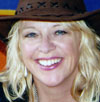 |
LINDA CRUSE Linda Cruse is a qualified nurse and a frontline international aid worker and disaster management specialist of 15 years. Linda is also and magician and is the author of Marmalade and Machine Guns, an inspirational speaker, creator of the Emergency Zen thought leadership series and a social entrepreneur. She is a Senior Fellow and Entrepreneur in Residence in the College of Business and Law at the University of Canterbury in Christchurch, New Zealand. Linda's humanitarian aid work has taken her to every continent, where she has assisted in natural disasters such as the Asian tsunami, the Pakistani earthquake, two Philippine super-typhoons, the aftermath of the Nepal earthquake, as well as aiding post war refugees and challenged communities. |
| ELLINOR HALLE Ellinor Halle describes herself as follows (on 6th October 2012): During my whole life, I have been a student of life. I have always been interested in talking to people from different backgrounds and different cultures trying to understand their lives, their religion or lack of religion and their culture. People have expressed themselves very openly to me which over many years has touched me deeply. I remember a story when I was 12 years old. I was waiting for my mother in the middle of the city, but she did not come. I had no money and was not able to call her. A homeless person came over to me and asked if I could spare him some money. I said truthfully that I was very sorry, but I had none and said that I was in need of some money myself. Then he said something that I never ever will forget. He said:” I will give you some of my money.” I was so touched and from that day onward I understood that behind each appearance there is a loving heart. I believe that the state of the earth, all the wars and individual misery, have their origin in childhood experiences of fear. I believe that nearly all the people on earth have at their core small children, psychologically spoken, who, to different degrees, are frightened and do what they believe they must do to feel safe and protected. People create a survival strategy as children and carry this script with them all through their lives. This ”survival personality,” when growing up, prevents us from truly experiencing the beauty and awe of life because it is based on fear and was created to protect us as children. We could not have survived without it. When we as grown-ups look upon the world and its people through the fearful eyes of that little child inside us, we will perceive the world according to our childhood experiences. Our ”babbling” inner thoughts are an expression of our inner fearful child and keep us stuck in fear without us knowing it. We are so accustomed to listening to these thoughts that we are unaware that they exist. We need to calm down the ”babbling” inner thoughts through mindfulness, meditation or other means and heal childhood fear. When that is done, we will be able to connect to our God given centre that has been there all along. The tiny voice that has been competing with the voice of fear is suddently clear and we can get all the support we need through this voice. We only need to listen to our inner selves. Now we will be able to show the world who we really are in all our beauty. Because we connect to our inner beauty, the world will present itself with all the love that exists. The veil of fear is gone forever. I have dedicated my life to this quest and it brings so much joy and hope for the future to me. |
|





































































































 2003 – present, Human Dignity and Humiliation Studies